
A nurse is preparing to administer hydralazine to a client with pre-eclampsia who has a blood pressure of 180/110 mmHg.
What is the rationale for using this medication?
It reduces cerebral edema and prevents seizures
It increases uteroplacental perfusion and fetal oxygenation
It decreases proteinuria and prevents renal damage
It relaxes smooth muscle and lowers blood pressure
The Correct Answer is D
This is the rationale for using this medication in a client with pre-eclampsia who has a blood pressure of 180/110 mmHg. High blood pressure in pre-eclampsia can cause damage to the kidneys, liver, brain, and other organs, and can also increase the risk of complications for the baby.
Therefore, lowering blood pressure with hydralazine can help prevent or reduce these adverse outcomes.
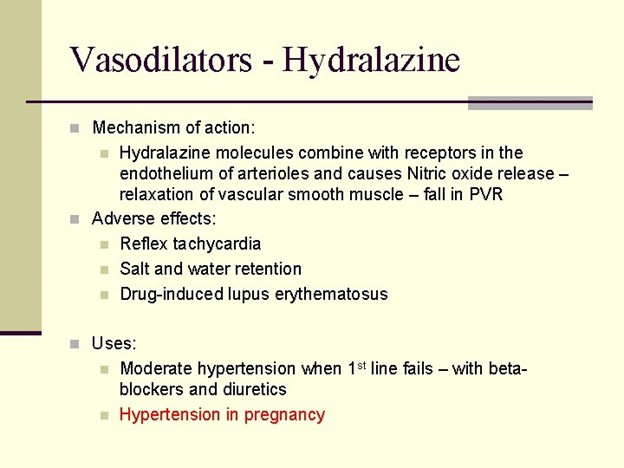
Choice A is wrong because hydralazine does not reduce cerebral edema or prevent seizures. These are symptoms of eclampsia, a more severe form of pre-eclampsia that requires different treatment.
Choice B is wrong because hydralazine does not increase uteroplacental perfusion or fetal oxygenation. These are affected by other factors such as the placental function, maternal position, and fetal well-being.
Choice C is wrong because hydralazine does not decrease proteinuria or prevent renal damage.
Proteinuria is a sign of kidney impairment that occurs in pre-eclampsia, but it is not directly affected by hydralazine. Renal damage can be prevented by controlling blood pressure and avoiding nephrotoxic drugs.
Nursing Test Bank
Naxlex Comprehensive Predictor Exams
Related Questions
Correct Answer is C
Explanation
Encourage bed rest in a left lateral position.
This is because bed rest can lower blood pressure and improve blood flow to the placenta and the fetus.The left lateral position reduces pressure on the inferior vena cava, a large vein that carries blood from the lower body to the heart.
Choice A is wrong because magnesium sulfate is used to prevent seizures in severe preeclampsia or eclampsia, not mild preeclampsia.
Choice B is wrong because monitoring the fetal heart rate and movement is important, but not the priority for this client.
Choice D is wrong because educating the client about the signs of eclampsia is not urgent and may not prevent the progression of preeclampsia.Some signs of eclampsia are severe headaches, blurred vision, nausea, vomiting, abdominal pain and seizures.
Correct Answer is A
Explanation
The most likely explanation for the client's findings of severe headache, blurred vision, hyperreflexia, and clonus in the context of severe pre-eclampsia is A. Cerebral edema.
Pre-eclampsia is a pregnancy-related condition characterized by high blood pressure (hypertension) and signs of organ damage, most commonly affecting the liver and kidneys. Severe pre-eclampsia can lead to complications such as eclampsia, which is characterized by seizures. The symptoms described by the client, including severe headache and blurred vision, are consistent with neurological manifestations associated with severe pre-eclampsia.
Hyperreflexia refers to an exaggerated reflex response, and clonus refers to rhythmic contractions of a muscle when it is passively stretched. Both hyperreflexia and clonus are indicative of central nervous system (CNS) hyperexcitability. Cerebral edema, which is the swelling of the brain due to fluid accumulation, can lead to increased intracranial pressure and neurological symptoms such as headache, vision changes, hyperreflexia, and clonus.
While other complications such as pulmonary edema (B), hemolysis (C), and thrombocytopenia (D) can occur in severe pre-eclampsia, they are not directly associated with the reported symptoms of severe headache, blurred vision, hyperreflexia, and clonus.
Pre-eclampsia is a pregnancy-related condition characterized by high blood pressure (hypertension) and signs of organ damage, most commonly affecting the liver and kidneys. Severe pre-eclampsia can lead to complications such as eclampsia, which is characterized by seizures. The symptoms described by the client, including severe headache and blurred vision, are consistent with neurological manifestations associated with severe pre-eclampsia.
Hyperreflexia refers to an exaggerated reflex response, and clonus refers to rhythmic contractions of a muscle when it is passively stretched. Both hyperreflexia and clonus are indicative of central nervous system (CNS) hyperexcitability. Cerebral edema, which is the swelling of the brain due to fluid accumulation, can lead to increased intracranial pressure and neurological symptoms such as headache, vision changes, hyperreflexia, and clonus.
While other complications such as pulmonary edema (B), hemolysis (C), and thrombocytopenia (D) can occur in severe pre-eclampsia, they are not directly associated with the reported symptoms of severe headache, blurred vision, hyperreflexia, and clonus.
Whether you are a student looking to ace your exams or a practicing nurse seeking to enhance your expertise , our nursing education contents will empower you with the confidence and competence to make a difference in the lives of patients and become a respected leader in the healthcare field.
Visit Naxlex, invest in your future and unlock endless possibilities with our unparalleled nursing education contents today