
A nurse is preparing to initiate IV antibiotic therapy for a newly admitted 12- month-old infant.
Which of the following actions should the nurse plan to take?
Use a 24-gauge catheter to start the IV.
Cover the insertion site with an opaque dressing.
Start the IV in the infant's foot.
Change the IV site every 3 days.
The Correct Answer is A
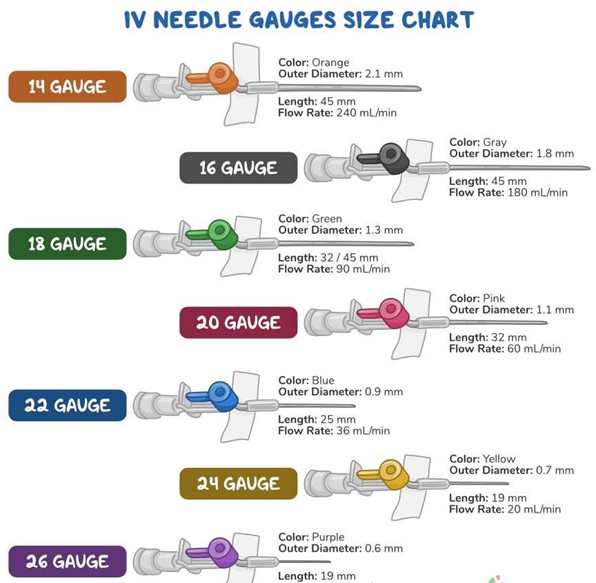
A 24-gauge catheter is the smallest-gauge catheter and is appropriate for administering IV fluids and medications to an infant.
Choice B is wrong because an opaque dressing would prevent the nurse from visualizing the insertion site.
Choice C is wrong because starting an IV in an infant’s foot can be painful and difficult to secure.
Choice D is wrong because IV sites should be changed every 72-96 hours or according to facility policy.
Nursing Test Bank
Naxlex Comprehensive Predictor Exams
Related Questions
Correct Answer is C
Explanation
According to UCSF Benioff Children’s Hospital Oakland Orthopaedic Department, you can change your baby’s diaper with the Pavlik harness in place and make sure the straps are kept outside of the diaper.
Choice A is wrong because while your child is being treated in the Pavlik harness, it is very important that you do not remove the harness or adjust the straps, unless you are given specific instructions by your doctor to do so.
Choice B is wrong because there are no instructions to apply lotion to the skin under the straps.
Choice D is wrong because the duration of treatment will be determined by your doctor and may vary.
Correct Answer is {"xRanges":[140.765625,170.765625],"yRanges":[113.609375,143.609375]}
Explanation
The correct answer is choice B. The patent ductus arteriosus (PDA) is a vascular structure that connects the proximal descending aorta to the roof of the main pulmonary artery near the origin of the left branch pulmonary artery.
This essential fetal structure normally closes spontaneously after birth. After the first few weeks of life, persistence of ductal patency is abnormal.
Whether you are a student looking to ace your exams or a practicing nurse seeking to enhance your expertise , our nursing education contents will empower you with the confidence and competence to make a difference in the lives of patients and become a respected leader in the healthcare field.
Visit Naxlex, invest in your future and unlock endless possibilities with our unparalleled nursing education contents today