
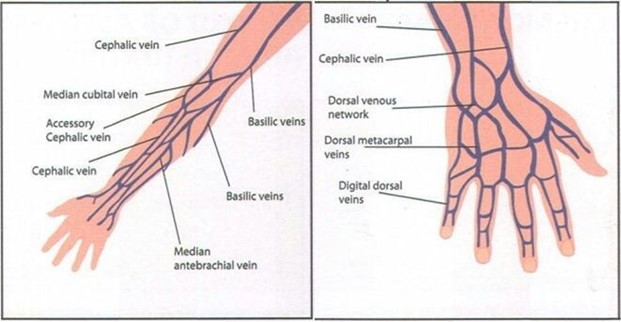
A nurse is preparing to insert an IV catheter for a client following a right mastectomy. Which of the following veins should the nurse select when Initiating IV therapy?
The radial vein on the left wrist
The cephalic vein in the left distal forearm
The cephalic vein on the back of the right hand
The basilic vein in the right antecubital fossa
The Correct Answer is B
When selecting a vein for IV therapy, it is important to consider several factors, including accessibility, integrity, and suitability of the vein. In this case, the client has undergone a right mastectomy, which means the right arm and hand on the affected side might be compromised due to surgery and potential lymphedema. Therefore, it is advisable to avoid using the veins on the affected side.
The cephalic vein in the left distal forearm is a suitable choice because it is on the opposite side of the mastectomy and provides accessibility for venipuncture. It is important to assess the integrity and condition of the vein before insertion to ensure it can accommodate the IV catheter and maintain patency throughout the infusion.
Nursing Test Bank
Naxlex Comprehensive Predictor Exams
Related Questions
Correct Answer is C
Explanation
The client needs assistance with morning ADLs, and an occupational therapist is an interprofessional team member who can assist with activities of daily living. Physical therapists focus more on mobility and range of motion exercises, registered dieticians focus on nutrition, and speech-language pathologists work with clients who have difficulty with speech and swallowing.
Correct Answer is A
Explanation
A. Place the extremity in a dependent position.This helps distend the veins by using gravity, making them easier to locate and cannulate.
B.The tourniquet should be placed above the insertion site to impede venous return and engorge the veins.
C.A warm compress (not cool) helps dilate veins and makes them more visible and palpable.
D. Nurses should choose the most distal site (e.g., the hand) first. If that site fails, they can move proximally.
Whether you are a student looking to ace your exams or a practicing nurse seeking to enhance your expertise , our nursing education contents will empower you with the confidence and competence to make a difference in the lives of patients and become a respected leader in the healthcare field.
Visit Naxlex, invest in your future and unlock endless possibilities with our unparalleled nursing education contents today