
A nurse is providing teaching to a client and their partner about performing peritoneal dialysis at home.
When discussing peritonitis, which of the following manifestations should the nurse identify as the earliest indication of this complication?
Cloudy effluent.
Increased heart rate.
Generalized abdominal pain.
Fever.
Fever.
The Correct Answer is A
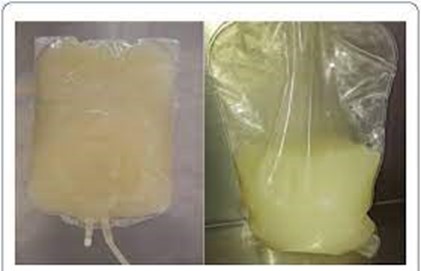
The earliest indication of peritonitis in a patient undergoing peritoneal dialysis is often cloudy dialysis fluid when drained from the body.
Choice B is incorrect because an increased heart rate is not the earliest indication of peritonitis.
Choice C is incorrect because generalized abdominal pain is not the earliest indication of peritonitis.
Choice D is incorrect because fever is not the earliest indication of peritonitis.
Nursing Test Bank
Naxlex Comprehensive Predictor Exams
Related Questions
Correct Answer is C
Explanation
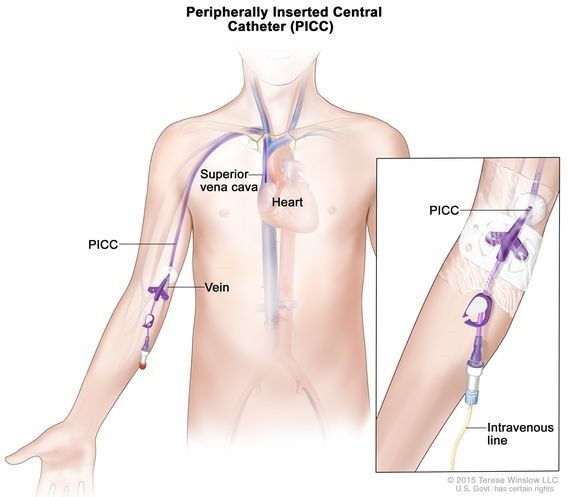
A 10-mL syringe is the minimum size that should be used to flush a PICC line to prevent damage to the catheter.
Choice A, Clean the insertion site using 20 mL of hydrogen peroxide, is not the correct answer because hydrogen peroxide should not be used to clean the insertion site of a PICC line.
Choice B, Changing the catheter dressing daily, is not the correct answer because the catheter dressing should be changed every 3 to 7 days or as directed by a healthcare provider.
Choice D, Do not elevate the arm above the level of the heart, is not the correct answer because there is no restriction on elevating the arm above the level of the heart with a PICC line.
Correct Answer is A
Explanation
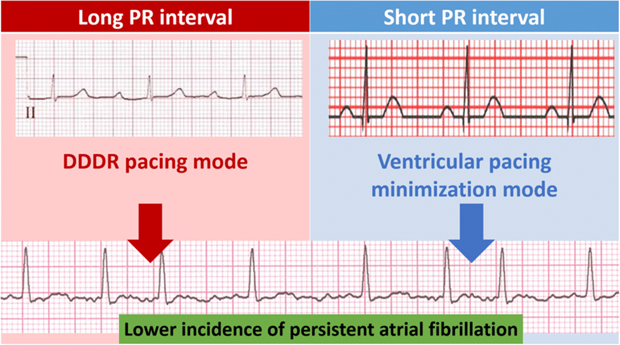
First-degree heart block is a type of atrioventricular (AV) block that involves the consistent prolongation of the PR interval (defined as >0.20 seconds) due to delayed conduction via the atrioventricular node.
This is seen on an ECG as a PR interval greater than 200 ms in length.
Choice B: Nondiscernible P waves are not an answer because it is not mentioned as a characteristic of first-degree heart block in my sources.
Choice C: More P waves than QRS complexes is not an answer because it is not mentioned as a characteristic of first-degree heart block in my sources.
Choice D: No correlation between P and QRS waves is not an answer because it is not mentioned as a characteristic of first-degree heart block in my sources.
Whether you are a student looking to ace your exams or a practicing nurse seeking to enhance your expertise , our nursing education contents will empower you with the confidence and competence to make a difference in the lives of patients and become a respected leader in the healthcare field.
Visit Naxlex, invest in your future and unlock endless possibilities with our unparalleled nursing education contents today