
A nurse is reinforcing dietary teaching with a client who has chronic kidney disease and requires a lowpotassium diet. Which of the following food by the client demonstrates an understanding of the teaching?
1 cup of cantaloupe
1 large baked potato
4 oz of banana chips
1 cup of applesauce
The Correct Answer is D
A: Cantaloupe is relatively high in potassium and is not a suitable choice for a low-potassium diet.
B: Baked potatoes are high in potassium and should be avoided in a low-potassium diet.
C: Banana chips are also high in potassium and should not be included in a low-potassium diet.
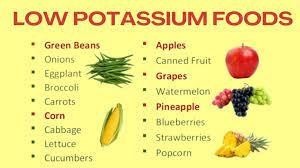
D: Correct. Applesauce is a low-potassium food and is an appropriate choice for a client with chronic kidney disease following a low-potassium diet.
Nursing Test Bank
Naxlex Comprehensive Predictor Exams
Related Questions
Correct Answer is {"dropdown-group-1":"A","dropdown-group-2":"A"}
Explanation
Allergic reaction: The client is at risk of blood transfusion reaction as evidenced by an increase in respiratory rate to 22 and the increase in heart rate from 88 to 100.
Itching: itching is an immediate symptom of type 1 hypersensitivity reaction that are common with blood transfusion.
Correct Answer is B
Explanation
A: Standing facing the center of the bed at the client's side is not the most stable position for moving a client, as it does not provide a wide base of support.
B: Placing feet apart with one foot in front of the other provides a wide base of support and allows the nurse to use their body weight to assist in the movement, making this the correct action.
C: Keeping knees and hips straight while bending at the waist toward the client can lead to back strain and does not utilize the stronger leg muscles, making it an incorrect action.
D: Encouraging the client to keep their legs straight and remain still may be helpful, but it does not directly involve the nurse's actions in moving the client, so it is not the correct answer to this question.
Whether you are a student looking to ace your exams or a practicing nurse seeking to enhance your expertise , our nursing education contents will empower you with the confidence and competence to make a difference in the lives of patients and become a respected leader in the healthcare field.
Visit Naxlex, invest in your future and unlock endless possibilities with our unparalleled nursing education contents today