
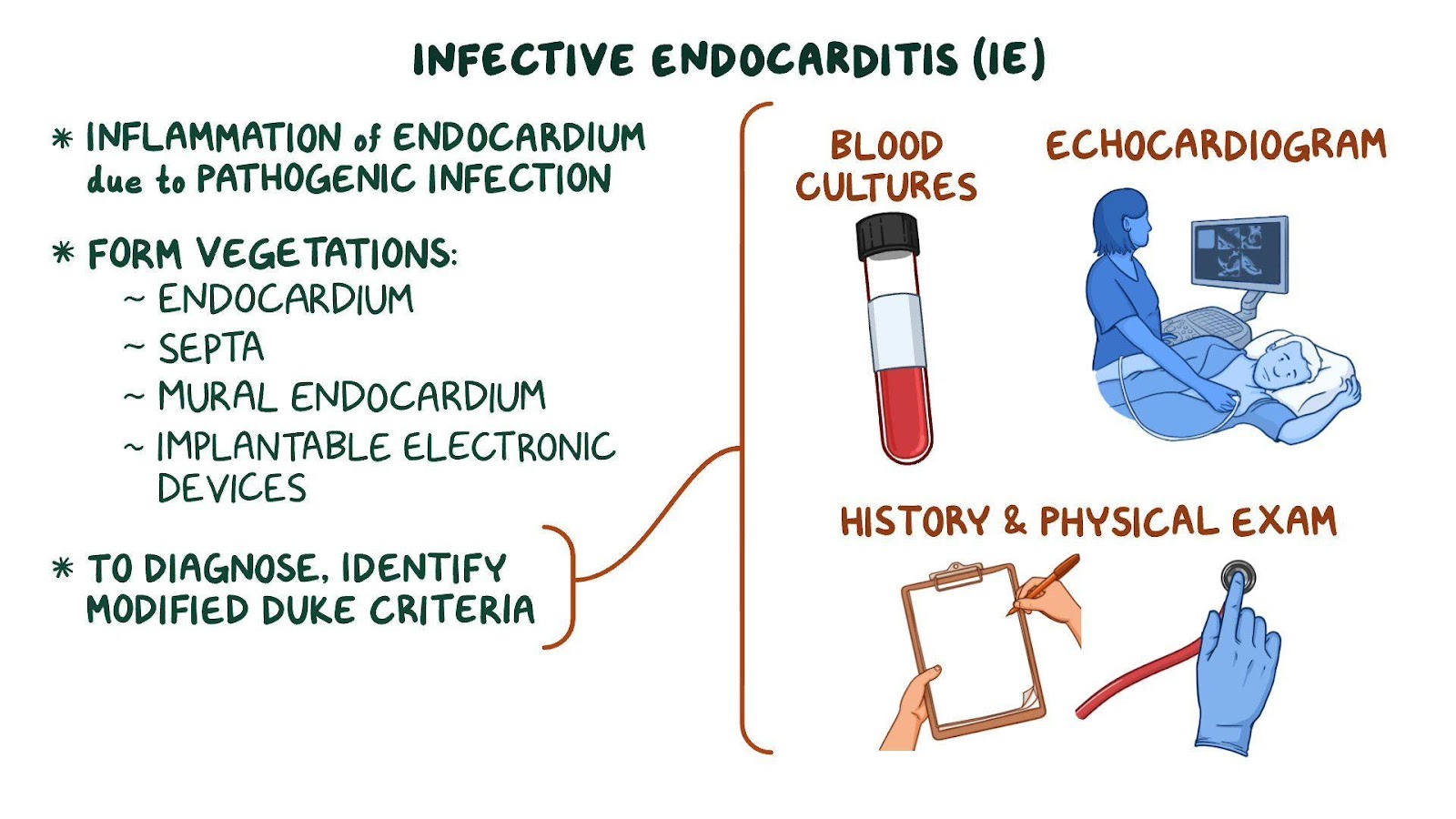
A nurse is reinforcing discharge teaching with a client who has infective endocarditis about how to prevent recurrence. Which of the following statements by the client indicates an understanding of the teaching?
I will reschedule any body piercings if I have a fever.
I will notify my doctor before I have dental procedures.
I will floss my teeth twice a day as a part of my oral care.
I will wear a mask when I go out in public.
The Correct Answer is B
Choice A reason: This is an incorrect statement, because the client should avoid any body piercings, tattoos, or other procedures that can cause skin or mucosal trauma and increase the risk of bacterial infection and endocarditis. The client should also seek medical attention if they have a fever or other signs of infection.
Choice B reason: This is a correct statement, because the client should notify their doctor before they have dental procedures, such as cleaning, filling, or extraction, that can cause bleeding and introduce bacteria into the bloodstream. The client may need prophylactic antibiotics to prevent endocarditis.
Choice C reason: This is a partially correct statement, because the client should floss their teeth twice a day as a part of their oral care, but this is not enough to prevent recurrence of endocarditis. The client should also brush their teeth with a soft toothbrush after each meal, use an antiseptic mouthwash, and visit their dentist regularly.
Choice D reason: This is an unnecessary statement, because the client does not need to wear a mask when they go out in public, unless they have a respiratory infection or are exposed to someone who has one. Endocarditis is not transmitted by airborne or droplet routes, but by direct contact with the infected heart valves or blood.
Nursing Test Bank
Naxlex Comprehensive Predictor Exams
Related Questions
Correct Answer is C
Explanation
Choice A reason: Irrigating the catheter with sterile water is an incorrect action, because the catheter should be irrigated with sterile normal saline (0.9% sodium chloride) to prevent hemolysis of the red blood cells.
Choice B reason: Clamping the drainage catheter during ambulation is an incorrect action, because the catheter should be kept patent and unclamped at all times to prevent obstruction and infection.
Choice C reason: Reporting viscous drainage with clots to the provider is a correct action, because it indicates that the irrigation is not effective and the client may need manual irrigation or surgical intervention.
Choice D reason: Removing the catheter if the client feels a strong urge to urinate is an incorrect action, because the catheter should be left in place until the provider orders its removal. The client may feel a sensation of bladder fullness or spasms due to the irrigation fluid, which can be relieved by medication or adjustment of the flow rate.
Correct Answer is ["B","C","E"]
Explanation
Choice A reason: Unilateral weakness is an incorrect finding, because it is more indicative of a stroke or a brain tumor than encephalitis. Encephalitis is an inflammation of the brain that can cause neurological symptoms, but they are usually bilateral and symmetrical.
Choice B reason: Stiff neck is a correct finding, because it is a sign of meningeal irritation, which can occur in encephalitis due to the involvement of the meninges (the membranes that cover the brain and spinal cord).
Choice C reason: Photophobia is a correct finding, because it is another sign of meningeal irritation, which can cause sensitivity to light and sound.
Choice D reason: Epigastric pain is an incorrect finding, because it is not related to encephalitis. Epigastric pain is more likely to be caused by a gastrointestinal disorder, such as gastritis or peptic ulcer.
Choice E reason: Lethargy is a correct finding, because it is a sign of altered mental status, which can occur in encephalitis due to the damage to the brain tissue.
Whether you are a student looking to ace your exams or a practicing nurse seeking to enhance your expertise , our nursing education contents will empower you with the confidence and competence to make a difference in the lives of patients and become a respected leader in the healthcare field.
Visit Naxlex, invest in your future and unlock endless possibilities with our unparalleled nursing education contents today