
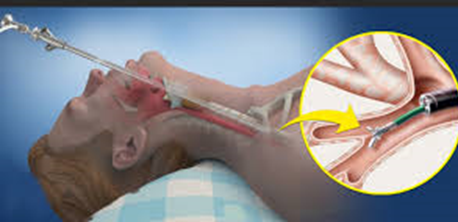
A nurse is reinforcing teaching with a client who is scheduled to undergo a bronchoscopy. Which of the following client statements indicates an understanding of the teaching?
"I can have clear liquids up to 3 hours before the procedure."
"I can eat as soon as the procedure is completed."
"I will receive an injection of radioactive material prior to having the procedure.”
"I might have blood-tinged sputum after the procedure."
The Correct Answer is D
Choice A Reason:
"I can have clear liquids up to 3 hours before the procedure." This is incorrect. Clients are usually instructed to be NPO (nothing by mouth) for a certain period before the procedure, typically 6-8 hours, to reduce the risk of aspiration.
Choice B Reason:
"I can eat as soon as the procedure is completed." This is incorrect. Clients should not eat or drink until the gag reflex returns, which can take a few hours after the procedure.
Choice C Reason:
"I will receive an injection of radioactive material prior to having the procedure.” This is incorrect. An injection of radioactive material is not part of a bronchoscopy. This might be confused with a different diagnostic procedure, such as a PET scan.
Choice D Reason:
"I might have blood-tinged sputum after the procedure." This statement indicates an understanding of the teaching. It is common for clients to have a small amount of blood-tinged sputum following a bronchoscopy due to the irritation caused by the procedure.
Nursing Test Bank
Naxlex Comprehensive Predictor Exams
Related Questions
Correct Answer is D
Explanation
Choice A Reason:
Using a fire extinguisher at the source of the smoke is not appropriate. While using a fire extinguisher could potentially help contain a small fire, it's crucial to prioritize rescuing those in immediate danger and alerting others about the fire first by activating the fire alarm. This action ensures that help is on the way and that everyone is aware of the emergency.
Choice B Reason:
Closing the doors to the room and to the bathroom is not appropriate. Closing doors can help contain smoke and fire to some extent, but again, the priority in an emergency situation like this is to rescue those in immediate danger then activate the fire alarm to ensure a swift response and alert others.
Choice C Reason:
Activate the fire alarm system is appropriate. Activating the fire alarm alerts others in the facility and initiates the emergency response protocol, helping to ensure that help is on the way while potentially preventing the spread of fire. However, this step should be taken after assisting the client to safety as they are in immediate danger.
Choice D Reason:
Assisting the client who is in immediate danger to a nearby common area should be the furst step that the nurse takes before alerting other people of the fire. (RACE protocol)
Correct Answer is C
Explanation
Choice A Reason:
"I'll make sure I stay away from microwave ovens." This statement is incorrect . While there were concerns about interference in the past, modern pacemakers are generally not affected by household appliances like microwave ovens.
Choice B Reason:
"I should have an MRI, rather than a CAT scan, if necessary." This statement is incorrect. Both MRI and CAT scans have considerations when a person has a pacemaker. An MRI might be contraindicated due to the magnetic field, while a CAT scan might be a safer imaging choice.
Choice C Reason:
"I'll hold my cell phone against the ear on the opposite side of my body." This statement reflects an understanding of the precaution to avoid holding a cell phone directly over the implanted pacemaker. Keeping the phone on the opposite side helps minimize the potential interference with the pacemaker's function.
Choice D Reason:
"I shouldn't travel by plane because of airport security." This statement is incorrect. Airport security systems generally don't affect pacemakers, so traveling by plane is usually safe. However, informing security personnel about the presence of a pacemaker is a good practice.
Whether you are a student looking to ace your exams or a practicing nurse seeking to enhance your expertise , our nursing education contents will empower you with the confidence and competence to make a difference in the lives of patients and become a respected leader in the healthcare field.
Visit Naxlex, invest in your future and unlock endless possibilities with our unparalleled nursing education contents today