
A nurse is reviewing the medical record of a client who has COPD. Which of the following laboratory findings indicates a need to request a dietary referral for the client?
Prealbumin 13 mg/dL
Potassium 3.5 mEq/L
Sodium 138 mEq/L
Total calcium 10 mg/dL
The Correct Answer is A
Prealbumin is a protein that is produced by the liver and is an indicator of the body's nutritional status. A low prealbumin level can indicate malnutrition, which is common in clients with COPD. Therefore, a dietary referral can help the client meet their nutritional needs and prevent further complications.
Nursing Test Bank
Naxlex Comprehensive Predictor Exams
Related Questions
Correct Answer is C
Explanation
A.Sodium restriction is a key component in the management of ascites, as it helps to reduce fluid retention. However, the standard recommendation for sodium intake in ascites management is typically lower than 3 grams per day. The guideline is often around 2 grams or even less to effectively manage ascites. Thus, while the concept is correct, the specific amount in this option is slightly higher than usually recommended.
B.This is not generally recommended for clients with ascites. Lying flat can increase discomfort and pressure on the diaphragm, making breathing more difficult. Instead, positioning the client in a semi-Fowler's or Fowler's position can help alleviate respiratory distress by reducing pressure on the diaphragm.
C. This is a crucial intervention. Measuring abdominal girth daily provides a reliable way to monitor changes in the size of the abdomen, which reflects changes in the amount of ascitic fluid. It helps in assessing the effectiveness of treatment and detecting any rapid accumulation of fluid that might require intervention.
D.While protein restriction was traditionally recommended to prevent hepatic encephalopathy, more recent guidelines suggest that moderate protein intake should be maintained unless the client has severe hepatic encephalopathy. Adequate protein intake is necessary to prevent muscle wasting and support liver function, and it should generally be individualized based on the client’s condition.
Correct Answer is D
Explanation
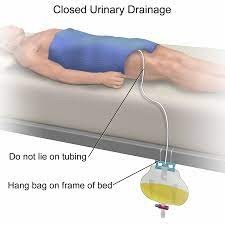
A) Coiling the tubing on the bed above the collection bag is incorrect because it can cause urine to flow back into the bladder, increasing the risk of infection and compromising the effectiveness of the drainage system. The tubing should be kept below the level of the bladder to ensure proper drainage.
B) Instructing the client to hold the drainage bag at waist height when ambulating is incorrect because the drainage bag should always be kept below the level of the bladder to prevent urine from flowing back into the bladder, which could lead to a urinary tract infection (UTI).
C) Collecting a sterile specimen from the urinary drainage bag is incorrect because urine in the drainage bag is not considered sterile. If a sterile specimen is needed, it should be obtained by cleaning the catheter's sampling port with an antiseptic solution and withdrawing urine directly from the port using a sterile syringe.
D) Securing the tubing with adhesive tape to the lower abdomen is correct because it helps prevent accidental pulling or tugging on the catheter, which could cause discomfort or dislodgement. Properly securing the tubing also helps maintain a continuous flow of urine and reduces the risk of infection.
Whether you are a student looking to ace your exams or a practicing nurse seeking to enhance your expertise , our nursing education contents will empower you with the confidence and competence to make a difference in the lives of patients and become a respected leader in the healthcare field.
Visit Naxlex, invest in your future and unlock endless possibilities with our unparalleled nursing education contents today