
A nurse is teaching a client who is at 10 weeks of gestation about increasing folate in her diet. Which of the following food choices should the nurse recommend as the best source of folate?
1/2 cup cooked asparagus
1/2 cup plain low-fat yogurt
1 medium apple
1 small banana
The Correct Answer is A
Folate, also known as vitamin B9, is an essential nutrient during pregnancy as it plays a crucial role in the development of the baby's neural tube. When teaching a client about increasing folate in their diet during pregnancy, it's important to recommend foods that are rich in this nutrient.
1/2 cup cooked asparagus: Asparagus is a good source of folate, and 1/2 cup of cooked asparagus contains approximately 134 micrograms of folate.
1/2 cup plain low-fat yogurt: While yogurt is a healthy food choice, it is not a significant source of folate.
1 medium apple: Apples are generally low in folate content and not considered a rich source of this nutrient.
1 small banana: Bananas are also not known for their folate content and do not provide a significant amount of this nutrient.
Given the options provided, 1/2 cup cooked asparagus is the best source of folate. It is important to note that other food sources rich in folate include dark leafy greens, legumes, fortified cereals, and citrus fruits. Encouraging a varied and balanced diet that incorporates these folate-rich foods can help ensure adequate folate intake during pregnancy.
Nursing Test Bank
Naxlex Comprehensive Predictor Exams
Related Questions
Correct Answer is B
Explanation
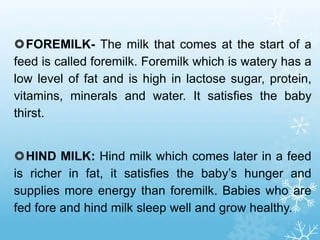
"My baby will receive the most milk within the first 10 minutes of the feeding": This statement is correct. During the first few minutes of breastfeeding, the baby receives the foremilk, which is more watery and quenches their thirst. The hindmilk, which is higher in fat and provides more calories, is obtained as the feeding progresses.
"I need to supplement feedings with water once my baby is 4 months old": Breast milk provides all the necessary fluids for the baby, and additional water supplementation is generally not needed for exclusively breastfed infants.
"The purpose of alternating breasts during feedings is to promote comfort": The purpose of alternating breasts during feedings is to ensure that the baby receives both foremilk and hindmilk from each breast and to stimulate milk production in both breasts. It is not primarily for promoting comfort.
"During the first few weeks, I should nurse my baby every 4 hours": Breastfed newborns typically feed more frequently than every 4 hours, especially during the early weeks.
On-demand feeding is recommended, which means feeding the baby whenever they show hunger cues, which can be more frequent than every 4 hours.
Correct Answer is C
Explanation
A) Drinking iced tea with meals can increase the amount of iron absorbed.
- This statement is not correct. Drinking iced tea, especially black tea, can inhibit the absorption of iron. It contains compounds that interfere with the body's ability to absorb non-heme iron, which is found in plant-based foods and supplements. Therefore, this information is not accurate and should not be included in the teaching.
B) Drinking orange juice with iron supplements can decrease absorption.
- This statement is not correct either. In fact, drinking orange juice with iron supplements can enhance iron absorption. This is because orange juice is a good source of vitamin C, which helps the body absorb non-heme iron more effectively. So, this information is inaccurate and should not be included in the teaching.
C) Fish and poultry are primary sources of heme iron.
- This statement is correct. Heme iron is found in animal-based sources like fish and poultry, and it is more readily absorbed by the body compared to non-heme iron from plant-based sources.
D) Cooking in a stainless steel skillet increases the amount of iron in the food.
- This statement is not accurate. Cooking in a stainless steel skillet does not significantly increase the iron content in food. The type of iron in the skillet is not the same as the dietary iron, and it doesn't transfer in significant amounts to the food being cooked. Therefore, this information is not correct and should not be included in the teaching.
So, the nurse should include the information from option C, which is accurate: "Fish and poultry are primary sources of heme iron." Options A, B, and D contain inaccurate information and should be avoided in the teaching to ensure the client receives correct guidance for managing iron deficiency anemia.
Whether you are a student looking to ace your exams or a practicing nurse seeking to enhance your expertise , our nursing education contents will empower you with the confidence and competence to make a difference in the lives of patients and become a respected leader in the healthcare field.
Visit Naxlex, invest in your future and unlock endless possibilities with our unparalleled nursing education contents today