
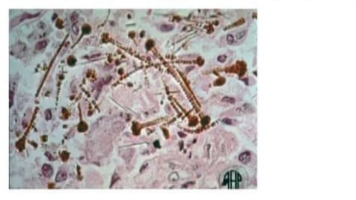
A sputum sample obtained from a 68-year-old former construction worker reveals needle-like inert minerals (shown). This patient is at increased risk of developing which of the following malignant neoplasms?
B cell lymphoma
Carcinoid tumor
Mesothelioma
Teratocarcinoma
Transitional cell carcinoma
The Correct Answer is C
A. B cell lymphoma: B cell lymphomas are hematologic malignancies affecting lymphoid tissues. Exposure to mineral fibers like asbestos does not specifically increase the risk for B cell lymphomas.
B. Carcinoid tumor: Carcinoid tumors are neuroendocrine tumors that can occur in the lungs or gastrointestinal tract. There is no direct link between asbestos exposure and carcinoid tumor development.
C. Mesothelioma: The presence of needle-like mineral fibers in the sputum is characteristic of asbestos exposure. Asbestos is a well-established risk factor for malignant mesothelioma, a cancer of the pleura or peritoneum. Chronic inhalation of asbestos fibers leads to inflammation, fibrosis, and eventual malignant transformation of mesothelial cells.
D. Teratocarcinoma: Teratocarcinomas are germ cell tumors that arise in the testes, ovaries, or midline structures. Asbestos exposure does not increase the risk for this type of malignancy.
E. Transitional cell carcinoma: Transitional cell carcinoma primarily arises in the urinary tract (bladder, ureters, renal pelvis). While chemical exposures like aromatic amines can increase risk, asbestos fibers are not a causative factor for this tumor type.
Nursing Test Bank
Naxlex Comprehensive Predictor Exams
Related Questions
Correct Answer is C
Explanation
A. Fat vacuoles within the alveolar capillaries:Fat embolism typically occurs after long bone fractures and manifests with respiratory distress, petechial rash, and neurologic changes. This patient’s fracture was limited to the ankle, a smaller bone, and the rapid cardiovascular collapse suggests a massive occlusive event rather than fat embolism.
B. Thromboembolus occluding the branch of the left pulmonary artery to the left upper lobe:A segmental pulmonary embolus would cause localized hypoxemia and pleuritic pain but is unlikely to produce sudden unresponsiveness and pulseless electrical activity. The severity of this patient’s collapse suggests a more proximal obstruction.
C. Saddle pulmonary thromboembolus occluding the bifurcation of the pulmonary trunk:Massive pulmonary embolism, often termed a “saddle” embolus, can occlude the main pulmonary artery bifurcation, abruptly increasing pulmonary vascular resistance. This results in right ventricular failure, severe hypoxemia, pulseless electrical activity, and rapid death, consistent with this patient’s sudden deterioration four days post-surgery, with multiple risk factors including obesity and oral contraceptive use.
D. Acute myocardial infarct of the anterior wall of the left ventricle:Acute myocardial infarction can cause sudden death but typically presents with chest pain, ST-segment changes, or preceding ischemic symptoms. The immediate post-operative context and massive pulmonary compromise favor pulmonary embolism as the underlying cause.
Correct Answer is C
Explanation
A. B cell lymphoma:B cell lymphomas are hematologic malignancies affecting lymphoid tissues. Exposure to mineral fibers like asbestos does not specifically increase the risk for B cell lymphomas.
B. Carcinoid tumor:Carcinoid tumors are neuroendocrine tumors that can occur in the lungs or gastrointestinal tract. There is no direct link between asbestos exposure and carcinoid tumor development.
C. Mesothelioma:The presence of needle-like mineral fibers in the sputum is characteristic of asbestos exposure. Asbestos is a well-established risk factor for malignant mesothelioma, a cancer of the pleura or peritoneum. Chronic inhalation of asbestos fibers leads to inflammation, fibrosis, and eventual malignant transformation of mesothelial cells.
D. Teratocarcinoma:Teratocarcinomas are germ cell tumors that arise in the testes, ovaries, or midline structures. Asbestos exposure does not increase the risk for this type of malignancy.
E. Transitional cell carcinoma:Transitional cell carcinoma primarily arises in the urinary tract (bladder, ureters, renal pelvis). While chemical exposures like aromatic amines can increase risk, asbestos fibers are not a causative factor for this tumor type.
Whether you are a student looking to ace your exams or a practicing nurse seeking to enhance your expertise , our nursing education contents will empower you with the confidence and competence to make a difference in the lives of patients and become a respected leader in the healthcare field.
Visit Naxlex, invest in your future and unlock endless possibilities with our unparalleled nursing education contents today