
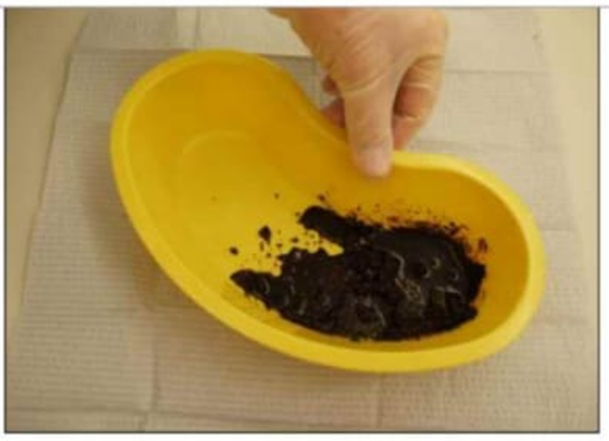
After being transferred from the emergency department (ED) to a medical unit, a client vomits into an emesis basin. The nurse observes the emesis as seen in the picture. Which assessment should the nurse complete first?
Measure abdominal girth.
Observe for flushing.
Auscultate breath sounds.
Obtain current vital signs.
The Correct Answer is D
A. Measure abdominal girth: While this can detect abdominal distention or internal bleeding, it is not the immediate priority compared to assessing hemodynamic stability.
B. Observe for flushing: Flushing is not directly related to gastrointestinal bleeding and does not provide critical information about the client’s immediate risk.
C. Auscultate breath sounds: Although important for overall assessment, respiratory status is not the most urgent concern in a client with potential upper GI bleeding compared to monitoring for shock.
D. Obtain current vital signs: Coffee-ground emesis indicates possible upper gastrointestinal bleeding. The priority is to assess hemodynamic status, including blood pressure and heart rate, to determine if the client is experiencing hypovolemia or shock, which requires immediate intervention.
Nursing Test Bank
Naxlex Comprehensive Predictor Exams
Related Questions
Correct Answer is B
Explanation
Rationale for Correct Choice:
- Gout: The client presents with acute, severe pain, redness, warmth, and swelling in the right great toe, which is classic for a gout flare. The pain onset is sudden and worsens rapidly, consistent with the patient’s history of previous attacks. Presence of hard, firm deposits (tophi) under the skin further supports chronic hyperuricemia and gout.
Rationale for Incorrect Choices:
- Osteoarthritis: Typically causes gradual joint pain, stiffness, and decreased range of motion, often affecting weight-bearing joints symmetrically. The acute, excruciating pain and swelling described here are inconsistent with osteoarthritis.
- Rheumatoid arthritis: Usually presents with symmetric joint involvement, morning stiffness, and systemic symptoms. The unilateral acute attack of a single joint does not align with the typical RA pattern.
- Septic arthritis: Often presents with rapid-onset joint pain, swelling, and fever. While the client has mild fever, there is a history of recurrent gout attacks and typical tophi, making gout more likely; septic arthritis is less likely without systemic toxicity or significant joint effusion requiring aspiration.
- Cellulitis: Presents with redness, warmth, swelling, and sometimes fever, usually without joint involvement or hard deposits. The pain is localized to the joint itself rather than diffuse soft tissue, making cellulitis less likely.
Correct Answer is B
Explanation
Rationale:
A. Fever: Fever can accompany thyrotoxicosis and may indicate infection or thyroid storm. While it requires monitoring, it does not constitute the most urgent threat compared to respiratory compromise.
B. Dyspnea: Shortness of breath or difficulty breathing in a client with thyrotoxicosis may indicate cardiac decompensation or a thyroid storm–related complication such as heart failure or pulmonary edema. This finding requires immediate intervention to prevent life-threatening consequences.
C. Hyperglycemia: Elevated blood glucose may occur due to stress or underlying diabetes but is not an acute, life-threatening manifestation of thyrotoxicosis requiring immediate action.
D. Anxiety: Anxiety is common with thyrotoxicosis but is generally not an emergent finding. It can be addressed with supportive measures but does not pose an immediate risk to the client’s physiological stability.
Whether you are a student looking to ace your exams or a practicing nurse seeking to enhance your expertise , our nursing education contents will empower you with the confidence and competence to make a difference in the lives of patients and become a respected leader in the healthcare field.
Visit Naxlex, invest in your future and unlock endless possibilities with our unparalleled nursing education contents today