
After falling down the basement steps, a client is brought to the emergency room. X-rays confirms that the client's right leg is fractured. Following application of a leg cast, which assessment finding warrants immediate intervention by the nurse?
Increased temperature to lower extremity.
Right foot pale with sluggish capillary refill.
Circumferential edema of right foot.
Complaint of throbbing right leg pain
The Correct Answer is B
A. Increased temperature to the lower extremity:
While increased temperature could indicate inflammation or infection, it is not as immediately concerning as impaired circulation.
B. Right foot pale with sluggish capillary refill.
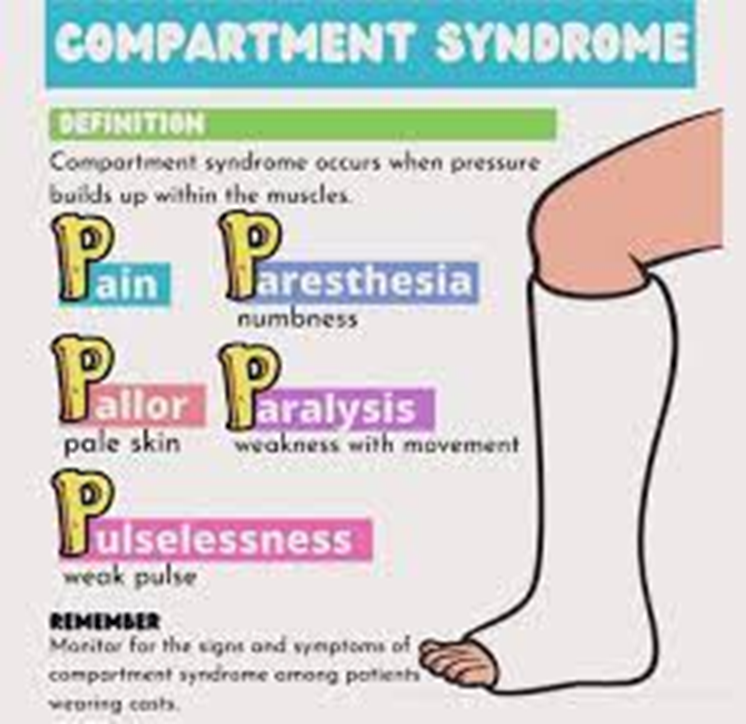
This finding suggests a potential impairment in blood flow to the right foot, which could be due to complications such as compartment syndrome or impaired circulation. Compartment syndrome is a serious condition that occurs when there is increased pressure within a muscle compartment, leading to reduced blood flow. Pale color and sluggish capillary refill indicate compromised circulation and require prompt intervention to prevent further damage.
C. Circumferential edema of the right foot:
Edema is a common finding after a fracture and cast application. However, in the context of pale color and sluggish capillary refill, it may indicate increased pressure within the compartment, requiring immediate attention.
D. Complaint of throbbing right leg pain:
Pain is a common complaint after a fracture, and throbbing pain may be expected. However, the priority is to address the potential compromise in circulation indicated by the pale color and sluggish capillary refill.
Nursing Test Bank
Naxlex Comprehensive Predictor Exams
Related Questions
Correct Answer is B
Explanation
A. Carcinogens are substances that contain cancerous cells:
This statement is incorrect. Carcinogens are substances that have the potential to cause cancer, but they do not necessarily contain cancerous cells themselves.
B. Substances that change a cell so that it becomes cancerous are potential sources of cancer:
This is the correct answer. Carcinogens are agents that can induce changes in the genetic material of cells, leading to the development of cancer. They can initiate or promote the process of carcinogenesis.
C. Environmental factors such as sunlight and chemicals can cause cancer to spread:
This statement is not accurate. Carcinogens can contribute to the initiation or promotion of cancer, but the spread of cancer (metastasis) involves complex biological processes and is not directly caused by environmental factors.
D. Carcinogens are in the environment and cannot be avoided:
This statement is not accurate. While carcinogens may be present in the environment, efforts can be made to minimize exposure and adopt preventive measures. Avoidance of known carcinogens and the promotion of a healthy lifestyle can contribute to cancer prevention.
Correct Answer is D
Explanation
A. Guidelines for oxygen use:
While guidelines for oxygen use are important, addressing the root cause of the respiratory condition, which includes smoking cessation, is crucial for long-term management.
B. Methods for weight loss:
Obesity can contribute to respiratory issues, but in the immediate context of emphysema exacerbation and the need for oxygen therapy, smoking cessation is a more urgent concern.
C. Approaches to conserve energy:
Conserving energy is important for clients with emphysema, but addressing the impact of smoking on respiratory function is a more immediate priority.
D. Strategies for smoking cessation.
Smoking is a major contributor to the progression of emphysema and exacerbation of respiratory symptoms. Addressing smoking cessation is crucial in improving the client's respiratory function and overall health. Continuing to smoke can exacerbate emphysema and compromise the effectiveness of other interventions, including oxygen therapy.
Whether you are a student looking to ace your exams or a practicing nurse seeking to enhance your expertise , our nursing education contents will empower you with the confidence and competence to make a difference in the lives of patients and become a respected leader in the healthcare field.
Visit Naxlex, invest in your future and unlock endless possibilities with our unparalleled nursing education contents today