
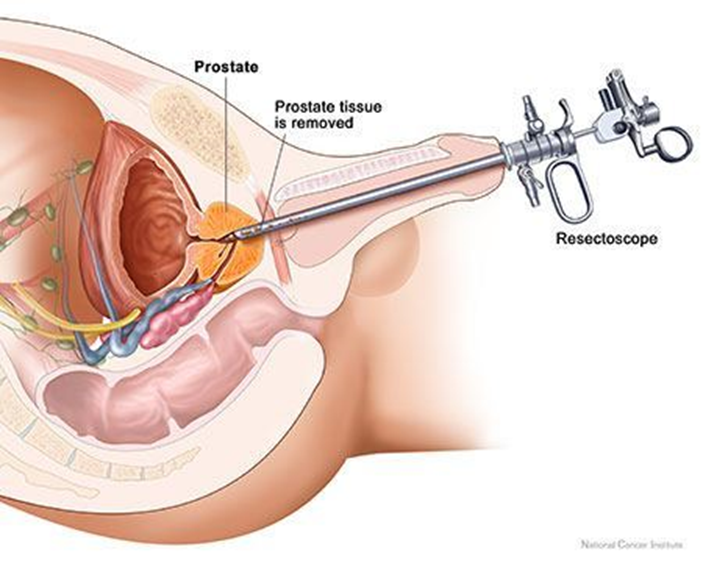
A client arrives to the medical-surgical unit 4 hours after a transurethral resection of the prostate. A triple-lumen catheter for continuous bladder irrigation with normal saline is infusing and the nurse observes dark, pink-tinged outflow with blood clots in the tubing and collection bag. Which action should the nurse take?
Irrigating the catheter manually.
Monitoring catheter drainage.
Discontinuing infusing solution.
Decreasing the flow rate.
The Correct Answer is B
A. Irrigating the catheter manually:
Manually irrigating the catheter without an order may disrupt the clotting process and increase the risk of bleeding. It is not a routine nursing intervention post-TURP without specific orders.
B. Monitoring catheter drainage.
It is not within the nurse's scope of practice to manually irrigate the catheter without a healthcare provider's order, especially in the context of post-TURP care. The dark, pink-tinged outflow with blood clots indicates some expected bleeding following the procedure. The nurse should closely monitor the catheter drainage for the amount, color, and presence of clots.
C. Discontinuing infusing solution:
Discontinuing the normal saline irrigation may lead to clot formation and obstruction, potentially worsening the situation. The continuous bladder irrigation is often used to prevent clot formation and maintain catheter patency post-TURP.
D. Decreasing the flow rate:
The flow rate is typically set by the healthcare provider to maintain catheter patency and prevent clot formation. Decreasing the flow rate without specific orders may not be appropriate in this situation.
Nursing Test Bank
Naxlex Comprehensive Predictor Exams
Related Questions
Correct Answer is D
Explanation
A. Instruct the client to avoid foods with gluten, such as wheat bread.
While some individuals with Crohn's disease may experience improvement by avoiding certain types of carbohydrates, including gluten, this recommendation is not universally applicable to all individuals with Crohn's disease. Gluten restriction is more relevant for those with gluten sensitivity or celiac disease.
B. Explain that the need to restrict fluids is the primary limitation.
This statement is not accurate. Fluid restriction is not a primary dietary limitation for individuals with Crohn's disease. In fact, maintaining adequate hydration is generally important for overall health. Restricting fluids is not a standard dietary recommendation for managing Crohn's disease.
C. Advise the client to limit foods that are high in calcium and iron.
Limiting foods high in calcium and iron is not a standard recommendation for Crohn's disease. In fact, adequate intake of essential nutrients, including calcium and iron, is important for overall health. Limiting these nutrients could lead to nutritional deficiencies.
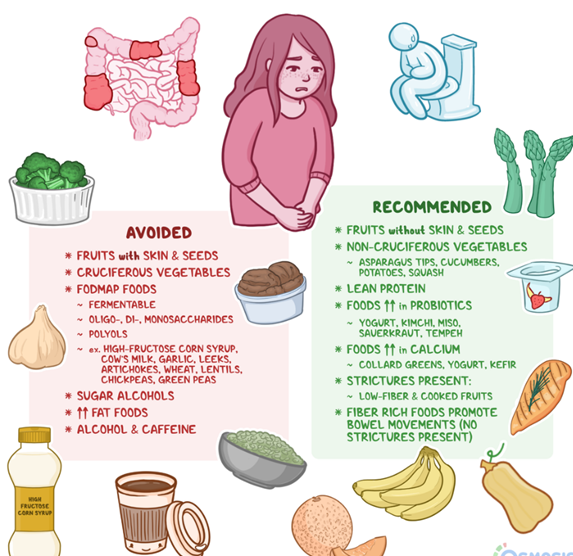
D. Describe the use of an elimination diet to find trigger foods.
This is the most appropriate response. Crohn's disease symptoms can vary among individuals, and identifying trigger foods through an elimination diet can help personalize dietary recommendations. By systematically eliminating and reintroducing foods, individuals can identify which specific foods may exacerbate their symptoms.
Correct Answer is C
Explanation
A. Begin continuous observation for transient episodes of neurologic dysfunction:
While continuous observation is important, the priority is to notify the stroke team for immediate assessment and management.
B. Place an indwelling urinary catheter and measure strict intake and output:
Monitoring intake and output is an important aspect of nursing care, but it is not the immediate priority when the client is presenting with signs and symptoms suggestive of a stroke.
C. Notify the stroke team to assist with acute assessment and management.
The client's symptoms, including an uneven smile with facial droop to the right side, weaker hand grasp strength on the right, and sudden, severe headache, are indicative of potential stroke symptoms. Quick notification of the stroke team is crucial to facilitate a rapid and comprehensive assessment. Time is a critical factor in the management of stroke, and prompt intervention can improve outcomes.
D. Raise the head of the bed to 30 degrees keeping head and neck in neutral alignment:
While positioning is important for maintaining physiological stability, it is not the immediate priority in the context of a potential stroke. Notifying the stroke team for rapid assessment and intervention takes precedence.
Whether you are a student looking to ace your exams or a practicing nurse seeking to enhance your expertise , our nursing education contents will empower you with the confidence and competence to make a difference in the lives of patients and become a respected leader in the healthcare field.
Visit Naxlex, invest in your future and unlock endless possibilities with our unparalleled nursing education contents today