
An elderly client with severe blood loss requires rapid transfusion of several units of blood. The client is most at risk for which of the following types of transfusion reactions?
Acute hemolytic reaction
Septic reaction
Allergic reaction
Circulatory overload reaction
The Correct Answer is D
Choice A reason: Acute hemolytic transfusion reactions occur due to ABO incompatibility and are not specifically linked to the volume or speed of the transfusion in the elderly, although they are serious. While possible, this is a distinct immunological event rather than one strictly dictated by the patient's age and infusion rate.
Choice B reason: Septic reactions are caused by the contamination of the blood product with bacteria during collection or storage. While any patient can develop a septic reaction if the blood unit is compromised, this is not the most common physiological complication associated specifically with the rapid administration of multiple units in an elderly patient.
Choice C reason: Allergic reactions, such as urticaria or anaphylaxis, occur due to sensitivity to proteins within the donor blood. While the elderly can certainly experience allergic reactions, their specific physiologic vulnerability to volume expansion makes another type of reaction significantly more likely than an immune-mediated hypersensitivity reaction during rapid, high-volume transfusions.
Choice D reason: Elderly patients often have reduced cardiac and renal reserve. When multiple units of blood are transfused rapidly, the sudden increase in intravascular volume can overwhelm the heart's ability to pump effectively, leading to pulmonary edema and heart failure, a condition known as transfusion-associated circulatory overload (TACO).
Nursing Test Bank
Naxlex Comprehensive Predictor Exams
Related Questions
Correct Answer is C
Explanation
Choice A reason: Tachycardia is not a component of Cushing's Triad; in fact, the opposite is expected. As intracranial pressure increases, the baroreceptor reflex is triggered, which typically leads to bradycardia. The presence of tachycardia would suggest a different physiological state, such as hypovolemia or systemic distress, rather than intracranial hypertension.
Choice B reason: Chest pain is not part of the clinical manifestation of Cushing's Triad. This syndrome is specifically related to brainstem compression due to increased intracranial pressure. Chest pain is a cardiac-specific symptom and is not associated with the classic triad of symptoms indicating imminent brain herniation.
Choice C reason: Irregular respirations are a hallmark sign of Cushing's Triad. As intracranial pressure rises, it exerts significant pressure on the brainstem, particularly the medulla oblongata, which controls breathing. This results in abnormal breathing patterns, such as Cheyne-Stokes respirations or gasping, reflecting the failure of the respiratory control centers.
Choice D reason: Hypotension is not a component of Cushing's Triad. The triad specifically includes hypertension, which is a compensatory response to maintain cerebral perfusion pressure in the face of rising intracranial pressure. Hypotension would be dangerous in this setting as it would further compromise oxygen delivery to the already injured brain.
Correct Answer is B
Explanation
Choice A reason: Lactate dehydrogenase (LDH) is a non-specific enzyme that was historically used as a marker for myocardial infarction. However, it lacks specificity for cardiac tissue and is not used in modern clinical practice for assessing the risk of developing coronary artery disease.
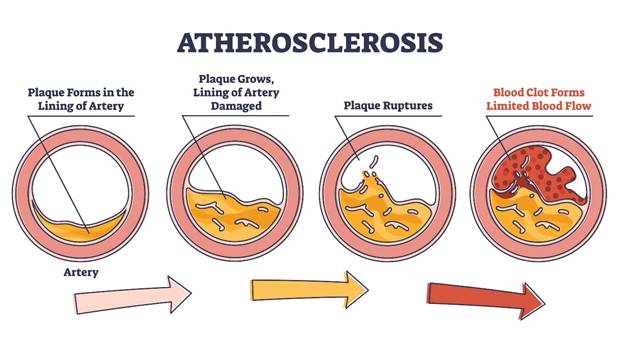
Choice B reason: Low-density lipoprotein (LDL) cholesterol is a primary, modifiable risk factor for the development of atherosclerosis. Elevated levels of LDL lead to the deposition of cholesterol in the arterial walls, forming plaques that narrow the coronary arteries. Monitoring and managing LDL is fundamental to preventing the progression of coronary artery disease.
Choice C reason: Creatinine kinase-MB (CK-MB) is a cardiac-specific isoenzyme that elevates during an active myocardial infarction. It is a diagnostic marker for acute tissue damage, not a predictive screening tool for assessing the future risk of developing coronary artery disease in an asymptomatic client.
Choice D reason: Cardiac troponin levels are highly specific diagnostic markers for acute myocardial injury. Like CK-MB, they are used to detect current or recent heart damage. They have no clinical utility in assessing a client's baseline risk or propensity for developing coronary artery disease in the future.
Whether you are a student looking to ace your exams or a practicing nurse seeking to enhance your expertise , our nursing education contents will empower you with the confidence and competence to make a difference in the lives of patients and become a respected leader in the healthcare field.
Visit Naxlex, invest in your future and unlock endless possibilities with our unparalleled nursing education contents today