
B cells divide and differentiate into:
Megakaryocytes.
Plasma cells.
Antibodies.
T cells produce and secrete antibodies.
The Correct Answer is B
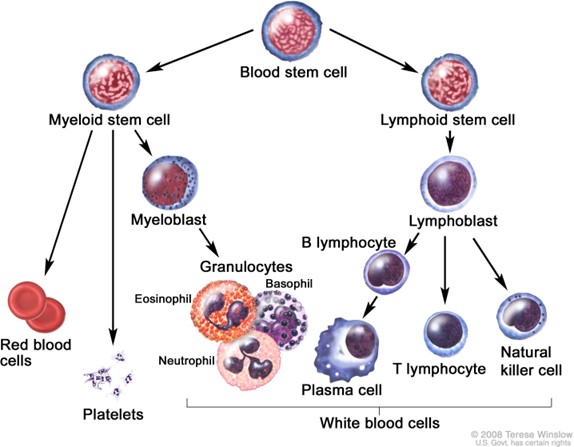
B cells are a type of lymphocyte that originate from the bone marrow and are involved in humoral immunity.
When they encounter a foreign substance (antigen), they differentiate into plasma cells, which secrete antibodies.
Antibodies are proteins that bind to the antigen and neutralize it.
Choice A is wrong because megakaryocytes are large cells that produce platelets, not antibodies.
Choice C is wrong because antibodies are not cells, but products of plasma cells.
Choice D is wrong because T cells are another type of lymphocyte that originate from the thymus and are involved in cell-mediated immunity, not antibody production.
Nursing Test Bank
Naxlex Comprehensive Predictor Exams
Related Questions
Correct Answer is D
Explanation
This is because blood type AB has both A and B antigens on the surface of red blood cells.
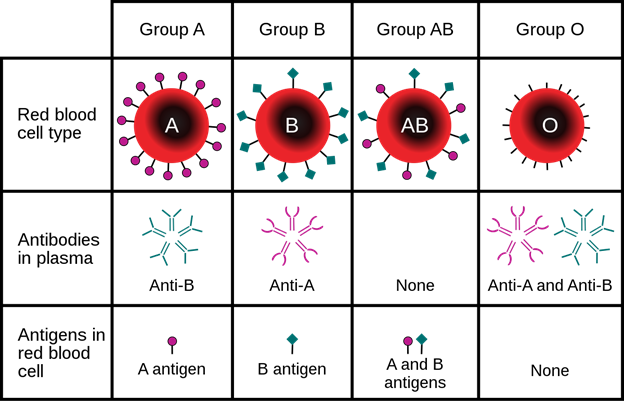
Antigens are protein molecules that can trigger an immune response if they are foreign to the body.
Choice A is wrong because antigen B only is present in blood type B.
Choice B is wrong because neither antigens A nor B are present in blood type O.
Choice C is wrong because antigen A only is present in blood type A.
Normal ranges for blood types vary by population, but according to the NHS, about 3% of people in the UK have blood type AB.
Correct Answer is D
Explanation
Atrial natriuretic peptide (ANP) is a hormone secreted by the heart when the atria are stretched by high blood pressure or volume.
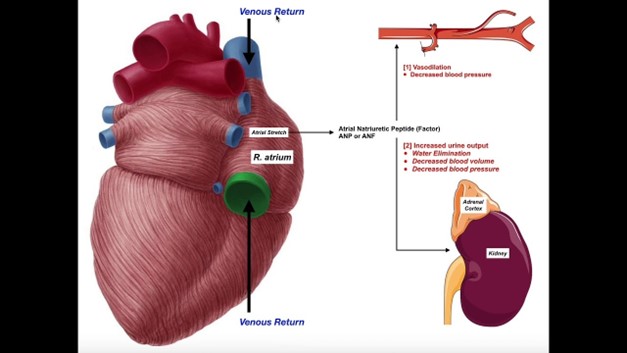
ANP has multiple effects, such as increasing urine and salt excretion, lowering blood pressure, and opposing the renin-angiotensin-aldosterone system.
Therefore, ANP inhibits the release of renin and aldosterone, which are hormones that increase blood pressure and sodium retention.
Choice A is wrong because ANP is not released from the adrenal cortex but from the cardiac atria.
ANP does not stimulate atrial hormones but rather inhibits them.
Choice B is wrong because ANP is not stimulated to release when blood volume decreases, but when it increases.
ANP acts to reduce blood volume by promoting diuresis and natriuresis.
Choice C is wrong because ANP does not raise blood pressure, but lowers it. ANP acts as a vasodilator and reduces peripheral resistance.
Whether you are a student looking to ace your exams or a practicing nurse seeking to enhance your expertise , our nursing education contents will empower you with the confidence and competence to make a difference in the lives of patients and become a respected leader in the healthcare field.
Visit Naxlex, invest in your future and unlock endless possibilities with our unparalleled nursing education contents today