
Bisacodyl (Dulcolax) has been ordered for a patient who is constipated. The nurse realizes the drug:
increases peristalsis to produce a bowel movement.
is incompatible with alcohol consumption.
should be avoided during pregnancy as it is teratogenic.
may lead to paralytic ileus.
The Correct Answer is A
A. "Bisacodyl (Dulcolax) increases peristalsis to produce a bowel movement." - This is correct. Bisacodyl is a stimulant laxative that works by irritating the intestines, leading to increased peristalsis and bowel movements.
B. "Bisacodyl (Dulcolax) is incompatible with alcohol consumption." - There is no specific information suggesting incompatibility with alcohol. However, excessive alcohol consumption can contribute to constipation, and it's generally advisable to stay hydrated, which can be affected by alcohol intake.
C. "Bisacodyl (Dulcolax) should be avoided during pregnancy as it is teratogenic." - There is no strong evidence to suggest that bisacodyl is teratogenic. However, it is recommended to use laxatives cautiously during pregnancy and under the guidance of a healthcare provider.
D. "Bisacodyl (Dulcolax) may lead to paralytic ileus." - Paralytic ileus is not a common side effect of bisacodyl. However, it's important to use laxatives cautiously in individuals with a history of bowel obstruction or other gastrointestinal issues.
Nursing Test Bank
Naxlex Comprehensive Predictor Exams
Related Questions
Correct Answer is A
Explanation
A. Misoprostol (Cytotec)
The patient complaining of gastric distress from NSAIDs (Nonsteroidal Anti-Inflammatory Drugs) like aspirin or indomethacin may benefit from the administration of misoprostol (Cytotec). Misoprostol is a prostaglandin analog that helps protect the stomach lining and reduce the risk of NSAID-induced gastric ulcers.
B. Lansoprazole (Prevacid)
Lansoprazole is a proton pump inhibitor (PPI) that reduces stomach acid production. While PPIs can be used for certain acid-related conditions, they do not directly protect against NSAID-induced gastric distress.
C. Magaldrate (Riopan)
Magaldrate is an antacid that neutralizes stomach acid. It may provide relief from symptoms of indigestion but does not specifically address the gastric distress caused by NSAIDs.
D. Magnesium trisilicate (Gaviscon)
Magnesium trisilicate is an antacid that helps neutralize stomach acid. Like magaldrate, it may alleviate symptoms of indigestion but does not target the underlying issue of NSAID-induced gastric distress.
Correct Answer is D
Explanation
A. Calm the patient to reduce acid production.
This description is not accurate for sucralfate. Calming the patient to reduce acid production is typically associated with medications like proton pump inhibitors (PPIs) or H2 receptor blockers.
B. Block the H2 receptors.
Blocking H2 receptors is the mechanism of action for H2 receptor blockers, such as ranitidine. It is not the mechanism of action for sucralfate.
C. Neutralize the gastric acids.
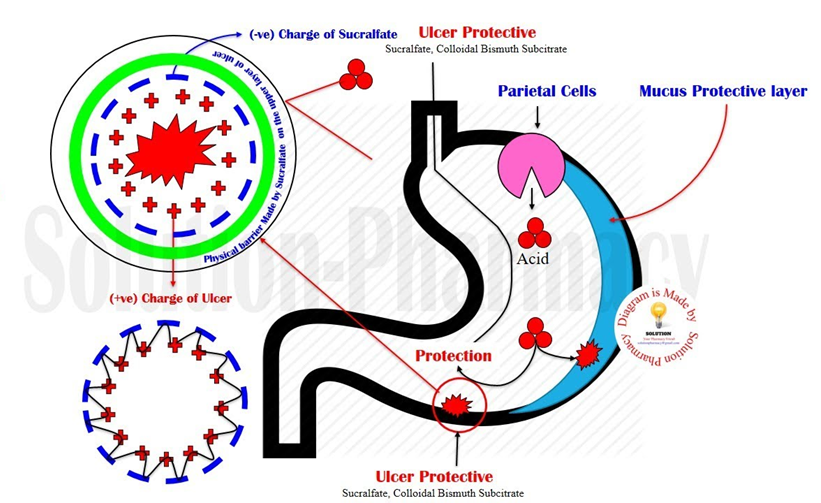
Neutralizing gastric acids is the mechanism of action for antacids, such as aluminum hydroxide or calcium carbonate. Sucralfate works differently; it forms a protective coating on the gastric lining rather than directly neutralizing acids.
D. Coat the gastric lining.
This is the correct mechanism of action for sucralfate. It forms a protective coating on the gastric lining, adhering to the ulcer site and providing a barrier against gastric acid.
Whether you are a student looking to ace your exams or a practicing nurse seeking to enhance your expertise , our nursing education contents will empower you with the confidence and competence to make a difference in the lives of patients and become a respected leader in the healthcare field.
Visit Naxlex, invest in your future and unlock endless possibilities with our unparalleled nursing education contents today