
David, a 38-year-old man, underwent a craniotomy to relieve increased ICP. What would be the most appropriate nursing intervention postoperatively?
Frequently changing the patient's position for comfort.
Stimulating the patient every hour to assess LOC.
Keeping the patient in a supine position.
Elevating the head of the bed 20 to 30 degrees.
The Correct Answer is D
A. While position changes are important, maintaining proper head positioning is crucial for managing increased intracranial pressure (ICP).
B. While assessing the patient's level of consciousness is important, excessive stimulation can increase ICP.
C. Keeping the patient flat can exacerbate increased ICP, and elevation of the head is preferred.
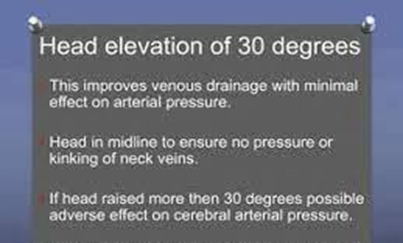
D. Elevating the head of the bed helps promote venous drainage from the brain and can reduce ICP.
Nursing Test Bank
Naxlex Comprehensive Predictor Exams
Related Questions
Correct Answer is D
Explanation
A. While position changes are important, maintaining proper head positioning is crucial for managing increased intracranial pressure (ICP).
B. While assessing the patient's level of consciousness is important, excessive stimulation can increase ICP.
C. Keeping the patient flat can exacerbate increased ICP, and elevation of the head is preferred.
D. Elevating the head of the bed helps promote venous drainage from the brain and can reduce ICP.
Correct Answer is A
Explanation
A. Right intracerebral hemorrhage typically causes symptoms on the opposite side of the body (left-sided hemiparesis) and a dilated ipsilateral (right) pupil due to pressure on the oculomotor nerve.
B. Right intracerebral hemorrhage typically results in left-sided hemiparesis due to damage to the motor pathways on the right side of the brain, along with a dilated right pupil due to compression of the ipsilateral (right) oculomotor nerve.
C. Bilateral handgrip strength being equal suggests no focal motor deficits, which would be unusual in the context of an intracerebral hemorrhage. Reactive pupils would not be expected in this scenario.
D. Pinpoint pupils are typically associated with opioid overdose or pontine lesions, not intracerebral hemorrhage.
Whether you are a student looking to ace your exams or a practicing nurse seeking to enhance your expertise , our nursing education contents will empower you with the confidence and competence to make a difference in the lives of patients and become a respected leader in the healthcare field.
Visit Naxlex, invest in your future and unlock endless possibilities with our unparalleled nursing education contents today