
During an observational experience in labor and delivery, the student nurse recognizes that thick meconium is present in the amniotic fluid. Upon delivery of the newborn, the student nurse understands that there are signs that indicate that the newborn will need resuscitation. These signs are:
Select one:
Central cyanosis and poor tone.
Heart rate of 160 beats per minute and spitting up mucus.
Crying with respirations of greater than 60 breaths per minute.
Blue hands and feet but lips that are slowly pinking up.
The Correct Answer is A
Choice A Reason: Central cyanosis and poor tone. These are signs of hypoxia and asphyxia in newborns, which indicate a need for resuscitation. Central cyanosis means bluish discoloration of the skin or mucous membranes around the mouth, nose, or eyes. Poor tone means limpness or lack of muscle activity.
Choice B Reason: Heart rate of 160 beats per minute and spitting up mucus. These are not signs of hypoxia or asphyxia in newborns, but rather normal findings or minor issues. A normal heart rate for a newborn ranges from 120 to 160 beats per minute. Spitting up mucus may be due to excess secretions or swallowing amniotic fluid, which can be cleared by suctioning or burping.
Choice C Reason: Crying with respirations of greater than 60 breaths per minute. These are not signs of hypoxia or asphyxia in newborns, but rather normal or expected findings. Crying indicates that the newborn has a patent airway and adequate lung expansion. Respirations of greater than 60 breaths per minute may be normal for a newborn in transition or due to transient tachypnea, which usually resolves within a few hours.
Choice D Reason: Blue hands and feet but lips that are slowly pinking up. These are not signs of hypoxia or asphyxia in newborns, but rather a common condition called acrocyanosis. Acrocyanosis means bluish discoloration of the hands and feet due to poor peripheral circulation in response to cold exposure or stress. It does not affect oxygenation or ventilation and usually disappears within 24 to 48 hours after birth.
Nursing Test Bank
Naxlex Comprehensive Predictor Exams
Related Questions
Correct Answer is D
Explanation
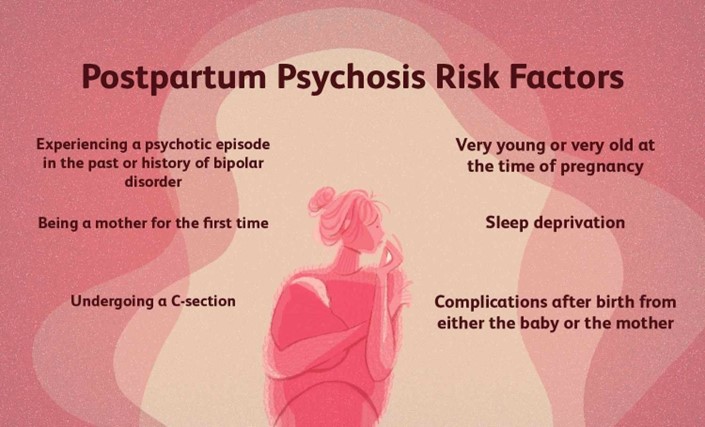
Choice A Reason: Maintain the client on strict bedrest. This is an inappropriate action that may worsen the client's condition and increase her isolation and depression. Postpartum psychosis requires prompt psychiatric treatment with medication and psychotherapy, not bedrest.
Choice B Reason: Carefully monitor intake and output. This is an irrelevant action that has no direct relation to postpartum psychosis or its management. Monitoring intake and output may be indicated for other postpartum complications such as hemorrhage, infection, or preeclampsia.
Choice C Reason: Restrict visitation of the client's partner. This is an unnecessary action that may deprive the client of social support and emotional comfort. The partner may be an important source of help and information for the client and the health care team. The partner should be involved in the client's care and education, unless there are signs of abuse or violence.
Choice D Reason: Closely supervise all infant care and interaction. This is because postpartum psychosis is a severe mental disorder that occurs in some women after childbirth, which can cause delusions, hallucinations, paranoia, mood swings, confusion, and suicidal or homicidal thoughts. Postpartum psychosis can pose a danger to both the mother and the infant, as the mother may harm herself or the infant due to distorted perceptions or impulses. The nurse should closely supervise all infant care and interaction to ensure safety and prevent injury.
Correct Answer is A
Explanation
Choice A Reason: "If I go too long overdue, the amniotic fluid volume can become too low for my baby to be safe." This is a correct answer that indicates that the client understands one of the Reasons for induction of labor at 42 weeks' pregnancy.
Choice B Reason: "My baby took longer to grow, and now she's ready to be born." This is an incorrect answer that shows a misconception about fetal growth and development. Fetal growth does not depend on gestational age alone, but also on genetic, maternal, placental, and environmental factors. A post-term fetus does not necessarily grow faster or larger than a term fetus. In fact, some post-term fetuses may experience intrauterine growth restriction (IUGR), which means slower than expected growth for gestational age.
Choice C Reason: "I don't really need this induction, my baby will come whenever he wants to." This is an incorrect answer that reveals a lack of awareness or acceptance of the need for induction of labor at 42 weeks' pregnancy. Induction of labor is recommended for post-term pregnancies to prevent potential complications such as fetal distress, stillbirth, or maternal hemorrhage.
Choice D Reason: "Since I am so tired of being pregnant, I am being induced." This is an incorrect answer that implies that induction of labor is based on maternal preference or convenience rather than medical indication. Induction of labor should not be done without a valid Reason or informed consent, as it carries some risks such as failed induction, prolonged labor, infection, uterine rupture, or cesarean delivery.
Whether you are a student looking to ace your exams or a practicing nurse seeking to enhance your expertise , our nursing education contents will empower you with the confidence and competence to make a difference in the lives of patients and become a respected leader in the healthcare field.
Visit Naxlex, invest in your future and unlock endless possibilities with our unparalleled nursing education contents today