
Experiments cannot validate hypotheses, only falsify them. The statement above can be restated in which of the following ways?
Until disproved, an explanation for an observation is valid.
Certain concepts cannot be subjected to direct experimentation.
A hypothesis that has not been falsified remains provisional.
Proving a hypothesis exempts it from further testing.
The Correct Answer is C
The statement "Experiments cannot validate hypotheses, only falsify them" can be restated as "A hypothesis that has not been falsified remains provisional." This means that a hypothesis is considered valid until it is disproved by experimental evidence. However, even if a hypothesis has not been falsified, it is still considered provisional and subject to further testing and scrutiny.
A. "Until disproved, an explanation for an observation is valid" is similar to the correct answer but does not capture the provisional nature of a hypothesis.
B. "Certain concepts cannot be subjected to direct experimentation" is not a restatement of the original statement.
D. "Proving a hypothesis exempts it from further testing" is incorrect because no hypothesis can be definitively proven and all hypotheses are subject to further testing and scrutiny.
Nursing Test Bank
Naxlex Comprehensive Predictor Exams
Related Questions
Correct Answer is D
Explanation
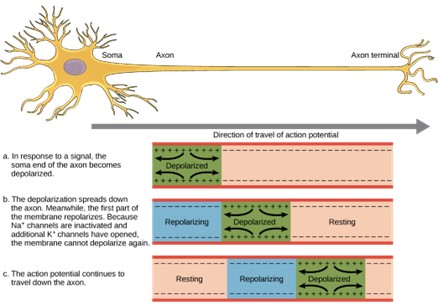
The opening of potassium channels allows potassium to leave the neuron. Repolarization of a neuron occurs after an action potential when the neuron's membrane potential returns to its resting state. This is achieved by the opening of potassium channels, which allows potassium ions to flow out of the neuron. This movement of positively charged ions out of the neuron helps to restore the negative membrane potential.
A. The inhibition of sodium and potassium pumps would not allow for repolarization because these pumps are necessary for maintaining the resting membrane potential.
B. The opening of sodium channels would cause depolarization, not repolarization.
C. The closing of both sodium and potassium channels would restrict ion movement, but it would not allow for repolarization.
Correct Answer is B
Explanation
The unknown genotype is Aa. This can be inferred from the Punnet square, which shows that half of the offspring are Aa and half are aa. This indicates that the unknown parent must have one dominant allele (A) and one recessive allele (a), making its genotype Aa.
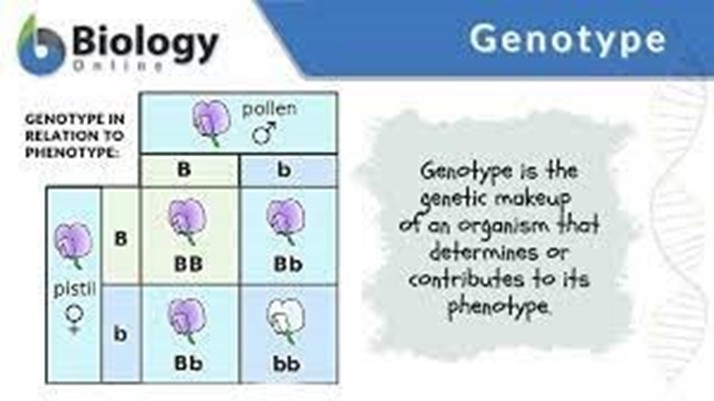
The other options are not correct because they do not match the results shown in the Punnet square. If the unknown genotype was aa or AA, all of the offspring would have the same genotype as their parent. If the unknown genotype was a, it would not be a valid genotype as it only has one allele.
Whether you are a student looking to ace your exams or a practicing nurse seeking to enhance your expertise , our nursing education contents will empower you with the confidence and competence to make a difference in the lives of patients and become a respected leader in the healthcare field.
Visit Naxlex, invest in your future and unlock endless possibilities with our unparalleled nursing education contents today