
Mr. Jones is a 35-year-old male with severe depression and has had failed treatment with SSRIs such as Citalopram (Celexa) and Fluoxetine (Prozac). He has a passive concentration and anhedonia. He has also lost 20 lbs in the last 3 months and has a poor appetite. He is scheduled for ECT tomorrow, and you are his nurse.
Some important considerations prior to ECT may be on a Pre-Op checklist that the nurse completes and some interventions include (select all that apply):
Advising the patient he will have permanent memory loss.
Authorizing MD signs off medical clearance that may require pre-op checklist to include EKG or lab work.
Signed informed consent by MD and patient and nurse follows up using “Teach Back Method” answering any further post-op or pre-op questions.
NPO after midnight and hold all meds unless specified such as a sip of water and blood pressure pill ordered by MD.
Correct Answer : B,C,D
Choice A reason:
Advising the patient he will have permanent memory loss is incorrect. While temporary memory loss can occur with ECT, it is not typically permanent. It is important to provide accurate information about potential side effects without causing unnecessary fear.
Choice B reason:
Authorizing MD signs off medical clearance that may require pre-op checklist to include EKG or lab work is an important consideration. Medical clearance ensures that the patient is physically fit for the procedure and helps identify any potential risks.
Choice C reason:
Signed informed consent by MD and patient and nurse follows up using “Teach Back Method” answering any further post-op or pre-op questions is essential. Informed consent ensures that the patient understands the procedure, risks, and benefits. The “Teach Back Method” confirms that the patient comprehends the information provided.
Choice D reason:
NPO after midnight and hold all meds unless specified such as a sip of water and blood pressure pill ordered by MD is a standard pre-op instruction. Fasting reduces the risk of aspiration during anesthesia, and holding medications ensures that the patient does not take anything that could interfere with the procedure.
Nursing Test Bank
Naxlex Comprehensive Predictor Exams
Related Questions
Correct Answer is B
Explanation
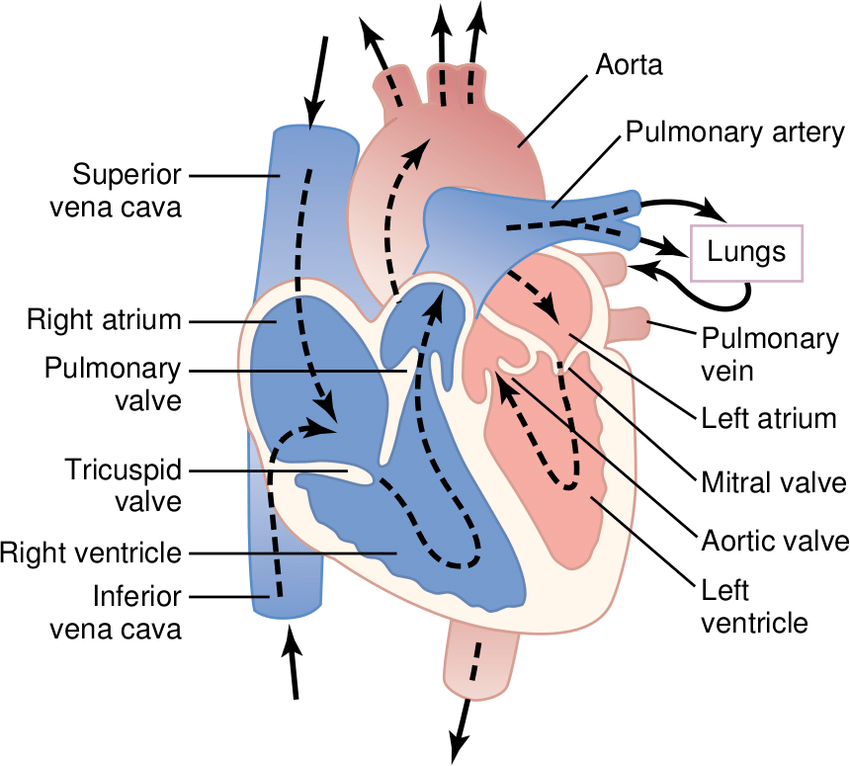
Option 2 accurately reflects the pathway of blood through the heart and the circulatory system:Top of FormBottom of Form
- Blood flows from the body into the right atrium: Deoxygenated blood from the body enters the right atrium via the superior and inferior vena cava.
- To the right ventricle: Blood flows from the right atrium into the right ventricle through the tricuspid valve.
- To the lungs: The right ventricle pumps the deoxygenated blood to the lungs via the pulmonary arteries.
- Back to the left atrium: Oxygenated blood returns from the lungs to the left atrium through the pulmonary veins.
- To the left ventricle: Blood flows from the left atrium into the left ventricle through the mitral valve.
- To all parts of the body: The left ventricle pumps oxygenated blood to the entire body through the aorta.
This sequence correctly follows the structure and function of the heart's chambers and valves, as well as the flow through the pulmonary and systemic circuits.
Correct Answer is A
Explanation
The frontal lobe of the brain is responsible for controlling thoughts, plans, and behavior. It is involved in executive functions such as decision-making, problem-solving, planning, and controlling voluntary movements.
Whether you are a student looking to ace your exams or a practicing nurse seeking to enhance your expertise , our nursing education contents will empower you with the confidence and competence to make a difference in the lives of patients and become a respected leader in the healthcare field.
Visit Naxlex, invest in your future and unlock endless possibilities with our unparalleled nursing education contents today