
Which of the following is the process of meiosis for egg cell formation?
Ovaries
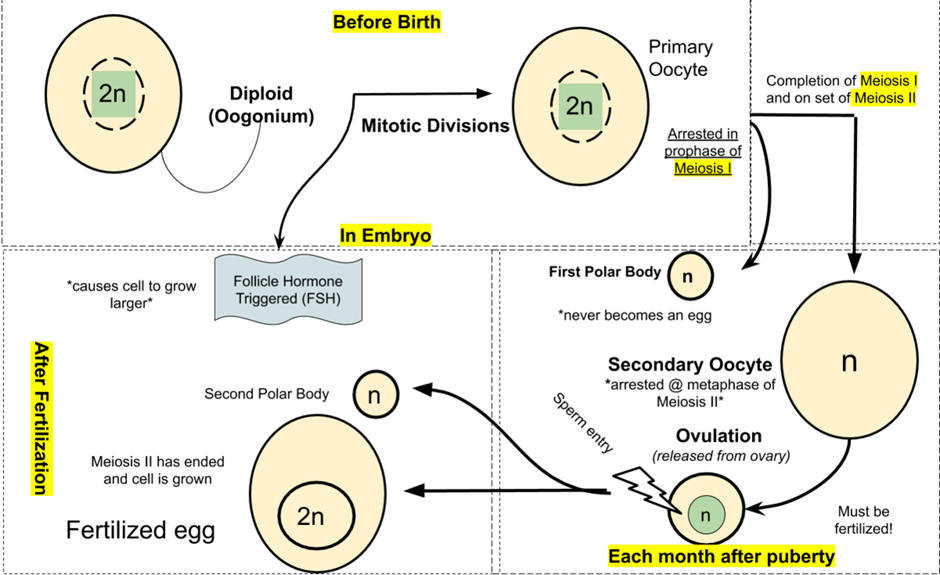
Oogenesis
Ovulation
Oocytes
The Correct Answer is B
a: Ovaries - The ovaries are the female reproductive organs where oogenesis occurs, but they are not the process itself.
b. Oogenesis: Oogenesis is the process by which female gametes (egg cells) are produced through meiosis in the ovaries.
c: Ovulation - Ovulation is the release of a mature egg from the ovary, not the process of egg cell formation.
d: Oocytes - Oocytes are immature egg cells found within the ovaries; they undergo oogenesis to mature into eggs.
Nursing Test Bank
Naxlex Comprehensive Predictor Exams
Related Questions
Correct Answer is B
Explanation
a. Purkinje fibers: Purkinje fibers are the last structures to receive the signal within the ventricles, causing them to contract.
b. Bundle of His: The correct sequence of the cardiac conduction system is as follows: The electrical impulse originates in the sinoatrial (SA) node, then travels to the atrioventricular (AV) node. From the AV node, the impulse travels to the Bundle of His. After the Bundle of His, the impulse travels through the bundle branches and finally reaches the Purkinje fibers, which facilitate the contraction of the ventricles.
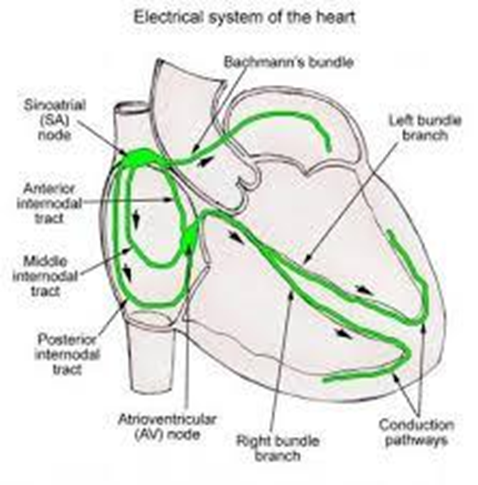
c. Bundle branches: The electrical impulse for heartbeat originates in the SA node (sinoatrial node). It then travels to the AV node (atrioventricular node), which delays the signal before sending it to the Bundle of His. The Bundle of His splits into right and left bundle branches, which distribute the electrical signal to the Purkinje fibers in the ventricles, causing them to contract in a coordinated fashion.
d. SA node: The SA node initiates the electrical impulse, not receive it after the AV node.
Correct Answer is A
Explanation
a. Sodium: Correct. Sodium (Na⁺) is the primary extracellular cation and plays a crucial role in maintaining osmotic pressure and fluid balance in the body.
b. Magnesium: Magnesium (Mg²⁺) is important for many cellular functions but is not a major contributor to osmotic pressure compared to sodium.
c. Calcium: Calcium (Ca²⁺) is vital for bone health and cellular processes but does not primarily influence osmotic pressure.
d. Potassium: Potassium (K⁺) is the main intracellular cation and affects cell function, but sodium has a more significant role in osmotic pressure regulation.
Whether you are a student looking to ace your exams or a practicing nurse seeking to enhance your expertise , our nursing education contents will empower you with the confidence and competence to make a difference in the lives of patients and become a respected leader in the healthcare field.
Visit Naxlex, invest in your future and unlock endless possibilities with our unparalleled nursing education contents today