
Patient Data
Review H and P and nurse's notes.
Identify from the choices area to specify which condition the client is most likely experiencing, two actions the nurse should take to address that condition, and two parameters the nurse should monitor to assess the client's progress.
The Correct Answer is []
Potential Conditions
Overflow urinary incontinence
This is the correct choice because overflow urinary incontinence is the involuntary loss of urine due to a distended bladder that cannot empty completely. The client has cerebral palsy, which can affect the bladder muscles and nerves, causing them to lose coordination and contractility. The client is also non-verbal and has severe intellectual disability, which can impair his ability to sense or communicate the need to void. The client's clothes and sheets are wet, indicating that he has leaked urine. The client voided approximately 75 mL of urine, which is a small amount for an adult male. These signs suggest that the client has overflow urinary incontinence.
Actions to Take
Provide skin care
This is a correct choice because the nurse should provide skin care to the client who has overflow urinary incontinence. The nurse should cleanse the perineal area with mild soap and water, pat dry, and apply a barrier cream or ointment to protect the skin from moisture and irritation. The nurse should also change the client's clothes and sheets as needed to keep him dry and comfortable.
Place an incontinence containment product under the client
This is a correct choice because the nurse should place an incontinence containment product under the client who has overflow urinary incontinence. An incontinence containment product is a device or material that absorbs or collects urine, such as a diaper, pad, or catheter. The nurse should choose an appropriate product based on the client's preferences, needs, and abilities. The nurse should also monitor the product for leakage, odor, or infection, and change it regularly.
Parameters to Monitor
Intake and output
This is a correct choice because the nurse should monitor the intake and output of the client who has overflow urinary incontinence. The nurse should measure and record the amount and type of fluids that the client consumes and excretes. The nurse should also note the color, clarity, odor, and specific gravity of the urine. The nurse should compare the intake and output with the normal ranges for the client's age, weight, and condition. The nurse should report any abnormal findings or changes to the health care provider.
Post-void residual
This is a correct choice because the nurse should monitor the post-void residual of the client who has overflow urinary incontinence. Post-void residual is the amount of urine left in the bladder after voiding. The nurse can measure it by using a bladder scanner or inserting a catheter after the client voids. A normal post-void residual is less than 50 mL for an adult male. A high post-void residual indicates that the bladder is not emptying completely, which can lead to overflow urinary incontinence. The nurse should report any high post-void residual to the health care provider.
Nursing Test Bank
Naxlex Comprehensive Predictor Exams
Related Questions
Correct Answer is D
Explanation
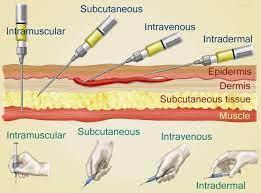
Choice A Reason: Massaging the injection site can cause bruising and bleeding, and is not recommended for subcutaneous heparin injections.
Choice B Reason: Rotating injections between different body sites can increase the risk of hematoma formation and skin irritation, and is not advised for subcutaneous heparin injections.
Choice C Reason: Expelling the air in the prefilled syringe can result in a loss of medication dose, and is not necessary for subcutaneous heparin injections.
Choice D Reason: Injecting in the abdominal area at least 2 inches from the umbilicus is the correct technique for subcutaneous heparin injections, as it reduces the risk of injury to blood vessels and nerves, and ensures consistent absorption of the medication.
Correct Answer is A
Explanation
Choice A: Reassess the client and the level of pain is the correct intervention because it helps the nurse evaluate the effectiveness of the medication and plan further actions. The nurse should use a valid and reliable pain scale and check for any signs of adverse effects or complications.
Choice B: Tell the client the medication needs more time to work is not a correct intervention because it may dismiss the client’s pain and delay appropriate treatment. The nurse should acknowledge the client’s pain and explain the expected onset and duration of the medication.
Choice C: Ask the UAP to offer a backrub to the client is not a correct intervention because it may not be sufficient or appropriate for the client’s pain. The nurse should assess the client’s pain before delegating any nonpharmacological interventions to the UAP.
Choice D: Encourage the client to focus on taking deep breaths is not a correct intervention because it may not be effective or feasible for the client’s pain. The nurse should assess the client’s pain and offer other complementary therapies that are suitable and acceptable for the client.
Whether you are a student looking to ace your exams or a practicing nurse seeking to enhance your expertise , our nursing education contents will empower you with the confidence and competence to make a difference in the lives of patients and become a respected leader in the healthcare field.
Visit Naxlex, invest in your future and unlock endless possibilities with our unparalleled nursing education contents today