
Sophia, a 44-year-old woman with COPD, has an arterial blood gas showing a PaO2 of 60 mmHg and a Sa02 of 90%. What monitoring technique can be used to continuously assess her oxygenation status?
Bronchial blood supply evaluation
Oximetry
Mixed venous blood gases
Pulmonary blood supply evaluation
The Correct Answer is B
A. Bronchial blood supply evaluation is not a direct method of monitoring oxygenation status.
B. Oximetry measures oxygen saturation (SaO2) continuously and non-invasively, providing real-time information about oxygen levels in the blood, which is essential for monitoring a patient with COPD.
C. Mixed venous blood gases provide information about oxygen extraction by tissues but are not commonly used for continuous monitoring of oxygenation status.
D. Pulmonary blood supply evaluation may involve various imaging techniques or invasive procedures but is not used for continuous monitoring of oxygenation status.
Nursing Test Bank
Naxlex Comprehensive Predictor Exams
Related Questions
Correct Answer is ["A","C","D","E"]
Explanation
A. Increasing oxygen supply to 4 liters per minute via a nasal cannula is not appropriate, as it can cause carbon dioxide retention and respiratory acidosis in COPD patients.
B. Initiating non-invasive positive pressure ventilation is not appropriate, as it can cause barotrauma and pneumothorax in COPD patients.
C. Teaching diaphragmatic breathing techniques can help Linda improve her ventilation and oxygenation by using the diaphragm more effectively.
D. Bronchodilators can help relieve bronchospasm and improve ventilation in COPD exacerbations.
E. Serial monitoring of arterial blood gases is essential to evaluate the effectiveness of interventions and guide further management.
Correct Answer is D
Explanation
A. While position changes are important, maintaining proper head positioning is crucial for managing increased intracranial pressure (ICP).
B. While assessing the patient's level of consciousness is important, excessive stimulation can increase ICP.
C. Keeping the patient flat can exacerbate increased ICP, and elevation of the head is preferred.
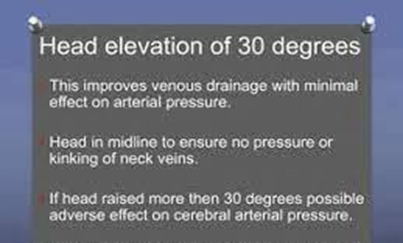
D. Elevating the head of the bed helps promote venous drainage from the brain and can reduce ICP.
Whether you are a student looking to ace your exams or a practicing nurse seeking to enhance your expertise , our nursing education contents will empower you with the confidence and competence to make a difference in the lives of patients and become a respected leader in the healthcare field.
Visit Naxlex, invest in your future and unlock endless possibilities with our unparalleled nursing education contents today