
The clinic nurse reviews the record of an infant and notes that the primary health care provider (PHCP) has documented a diagnosis of suspected Hirschsprung's disease. The nurse reviews the assessment findings documented in the record, knowing that which sign most likely led the parent to seek health care for the infant?
Diarrhea
Regurgitation of feedings
Projectile vomiting
Foul-smelling ribbon-like stools
The Correct Answer is D
A. Diarrhea
Explanation: Diarrhea is not a typical sign of Hirschsprung's disease. Instead, the condition is associated with constipation due to the obstructed passage of stool.
B. Regurgitation of feedings
Explanation: Regurgitation of feedings is not a characteristic sign of Hirschsprung's disease. It may be seen in other gastrointestinal conditions, but not specifically in this disorder.
C. Projectile vomiting
Explanation: Projectile vomiting is not a typical sign of Hirschsprung's disease. It may be associated with conditions such as pyloric stenosis, but it is not a characteristic feature of Hirschsprung's disease.
D. Foul-smelling ribbon-like stools
Explanation:
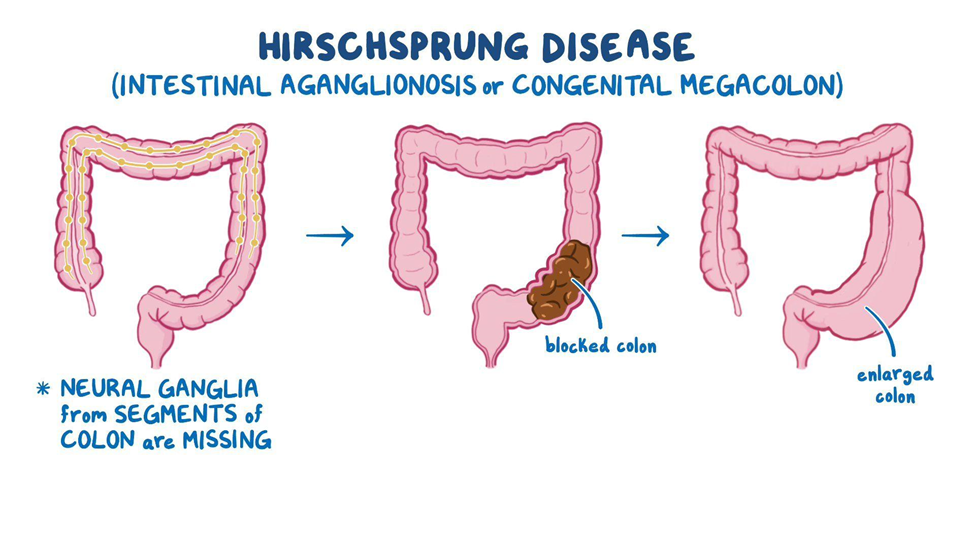
Hirschsprung's disease is a congenital condition characterized by the absence of ganglion cells in the rectum and a portion of the colon. The lack of ganglion cells results in functional obstruction, causing stool to accumulate in the affected area. One of the hallmark signs is the presence of foul-smelling, ribbon-like stools, often described as "fecal pellets" or "pellets" due to the obstructed passage of stool.
Nursing Test Bank
Naxlex Comprehensive Predictor Exams
Related Questions
Correct Answer is ["B","C","E"]
Explanation
A. Symptoms are continuous throughout the day:
Incorrect: Continuous symptoms throughout the day are more indicative of moderate or severe persistent asthma, not mild persistent asthma.
B. Daytime symptoms occur more than twice a week:
Correct Answer: Children with mild persistent asthma may experience symptoms more than twice a week, but less than once a day.
C. Peak expiratory flow (PEF) is greater than or equal to 80% of the predicted value:In mild persistent asthma, pulmonary function tests (e.g., PEF or FEV1) remain normal or close to normal, with values typically ≥80% of the predicted value, reflecting good lung function between episodes.
D. Nighttime symptoms occur approximately twice a month:
Mild persistent asthma often involves nighttime symptoms or awakenings occurring 3–4 times per month. If nighttime symptoms occur more frequently (e.g., once weekly), it suggests moderate persistent asthma.
E. Minor limitations occur with normal activity:Children with mild persistent asthma may experience minor limitations in their normal activities. These limitations are not severe and do not significantly impact daily life.
Correct Answer is ["A","C","D"]
Explanation
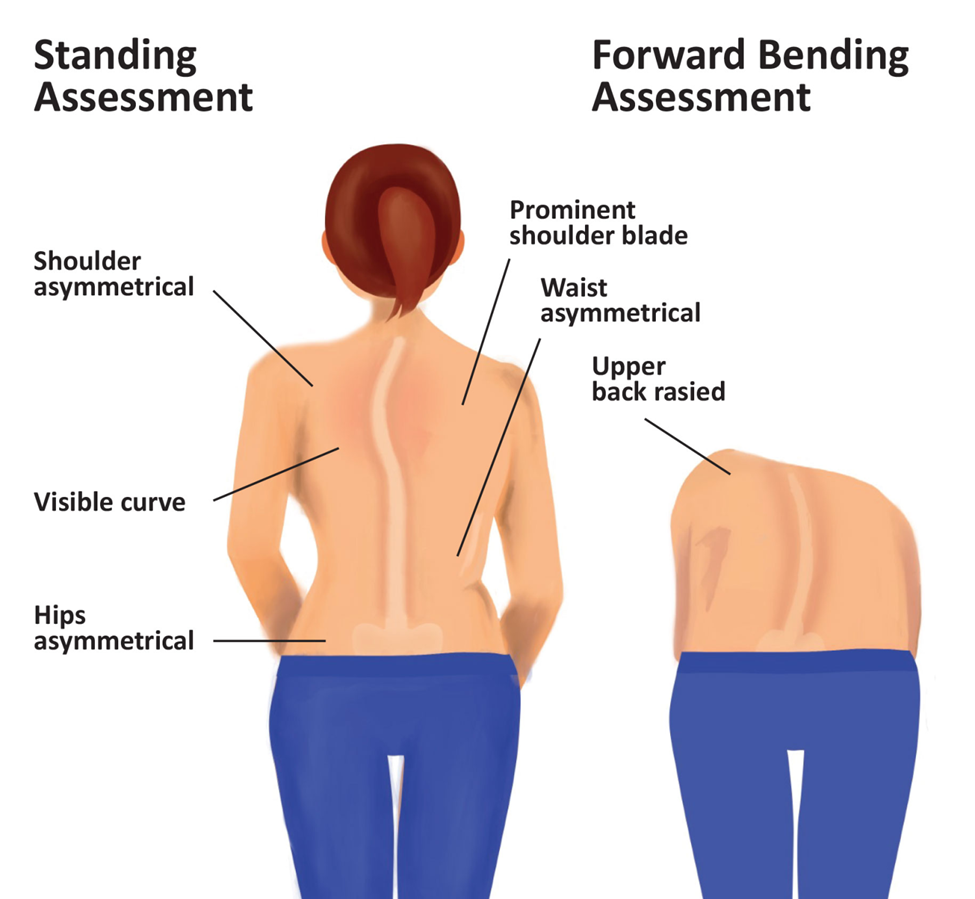
A. Lateral deviation and rotation of each vertebra:
Correct Answer: Correct.
Explanation: Scoliosis involves a lateral (side-to-side) curvature of the spine and often includes some degree of vertebral rotation. Assessing for these deviations is crucial in diagnosing scoliosis.
B. Equal rib prominences:
Correct Answer: Incorrect.
Explanation: In scoliosis, the ribs may appear more prominent on one side due to the lateral curvature of the spine. Therefore, equal rib prominences would not typically be observed in scoliosis.
C. Unequal rib heights:
Correct Answer: Correct.
Explanation: Unequal heights of the ribs are commonly seen in scoliosis due to the asymmetrical nature of the spine's curvature.
D. Chest asymmetry:
Correct Answer: Correct.
Explanation: Asymmetry in the chest area, including differences in the shape or appearance of the chest, can be indicative of scoliosis, especially when associated with the spinal curvature.
E. Equal shoulder heights:
Correct Answer: Incorrect.
Explanation: In scoliosis, one shoulder might appear higher than the other due to the lateral curvature of the spine. Therefore, equal shoulder heights would not typically be observed in scoliosis.
F. Equal waist angles:
Correct Answer: Incorrect.
Explanation: Scoliosis often causes an asymmetrical appearance of the waistline due to the lateral curvature of the spine, resulting in unequal waist angles rather than equal ones.
Whether you are a student looking to ace your exams or a practicing nurse seeking to enhance your expertise , our nursing education contents will empower you with the confidence and competence to make a difference in the lives of patients and become a respected leader in the healthcare field.
Visit Naxlex, invest in your future and unlock endless possibilities with our unparalleled nursing education contents today