
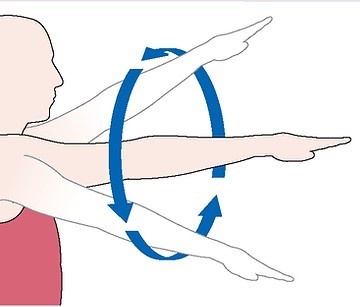
The nurse is assessing the patient's range of motion. The nurse asks the patient to circumduct his arms. When the patient asks what this means, the nurse explains:
This is moving his arms toward the midline of his body.
This is moving his arms in a circular motion.
This is extending his arms behind his back.
This is moving his arms away from his body.
The Correct Answer is B
Circumduction is a movement that involves the circular rotation of a limb, such as an arm or leg, around a fixed point. When assessing the patient's range of motion, the nurse may ask the patient to perform circumduction of their arms to evaluate their ability to move their arms in a circular motion.
Nursing Test Bank
Naxlex Comprehensive Predictor Exams
Related Questions
Correct Answer is ["A","B"]
Explanation
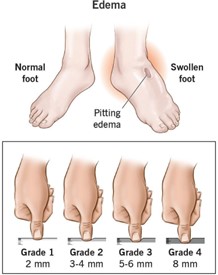
When checking for edema in the lower extremities of a patient with Congestive heart failure, the nurse will grade the edema on a scale of +1 to +4 and press the skin over the tibia. Plantar flexing the feet is not necessary for assessing edema in the lower extremities, and checking only one limb is not sufficient as edema may occur in both legs.
Correct Answer is ["A","B","D"]
Explanation
A. Low economic status: This can limit their access to healthy and nutritious foods.
B. Self-care deficits that may hurt their ability to eat, prepare food, or secure food: This can include physical or cognitive impairments that make it difficult for them to shop, cook or feed themselves.
D. Dental problems: These can affect their ability to chew and digest food properly.
Whether you are a student looking to ace your exams or a practicing nurse seeking to enhance your expertise , our nursing education contents will empower you with the confidence and competence to make a difference in the lives of patients and become a respected leader in the healthcare field.
Visit Naxlex, invest in your future and unlock endless possibilities with our unparalleled nursing education contents today