
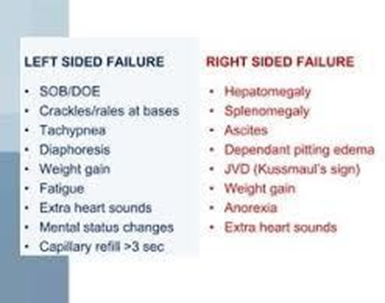
The nurse is caring for a client after a coronary artery bypass graft surgery. The client is exhibiting pitting edema of the lower extremities and jugular venous distention with increased central venous pressure. Which condition should the nurse suspect the client is experiencing based on these findings?
Internal bleeding.
Right-sided heart failure.
Cardiac tamponade.
Left ventricular dysfunction.
The Correct Answer is B
A. Internal bleeding may present with symptoms such as hypotension, tachycardia, and signs of blood loss, but it typically does not cause pitting edema or jugular venous distention.
B. Right-sided heart failure can cause systemic venous congestion, leading to pitting edema of the lower extremities and jugular venous distention due to increased central venous pressure.
C. Cardiac tamponade presents with Beck's triad (hypotension, distended neck veins, muffled heart sounds) and is typically more acute in onset compared to the gradual development of symptoms seen in right-sided heart failure.
D. Left ventricular dysfunction primarily causes symptoms of pulmonary congestion, such as dyspnea, orthopnea, and crackles, rather than pitting edema and jugular venous distention.
Nursing Test Bank
Naxlex Comprehensive Predictor Exams
Related Questions
Correct Answer is ["125"]
Explanation
Correct Answer: 125 mL/hr
Rationale:
To calculate the infusion rate in mL/hr, you can use the formula: (Total Volume in mL) / (Time in hours) = Rate in mL/hr. For 1 liter (which is 1000 mL) of lactated Ringers to be infused over 8 hours, the calculation would be 1000 mL / 8 hr = 125 mL/hr.
Therefore, the nurse should program the infusion pump to deliver 125 mL of fluid per hour.
Correct Answer is A
Explanation
A. Assessing the pin sites for signs of infection is essential in clients with skeletal traction to detect any early signs of infection, such as redness, swelling, warmth, or purulent drainage. Prompt identification and management of pin site infections can prevent complications.
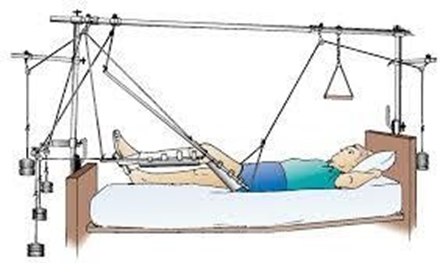
B. Administering pain medication at designated intervals around the clock helps to ensure adequate pain control and comfort for the client. However, this intervention alone does not specifically address the care needs related to skeletal traction.
C. Assessing the pulses proximal to the fracture site is important for monitoring circulation and detecting any signs of impaired perfusion. However, this assessment is not directly related to the care of skeletal traction itself.
D. Removing traction every shift is not indicated unless there is a specific reason to do so as ordered by the healthcare provider. Continuous traction is often necessary for proper alignment and stabilization of the fracture. Additionally, providing skin care is important to prevent skin breakdown around the traction device, but removing traction every shift is not part of routine care.
Whether you are a student looking to ace your exams or a practicing nurse seeking to enhance your expertise , our nursing education contents will empower you with the confidence and competence to make a difference in the lives of patients and become a respected leader in the healthcare field.
Visit Naxlex, invest in your future and unlock endless possibilities with our unparalleled nursing education contents today