
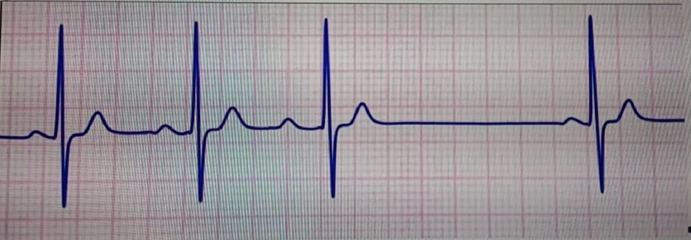
The nurse is caring for a client in the coronary care unit and the monitor depicts the rhythm shown below. What is the nurse’s interpretation of this rhythm?
Second degree AV block- Mobitz II
Sinus bradycardia with first degree AV block
Second degree AV block- Mobitz I
Third degree heart block
The Correct Answer is C
A. Mobitz II is a type of second-degree AV block characterized by constant PR intervals and sudden dropped QRS complexes (i.e., the PR interval does not lengthen progressively). This is a more serious block because the dropped beats are unpredictable and could lead to complete block.
B. Sinus bradycardia is a slower-than-normal heart rate (usually less than 60 beats per minute) that originates from the sinus node. First-degree AV block is characterized by a prolonged PR interval, but unlike second-degree block, there are no dropped QRS complexes.
C. Mobitz I (Wenckebach) is a second-degree AV block where the PR interval gradually lengthens with each successive beat until a QRS complex is dropped. After the dropped beat, the cycle repeats. This is a relatively benign block and often resolves without intervention, though it requires monitoring.
D. Third-degree heart block (also known as complete heart block) occurs when there is no communication between the atria and ventricles. The atria and ventricles beat independently of each other. There are no relationship between the P waves and QRS complexes, and the ventricular rate is typically slower than the atrial rate.
Nursing Test Bank
Naxlex Comprehensive Predictor Exams
Related Questions
Correct Answer is C
Explanation
A. “I probably will not have any transfusion reactions from my own blood.” - Autologous transfusions
generally have a lower risk of transfusion reactions because they involve the client’s own blood.
B. “This is the blood I’ve been giving for the past 6 weeks for myself.” - This is a correct understanding of the process of autologous blood donation, where the client donates blood for their own use.
C. An autologous blood transfusion involves the collection and storage of a patient's own blood for later transfusion. This significantly reduces the risk of bloodborne infections, such as hepatitis, HIV, and other blood-borne diseases, as the blood is coming from the patient themselves.
D. “Since I have O negative blood, it’s a good thing I’m getting my own blood.” - The client may not need additional teaching here because O negative blood is universally compatible, but the reason they are getting their own blood is due to the autologous donation process, not because of blood type.
Correct Answer is A
Explanation
A. Dopamine at low doses primarily increases renal perfusion, which can lead to improved urine output. An increase in urine output is a key indicator that the medication is effectively improving kidney function and blood flow. This is the most direct way to assess its effectiveness.
B. A decrease in blood pressure is not an expected effect of low-dose dopamine, which should actually help improve perfusion and raise blood pressure.
C. An increase in heart rate is more likely with higher doses of dopamine and is not an optimal indicator of the drug's effectiveness for acute heart failure.
D. Client alertness is important but does not directly reflect the primary effects of dopamine on renal perfusion and cardiac output in acute heart failure.
Whether you are a student looking to ace your exams or a practicing nurse seeking to enhance your expertise , our nursing education contents will empower you with the confidence and competence to make a difference in the lives of patients and become a respected leader in the healthcare field.
Visit Naxlex, invest in your future and unlock endless possibilities with our unparalleled nursing education contents today