
The nurse is preparing a presentation for a group of adults at a local community center about diabetes. Which of the following would the nurse include as associated with type 2 diabetes?
Little relation to prediabetes
Insufficient insulin production
Less common than type 1 diabetes
Onset most common during adolescence
The Correct Answer is B
Type 2 diabetes mellitus is a metabolic disorder defined by insulin resistance and progressive beta-cell exhaustion. It results in chronic hyperglycemia due to the body's inability to utilize glucose effectively. Prolonged elevated blood sugar leads to microvascular complications such as retinopathy, nephropathy, and peripheral neuropathy.
A. Little relation to prediabetes: Prediabetes represents a critical physiological state where blood glucose levels are elevated but do not yet meet diagnostic thresholds. Most individuals progressing to type 2 diabetes move through this transitional phase of impaired glucose tolerance. Early lifestyle modifications during this stage can successfully delay or prevent the onset of clinical diabetes.
B. Insufficient insulin production: This condition involves a dual defect of peripheral tissue resistance and a subsequent failure of the pancreas to secrete adequate levels of hormone. Over time, the pancreatic islets cannot compensate for the high demand, leading to a functional deficit. This distinguishing feature necessitates pharmacological intervention to manage glycemic loads and prevent ketoacidosis.
C. Less common than type 1 diabetes: Epidemiological data confirms that type 2 diabetes accounts for approximately 90% to 95% of all diagnosed cases globally. In contrast, the autoimmune-mediated variety is significantly rarer, typically manifesting in younger populations. The rising prevalence of sedentary lifestyles and caloric surplus has exponentially increased the incidence of type 2 cases.
D. Onset most common during adolescence: While pediatric cases are rising due to childhood obesity, this metabolic syndrome historically and predominantly affects adults. The risk increases significantly with advancing age, typically peaking in individuals over 45 years. Conversely, type 1 diabetes is the variant most frequently diagnosed during childhood or the adolescent years.
Nursing Test Bank
Naxlex Comprehensive Predictor Exams
Related Questions
Correct Answer is D
Explanation
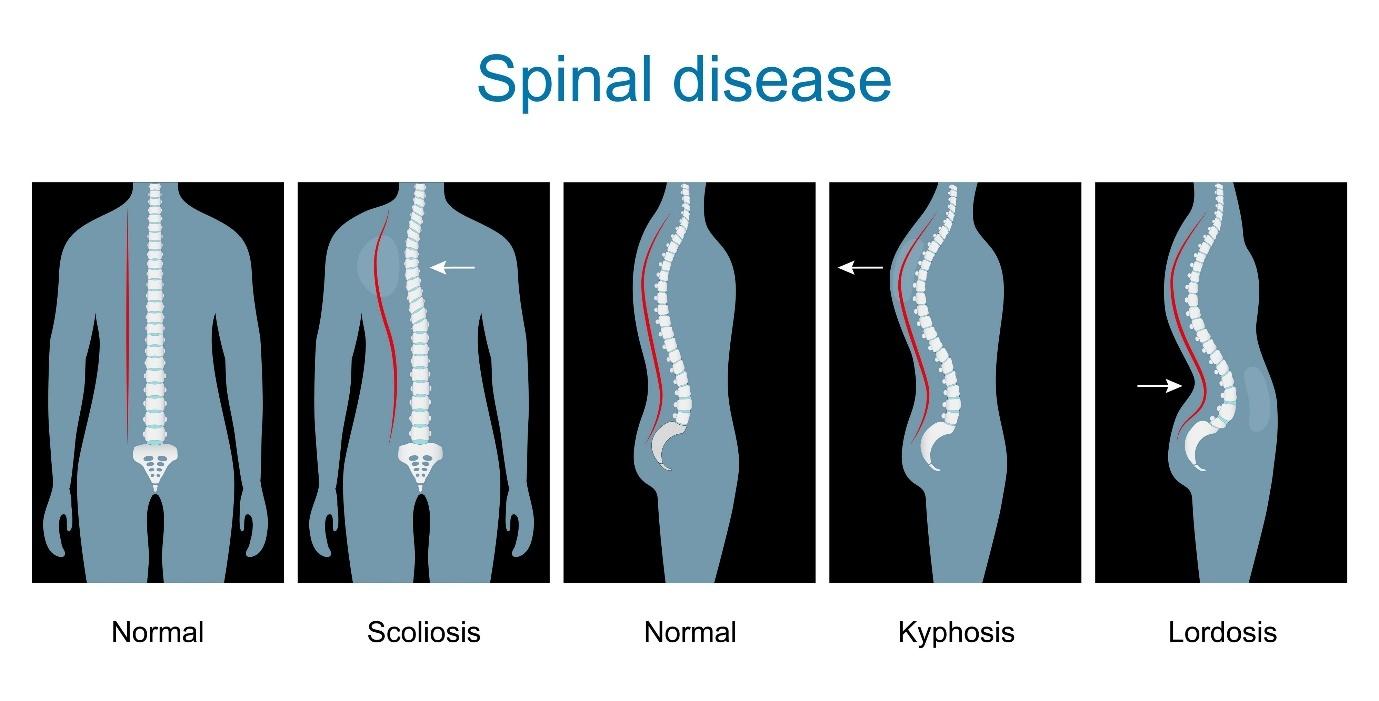
Kyphosis is a spinal deformity characterized by an abnormal posterior convexity of the thoracic vertebrae, often resulting from vertebral compression fractures or degenerative disc disease. This sagittal plane misalignment can lead to pulmonary restriction and chronic back pain as the center of gravity shifts anteriorly. In geriatric populations, it is commonly associated with bone demineralization and is colloquially known as a dowager's hump.
A. Diaphysis: This term refers to the elongated shaft of a long bone, such as the femur or humerus, rather than a spinal curvature. It consists primarily of compact bone surrounding a central marrow cavity. Diaphysis is an anatomical structure involved in skeletal support and hematopoiesis, not a pathological condition of the vertebral column.
B. Scoliosis: Scoliosis is a lateral or sideways deviation of the spine that typically occurs during the growth spurt just before puberty. It involves a rotational component of the vertebrae, often resulting in uneven shoulders or hips. While it is a spinal curvature, it occurs in the coronal plane, whereas the question describes a convex curvature in the thoracic region.
C. Lordosis: Lordosis, or "swayback," is an exaggerated anterior concavity of the lumbar or cervical spine. It is frequently seen in pregnant women or individuals with significant abdominal obesity as the body compensates for an altered center of mass. This condition affects the lower back, in contrast to the thoracic convexity described in the question.
D. kyphosis: This is the correct clinical term for the "hunchback" appearance caused by the angulation of the thoracic spine. It may be postural or structural, with structural cases requiring bracing or surgical correction to prevent progressive spinal cord compression. Identification is crucial for managing underlying osteoporosis and preventing further vertebral collapse.
Correct Answer is A
Explanation
Glipizide belongs to the sulfonylurea class of medications, which function as insulin secretagogues by binding to specific receptors on pancreatic beta cells. This binding closes ATP-sensitive potassium channels, leading to cell depolarization and the subsequent influx of calcium. This process triggers the exocytosis of preformed insulin granules into the bloodstream, directly lowering plasma glucose concentrations.
A. Glipizide stimulates the pancreas to release adequate insulin: Sulfonylureas directly enhance the endogenous secretion of insulin from functioning beta cells. Because they act independently of current blood glucose levels, they carry a high risk of inducing prolonged hypoglycemia. This medication requires the client to have some degree of residual pancreatic function to be effective.
B. Glipizide slows gastric emptying and decreases appetite: This mechanism is characteristic of GLP-1 receptor agonists and amylin analogs, not sulfonylureas. By delaying the transit of food from the stomach to the duodenum, these drugs reduce the postprandial glucose spike. Glipizide focuses on hormone production rather than the mechanical rate of digestion or satiety centers in the brain.
C. Glipizide promotes the breakdown of glycogen to glucose: Promoting the breakdown of glycogen, or glycogenolysis, would cause an increase in blood sugar, which is the opposite of the therapeutic goal. This process is naturally stimulated by glucagon during fasting states or hypoglycemia. Antidiabetic agents like glipizide aim to inhibit glucose release and increase its peripheral utilization.
D. Glipizide blocks glucose production in the liver: The inhibition of hepatic gluconeogenesis is the primary mechanism of action for biguanides, such as metformin. Metformin improves insulin sensitivity and reduces the liver's output of glucose. While glipizide and metformin are often used together, they operate through distinct pathways within the body's metabolic system.
Whether you are a student looking to ace your exams or a practicing nurse seeking to enhance your expertise , our nursing education contents will empower you with the confidence and competence to make a difference in the lives of patients and become a respected leader in the healthcare field.
Visit Naxlex, invest in your future and unlock endless possibilities with our unparalleled nursing education contents today