
The nurse is transcribing a medication order and schedules dosing for 10:00 AM, 2:00 PM and 6:00 PM. Which medication order is consistent with this schedule?
Propranolol 10 mg PO twice a day
Diazepam 5 mg PO three times a day
Cephalexin 500 mg PO q4 hours
Morphine Sulfate 10 mg IM q 4 hours pr pain
The Correct Answer is B
Choice A rationale: Propranolol 10 mg PO twice a day would typically be given with a more extended interval between doses, not at 10:00 AM, 2:00 PM, and 6:00 PM.
Choice B rationale: Diazepam 5 mg PO three times a day would align with the specified dosing schedule of 10:00 AM, 2:00 PM, and 6:00 PM.
Choice C rationale: Cephalexin 500 mg PO q4 hours would require more frequent dosing than the specified schedule.
Choice D rationale: Morphine Sulfate 10 mg IM q4 hours prn pain is ordered every 4 hours, not at the specified times of 10:00 AM, 2:00 PM, and 6:00 PM.
Nursing Test Bank
Naxlex Comprehensive Predictor Exams
Related Questions
Correct Answer is {"dropdown-group-1":"B"}
Explanation
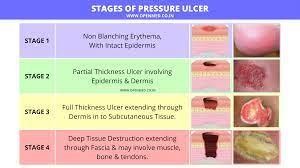
Choice A rationale: Stage I pressure ulcers involve intact skin with non-blanchable redness, and there is no mention of intact skin in the scenario.
Choice B rationale: Stage II pressure ulcers involve partial thickness skin loss, typically presenting as an abrasion, blister, or shallow crater, which aligns with the description provided.
Choice C rationale: Stage III pressure ulcers involve full-thickness skin loss with damage to or necrosis of subcutaneous tissue but do not match the described scenario.
Choice D rationale: Stage IV pressure ulcers involve full-thickness skin loss with extensive destruction, tissue necrosis, or damage to muscle, bone, or supporting structures, which does not align with the description of partial thickness skin loss in the scenario.
 |
Correct Answer is C
Explanation
Choice A rationale: Telling the nurse manager is not the first action; the immediate focus should be on the client's well-being.
Choice B rationale: Notifying the physician is important, but the immediate concern is addressing the client's condition.
Choice C rationale: Checking the client's blood pressure is the first action to assess the client's response to the medication error.
Choice D rationale: Filing an incident report is important for documenting the error but is not the immediate action in this situation.
Whether you are a student looking to ace your exams or a practicing nurse seeking to enhance your expertise , our nursing education contents will empower you with the confidence and competence to make a difference in the lives of patients and become a respected leader in the healthcare field.
Visit Naxlex, invest in your future and unlock endless possibilities with our unparalleled nursing education contents today