
The nursery nurse attends the delivery of a post-term infant. Upon initial assessment, the infant is lethargic, has coarse breath sounds and blood gases indicate acidosis. An X-ray shows a honeycomb appearance. These signs are consistent with which complication of the newborn?
Meconium Aspiration Syndrome
Respiratory Distress Syndrome
Bronchopulmonary Dysplasia
Transient tachypnea of the Newborn
The Correct Answer is A
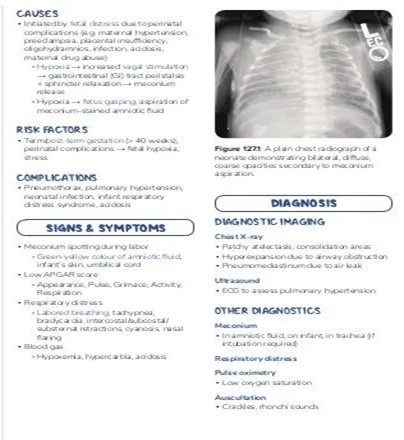
The signs described are consistent with Meconium Aspiration Syndrome (MAS). Meconium aspiration occurs when the fetus has a bowel movement before or during delivery and inhales meconium-stained amniotic fluid into the lungs. This can lead to airway obstruction, chemical pneumonia, and respiratory distress, which may progress to respiratory failure, persistent pulmonary hypertension, and death. The presence of coarse breath sounds, acidosis, and the honeycomb appearance on X-ray are all signs of MAS.
Nursing Test Bank
Naxlex Comprehensive Predictor Exams
Related Questions
Correct Answer is A
Explanation
One of the most important principles of effective health education is to involve the target audience in the planning process. By involving the target audience in the planning process, the nurse can gain a better understanding of their needs, priorities, and concerns related to health and wellness. This, in turn, can help the nurse develop education goals that are relevant, engaging, and effective at improving health outcomes.
Asking the formal leadership of a community what the learning needs are, using the expertise of professional nurses who are skilled at assessing needs, or interviewing physicians to determine the highest need based on diagnoses can all be useful strategies for gathering information about community health needs. However, none of these strategies are as effective at identifying the specific needs and priorities of the target audience as asking the target audience directly.
Correct Answer is B
Explanation
Cervidil (dinoprostone) is a medication used to ripen the cervix in preparation for labor induction in women who are at or near term.
Cervidil contains a synthetic form of prostaglandin E2, which helps to soften and thin the cervix, making it easier to dilate and efface during labor. The medication is usually administered vaginally, in the form of a small, flat, rectangular-shaped insert that is placed near the cervix.
The medication is released slowly over time, helping to ripen the cervix gradually.
Cervidil is not used to stimulate the amniotic membranes to rupture, enhance uteroplacental perfusion in an aging placenta, or increase amniotic fluid volume.
Whether you are a student looking to ace your exams or a practicing nurse seeking to enhance your expertise , our nursing education contents will empower you with the confidence and competence to make a difference in the lives of patients and become a respected leader in the healthcare field.
Visit Naxlex, invest in your future and unlock endless possibilities with our unparalleled nursing education contents today