
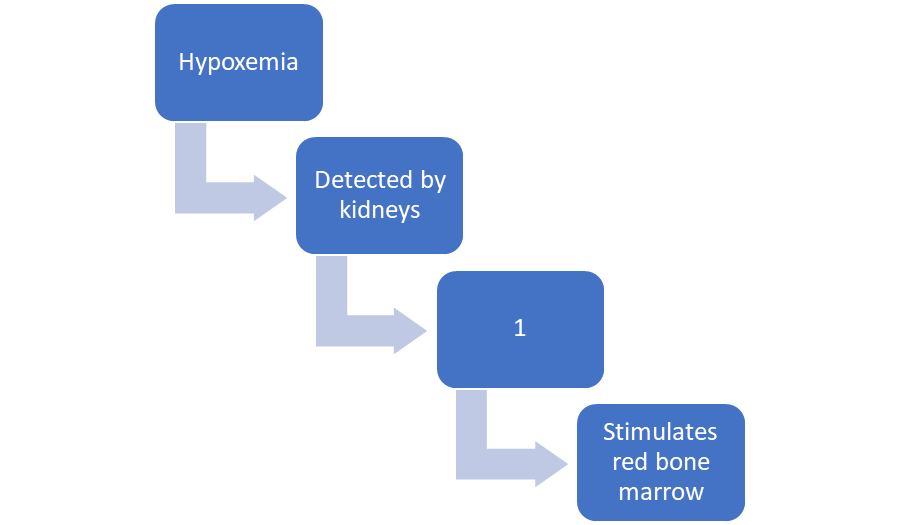
This figure shows the correction of hypoxemia by a negative feedback loop. What should go in the box labeled 1?
Decreased osteoclast activity
Increased osteoblast activity
Secretion of erythropoietin
Secretion of gastroferritin
The Correct Answer is C
Correct answer: C
A. Decreased osteoclast activity: osteoclasts resorb bone and are involved in calcium homeostasis, not the primary sensor/effector for correcting hypoxemia.
B. Increased osteoblast activity: osteoblasts build bone (also related to calcium metabolism), not the mechanism that increases RBC production in response to low O₂.
C. Secretion of erythropoietin: hypoxemia stimulates renal production (secretion) of erythropoietin (EPO), which promotes erythropoiesis in red marrow to raise RBC mass and correct low O₂.
D. Secretion of gastroferritin: gastroferritin (a gastric iron-binding molecule) helps iron handling in the gut but is not the feedback signal used to correct hypoxemia.
Nursing Test Bank
Naxlex Comprehensive Predictor Exams
Related Questions
Correct Answer is C
Explanation
A. Granulocytes: granulocytes (neutrophils, eosinophils, basophils) are white blood cells that are part of the buffy coat.
B. Lymphocytes: lymphocytes (T cells, B cells, NK cells) are white blood cells found in the buffy coat.
C. Erythrocytes: erythrocytes (red blood cells) form the red cell layer below the buffy coat; the buffy coat contains white cells and platelets, not RBCs.
D. Agranulocytes: agranulocytes (lymphocytes and monocytes) are included in the buffy coat.
Correct Answer is C
Explanation
A. Insulin: insulin is a low-concentration peptide hormone (produced by pancreas), not the major plasma protein.
B. Bilirubin: bilirubin is a breakdown product of heme (not a protein) and is present in low concentrations.
C. Albumin: albumin is the most abundant plasma protein (produced by the liver); it maintains oncotic pressure and binds/ transports many substances.
D. Creatinine: creatinine is a small waste molecule (not a protein) present at low concentration.
E. Creatine: creatine is a small molecule involved in muscle energy storage, not a plasma protein.
Whether you are a student looking to ace your exams or a practicing nurse seeking to enhance your expertise , our nursing education contents will empower you with the confidence and competence to make a difference in the lives of patients and become a respected leader in the healthcare field.
Visit Naxlex, invest in your future and unlock endless possibilities with our unparalleled nursing education contents today