
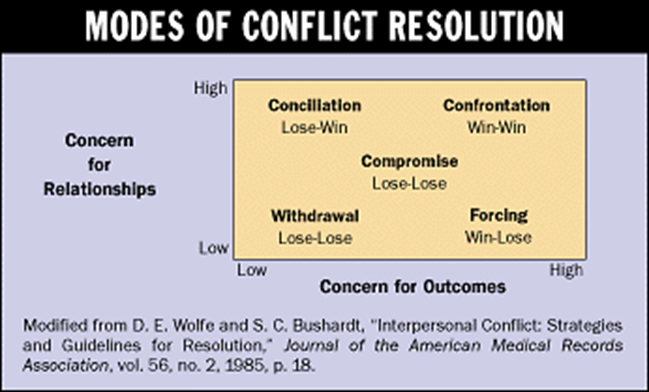
To resolve a conflict between staff members regarding potential changes in policy, a nurse manager decides to implement the changes she prefers regardless of the feelings of those who oppose those changes. Which of the following conflict resolution strategies is the nurse manager using?
Cooperating
Collaborating
Competing
Compromising
The Correct Answer is C
A. Cooperating involves finding a middle ground and working together, which isn't reflected in the manager's unilateral decision-making.
B. Collaborating involves working together toward a solution that accommodates various perspectives, which isn't the case here.
C. Competing involves asserting one's own concerns at the expense of others' viewpoints, which aligns with the manager's decision to implement changes regardless of opposition.
D. Compromising entails finding a middle ground that satisfies all parties involved, which isn't evident in the manager's decision-making process.
Nursing Test Bank
Naxlex Comprehensive Predictor Exams
Related Questions
Correct Answer is B
Explanation
A. A client who has peripheral vascular disease and has an absent pedal pulse in the right foot is not the highest priority because this is a chronic condition that does not pose an
immediate threat to the client's health. The nurse should monitor the client's circulation, provide education on foot care, and encourage smoking cessation if applicable.
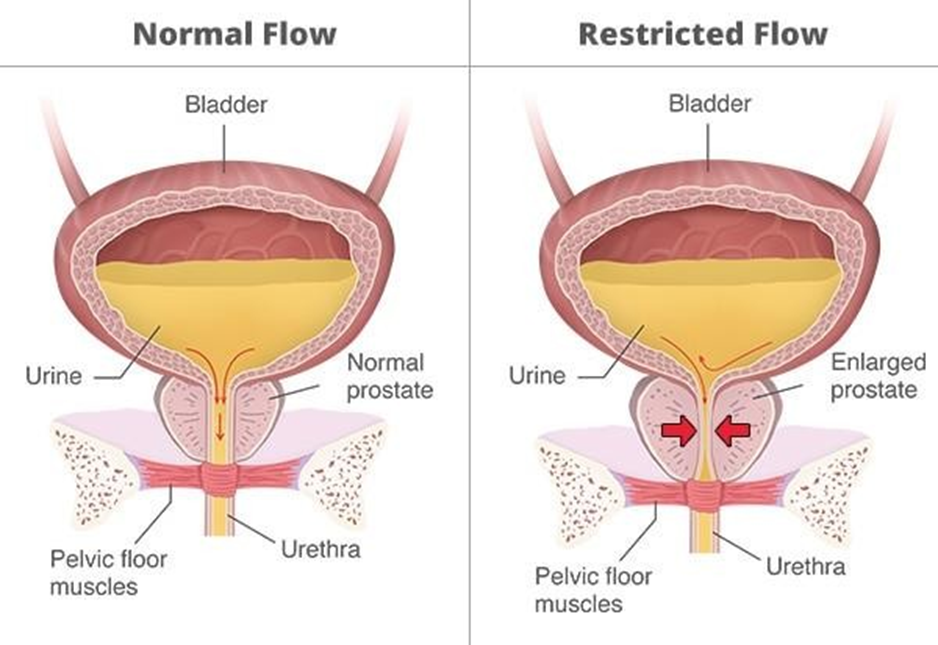
B. This client is at risk for urinary retention, which can lead to bladder distension,
infection, and renal damage. The nurse should assess the client's bladder, perform a
bladder scan, and notify the provider if indicated. This is the most urgent situation that requires immediate intervention.
C. A client who is newly diagnosed with pancreatic cancer and is scheduled to begin IV chemotherapy is not the highest priority because this is a planned procedure that does not require immediate action. The nurse should prepare the client for chemotherapy, provide emotional support, and teach the client about potential side effects and complications.
D. A client who has methicillin-resistant Staphylococcus aureus (MRSA) and has an
axillary temperature of 38° C (101° F) is not the highest priority because this is a sign of infection that can be managed with antibiotics and infection control measures. The nurse should administer the prescribed antibiotics, monitor the client's vital signs, and
implement contact precautions.
Correct Answer is D
Explanation
A. "MSO4 10 mg IVP q4° prn for pain" lacks clarity in abbreviation and dosing instructions.
B. "MS 10 mg IV every 4 pm for pain" contains an unclear frequency and timing.
C. "Morphine sulfate 10 mg IV q4h IV pm for pain" contains redundant dosing information and unclear timing.
D. "Morphine sulfate 10mg every 4 hours IV prn for pain" provides clear and appropriate information regarding medication, dosage, route, frequency, and indication.

Whether you are a student looking to ace your exams or a practicing nurse seeking to enhance your expertise , our nursing education contents will empower you with the confidence and competence to make a difference in the lives of patients and become a respected leader in the healthcare field.
Visit Naxlex, invest in your future and unlock endless possibilities with our unparalleled nursing education contents today