
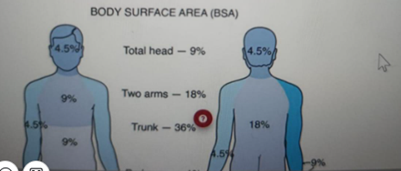
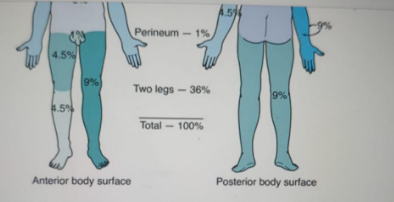
Using the image provided, calculate the total body surface area (TBSA) involved if an individual sustains burns to the body as follows:
Entire front of torso
Entire right arm
Front of right leg
Face and front of neck
BODY SURFACE AREA (BSA)
31.5 %
40.5 %
49.5 %
36 %
The Correct Answer is B
A. 31.5 %: Underestimates TBSA; likely missed one major area such as the anterior torso or leg portion.
B. Using the Rule of Nines for adults: Entire front of torso (anterior trunk) = 18%, entire right arm = 9%; front of right leg (anterior half of one leg) = 9%; face and front of neck (anterior head/neck) = 4.5%. Total TBSA = 18 + 9 + 9 + 4.5 = 40.5%
C. 49.5 %: Overestimates TBSA; may have incorrectly counted the entire leg (18%) instead of just the front (9%).
D. 36 %: Slight underestimation; possibly omitted the face/neck portion (4.5%).
Nursing Test Bank
Naxlex Comprehensive Predictor Exams
Related Questions
Correct Answer is D
Explanation
A. Increased oxygen delivery to the tissues is incorrect because increased oxygen delivery does not inherently increase infection risk; in fact, adequate tissue oxygenation can support immune function and healing.
B. Decreased body temperature is incorrect because while severe burns may cause thermoregulatory issues, hypothermia itself is not the primary reason for increased infection risk. Infection is more directly related to the loss of skin integrity.
C. Increased production of white blood cells is incorrect because leukocytosis (increased white blood cells) occurs as part of the inflammatory response, but it does not prevent infection. Even with elevated WBC counts, the body is more vulnerable if the skin barrier is compromised.
D. Loss of the protective skin barrier is correct because the skin is the body’s first line of defense against pathogens. Burns destroy this barrier, leaving underlying tissues exposed to bacteria, fungi, and other microorganisms. This makes burn patients highly susceptible to local wound infections, sepsis, and systemic infections. Proper wound care, aseptic techniques, and sometimes prophylactic antibiotics are critical in managing this risk.
Correct Answer is A
Explanation
A. Tuberculosis is correct because Mycobacterium tuberculosis infection leads to granulomatous inflammation in the lungs. Over time, this can cause caseous necrosis, resulting in cavitation, where the lung tissue breaks down and forms large open spaces (cavities). These cavities can erode into pulmonary blood vessels, potentially leading to hemoptysis (coughing up blood). The destruction of lung tissue impairs gas exchange and can facilitate spread of the infection. Cavitation is a hallmark of active, progressive pulmonary TB, particularly in adults.
B. Bronchiolitis is incorrect because it involves inflammation of the small bronchioles, usually caused by viral infections (e.g., RSV). It primarily affects airway obstruction in infants and does not cause cavitation or necrosis of lung tissue.
C. Chronic bronchitis is incorrect because it is a chronic inflammatory condition of the bronchi, characterized by persistent cough and mucus production for at least three months per year. While it causes airway narrowing and increased susceptibility to infections, it does not produce necrosis or cavitation.
D. Asthma is incorrect because asthma is a chronic inflammatory disorder of the airways with bronchospasm, hyperreactivity, and mucus production. Asthma involves reversible airway obstruction and does not cause lung tissue necrosis or cavitation.
Whether you are a student looking to ace your exams or a practicing nurse seeking to enhance your expertise , our nursing education contents will empower you with the confidence and competence to make a difference in the lives of patients and become a respected leader in the healthcare field.
Visit Naxlex, invest in your future and unlock endless possibilities with our unparalleled nursing education contents today