
When caring for a client who has wrist restraints after an episode of violent behavior, which of the following actions should the nurse take?
Tie the restraints to the side rail.
Remove the restraints every 3 hr.
Remove one restraint at a time.
Secure restraints with a square knot.
The Correct Answer is C
When caring for a client who has wrist restraints after an episode of violent behavior, the nurse should remove one restraint at a time.
This allows the nurse to assess the client’s behavior and response to having one arm free while still maintaining some level of control and safety.
Choice A is wrong because tying the restraints to the side rail can be dangerous as it can cause injury to the client if they move suddenly.
Choice B is wrong because removing the restraints every 3 hours is not a specific guideline and may vary depending on the facility’s policy and the client’s condition.
Choice D is wrong because securing restraints with a square knot can make it difficult to quickly release the restraints in an emergency.
Nursing Test Bank
Naxlex Comprehensive Predictor Exams
Related Questions
Correct Answer is D
Explanation
This is important to prevent urine from flowing back into the bladder, which can cause infection 1.
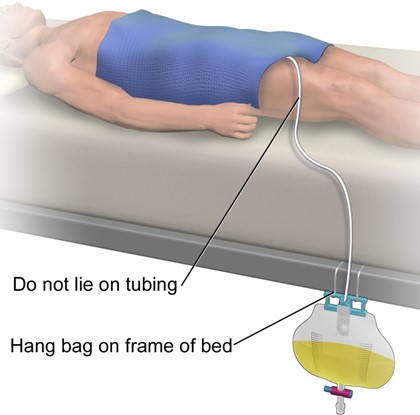
Choice A is incorrect because the catheter should be secured to the outer side of the thigh, not taped to the lower abdomen 2.
Choice B is incorrect because attaching the drainage bag to the side rails of the bed can cause it to be above the level of the bladder.
Choice C is incorrect because it is important to empty the drainage bag regularly, not just when it is three-quarters full.
Correct Answer is A
Explanation
When administering multiple medications via an NG tube, each medication should be prepared separately by crushing (if appropriate) and diluting it with sterile water. This method helps prevent drug interactions, ensures that medications are adequately dissolved, and minimizes the risk of clogging the tube.
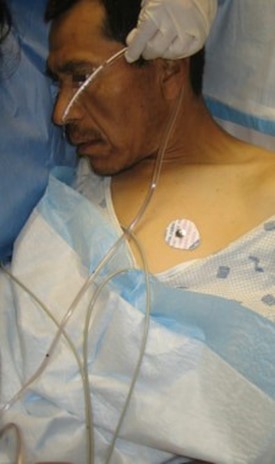
Choice B is wrong because medications should not be combined with the formula in the feeding bag.
Choice C is wrong because the NG tube should be flushed with at least 15 to 30 mL of water before and after drug delivery.
Choice D is wrong because each medication should be administered separately when it is being given at the same time.
Whether you are a student looking to ace your exams or a practicing nurse seeking to enhance your expertise , our nursing education contents will empower you with the confidence and competence to make a difference in the lives of patients and become a respected leader in the healthcare field.
Visit Naxlex, invest in your future and unlock endless possibilities with our unparalleled nursing education contents today