
Which description of a stool is characteristic of intussusception?
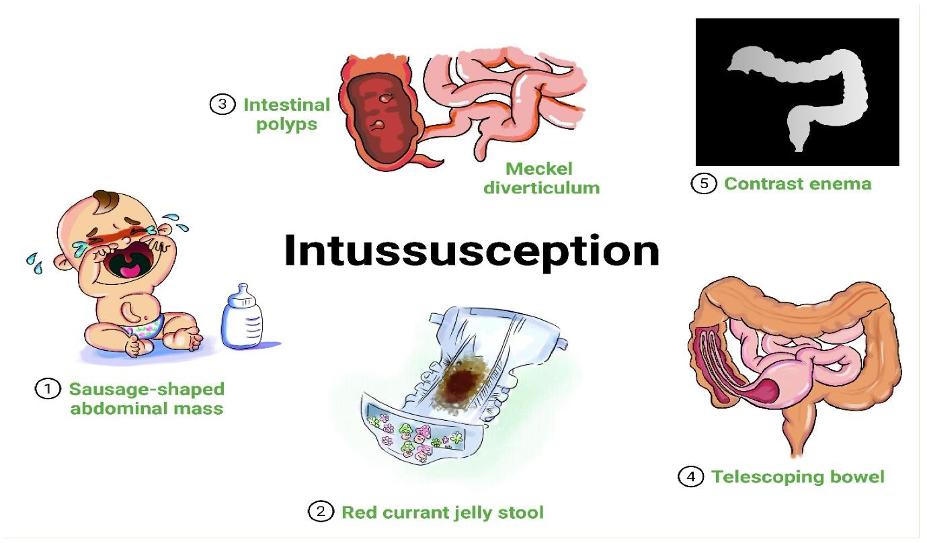
"Currant jelly" stools
Loose, foul smelling stools
Hard stools positive for guaiac
Ribbon-like stools
The Correct Answer is A
Intussusception is a medical condition where a portion of the intestine telescopes into an adjacent section, causing an obstruction. This obstruction can affect the normal passage of stool through the intestine.
In intussusception, the obstructed intestine can lead to the development of blood and mucus within the stool, giving it a characteristic appearance described as "currant jelly." The stool may contain a combination of blood, mucus, and faecal matter, resembling the colour and consistency of currant jelly.
loose, foul-smelling stools in (option) is incorrect because it, is not specific to intussusception and can be associated with various gastrointestinal conditions.
hard stools positive for guaiac in (option C) is incorrect because it, is not typical of intussusception. Hard stools and positive guaiac test results are more commonly associated with constipation or other conditions affecting the lower gastrointestinal tract.
ribbon-like stools, in (option D) is incorrect because it may be seen in conditions like colorectal cancer or other obstructive disorders. However, it is not a specific characteristic of intussusception.
In the context of intussusception, the presence of "currant jelly" stools is considered a significant sign and should prompt immediate medical attention. Intussusception is a medical emergency and requires prompt diagnosis and treatment.
Nursing Test Bank
Naxlex Comprehensive Predictor Exams
Related Questions
Correct Answer is B
Explanation
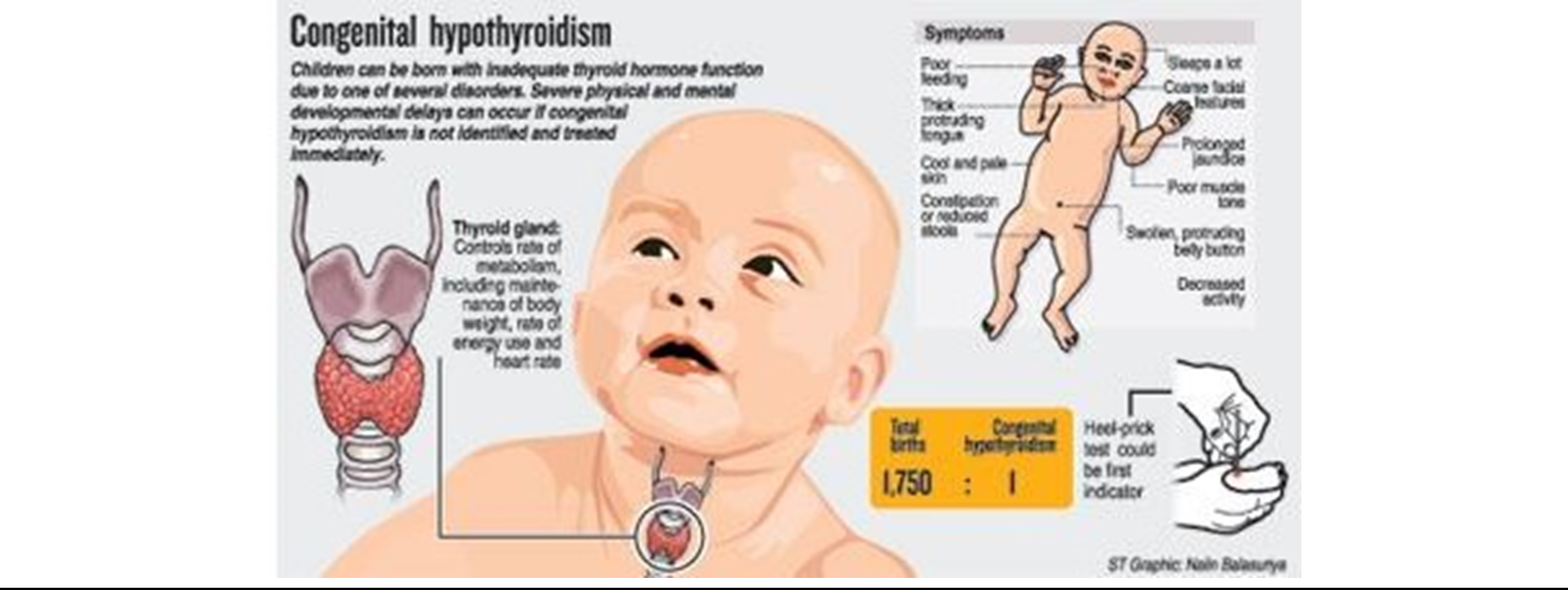
Hypothyroidismreferstoanunderactivethyroid glandthatdoesnotproduceenoughthyroidhormones. In newborns, this condition is known as congenital hypothyroidism. Thesymptoms mentioned—mottled skin, a large fontanel (soft spot on the baby's head), a largetongue,lethargy, anddifficultyfeeding—arecharacteristic ofhypothyroidism inneonates.
Mottledskincanoccur duetodecreasedcirculationandlow bodytemperatureassociatedwith hypothyroidism. A large fontanel and tongue are common physical features seen ininfants with hypothyroidism. Lethargy and poor feeding are also typical signs of thiscondition.
Hypoglycaemia in (option A) is incorrect because it refers to low blood sugar levels andusuallypresentswithdifferent symptomssuchas jitteriness,tremors,and sweating.
Hypocalcaemia in (option C) is incorrect because it is low calcium levels and can manifestwithsymptoms like muscle cramps, twitching,and seizures.
Phenylketonuria (PKU) in (option D) it is incorrect because it is a metabolic disordercharacterized by the inability to metabolize the amino acid phenylalanine, and it typicallypresentswith differentsymptoms such asintellectual disabilityandamustydoorto theskin.
Therefore, based on the symptoms described, hypothyroidism (B) is the most likely disorderinthisneonate. Itisimportanttoconsultahealthcareprofessionalforaproperdiagnosisandappropriatetreatment.
Correct Answer is B
Explanation
Thebehaviourdescribed,wherethechildappearstobestaringinto space,is characteristicof
B.Absenceseizures.
Absence seizures, also known as petit mal seizures, are a type of generalized seizure thatprimarily affects children. These seizures are brief and usually last for a few seconds. Duringan absence seizure, the child may appear to be staring blankly into space, unaware of theirsurroundings.Theymaynot respond to stimuli orengagein anypurposefulactivity.After theseizure ends, the child typically resumes their previous activity without any memory of theseizure.
Atonic seizures in (option A) is incorrect because it involves a sudden loss of muscle tone,leadingtoalimp or "drop"in theperson.
Simple partial seizures in (option C) are focal seizures that affect a specific region of thebrain,causinglocalizedsymptoms suchas twitchingor tinglinginaparticularbodypart.
Tonic-clonic seizures in (option D) also known as grand mal seizures, is incorrect because itinvolves a combination of muscle rigidity (tonic phase) and jerking movements (clonicphase).
Therefore, based on the description provided, the behaviour of staring into space ischaracteristic of B. Absence seizures. It is important for the child to be evaluated by ahealthcare professional for an accurate diagnosis and appropriate management of theirseizures.
Whether you are a student looking to ace your exams or a practicing nurse seeking to enhance your expertise , our nursing education contents will empower you with the confidence and competence to make a difference in the lives of patients and become a respected leader in the healthcare field.
Visit Naxlex, invest in your future and unlock endless possibilities with our unparalleled nursing education contents today