
Which needle should the nurse use to administer IV fluids via a client's implanted port?
A
B
C
D
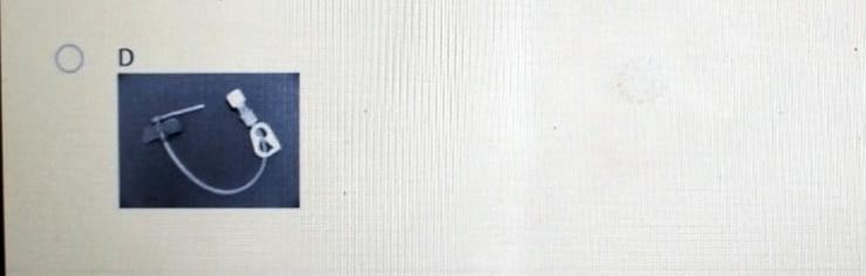
The Correct Answer is D
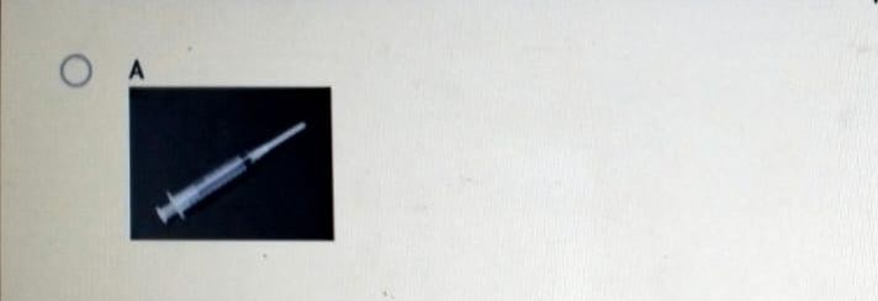
A. this is a syringe for administration of small amounts of fluids and medications
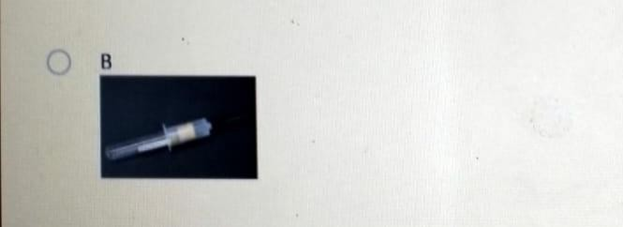
B. the syringe administers smaller volumes of IV fluids
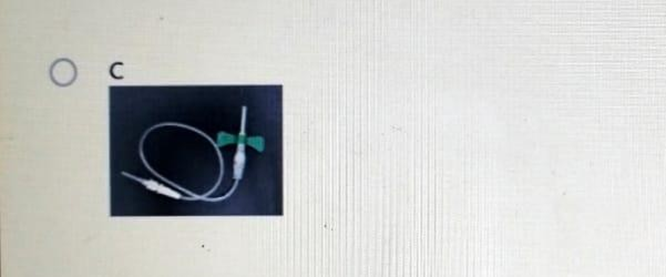
C. connecting tubing for administration of IV fluids of peripheral access
D. Connecting tubing that can be used on implanted ports.
Nursing Test Bank
Naxlex Comprehensive Predictor Exams
Related Questions
Correct Answer is A
Explanation
A. Attempting to distract the client with general conversation can help redirect the client's focus away from the discomfort and anxiety associated with the procedure. It can help alleviate anxiety and make the experience more tolerable for the client.
B. Explaining the procedure in detail while removing the staples may increase the client's anxiety and discomfort. While education about the procedure is important, it may not be the most
effective intervention in this situation.
C. Encouraging the client to continue to verbalize the anxiety acknowledges the client's feelings but may not effectively address the anxiety or alleviate discomfort during the procedure.
D. Reassuring the client that this is a simple nursing procedure may not be sufficient to alleviate the client's anxiety. The client's perception of the procedure as distressing is valid, and additional measures may be needed to help manage the anxiety and discomfort.
Correct Answer is ["B","C","D"]
Explanation
A. Giving a bolus of 1,000 mL 0.9% sodium chloride is typically used to treat hypovolemia or electrolyte imbalances, which are not indicated by the patient's current lab values or clinical
situation.
B. Repeating the blood gas in 1 hour is a reasonable order as it would provide information on whether the patient's respiratory status is improving following interventions for ventilator-associated pneumonia.
C. Placing the client in a prone position can improve oxygenation in patients with respiratory distress by redistributing lung perfusion, making it a suitable intervention for this patient with diminished breath sounds and crackles.
D. Performing endotracheal suctioning would help clear secretions, which may be contributing to the patient's diminished breath sounds and crackles, and is consistent with the care for a patient with pneumonia.
E. A chest x-ray now would typically be ordered if there was a suspicion of a new onset condition such as a pneumothorax or pleural effusion, which is not indicated by the patient's current presentation.
F. Administering an inhaled corticosteroid is generally used for long-term management of chronic respiratory conditions and is not typically used for acute management of ventilator-associated pneumonia.
Whether you are a student looking to ace your exams or a practicing nurse seeking to enhance your expertise , our nursing education contents will empower you with the confidence and competence to make a difference in the lives of patients and become a respected leader in the healthcare field.
Visit Naxlex, invest in your future and unlock endless possibilities with our unparalleled nursing education contents today