
Which of the following mechanisms is an example of negative feedback in the endocrine system?
The release of oxytocin during childbirth
The activation of the sympathetic nervous system during stress
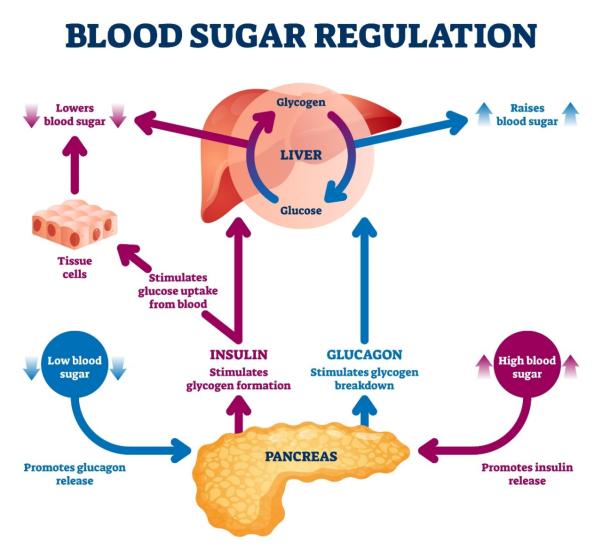
The regulation of blood glucose levels by insulin and glucagon
The release of adrenaline during exercise
The Correct Answer is C
A. The release of oxytocin during childbirth: This is the classic example of positive feedback. Uterine contractions stimulate the release of oxytocin, which causes stronger contractions, which stimulates more oxytocin, continuing until delivery is complete.
B. The activation of the sympathetic nervous system during stress: This is a neurological "fight or flight" response. While it involves hormones (epinephrine), the mechanism of rapidly ramping up the body's alert state is not a homeostatic negative feedback loop (which aims to reverse a change).
C. The regulation of blood glucose levels by insulin and glucagon: Negative feedback works to reverse a deviation from the set point. If blood glucose rises, insulin is released to lower it. If blood glucose drops, glucagon is released to raise it. The system works to negate the stimulus (high or low sugar) to maintain balance.
D. The release of adrenaline during exercise: Similar to choice B, this is a response to increased demand (feed-forward) rather than a loop designed to keep adrenaline levels constant.
Nursing Test Bank
Naxlex Comprehensive Predictor Exams
Related Questions
Correct Answer is A
Explanation
A. Lens:The lens is a transparent, flexible structure located behind the iris. By changing its shape (accommodation), it fine-tunes the focus of light onto the retina to allow clear vision at various distances.
B. Pupil:The pupil is simply the opening (hole) in the center of the iris that allows light to enter the eye. It does not focus light itself.
C. Iris:The iris is the colored muscle that controls the size of the pupil, regulating the amount of light entering, but not the focus.
D. Cornea:The cornea is the clear outer layer that provides the initial and strongest refraction (bending) of light. However, the lensis the structure responsible for the variable focusing adjustment required to see clearly.
Correct Answer is A
Explanation
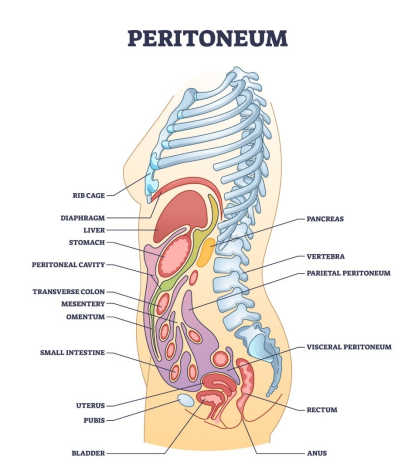
A. Providing support and reducing friction:The peritoneum is a continuous serous membrane that lines the abdominal cavity and covers the abdominal organs. It secretes a lubricating serous fluid that allows organs to glide against each other without friction during digestion and movement. It also helps suspend organs in place via folds (mesenteries).
B. Producing digestive enzymes:Digestive enzymes are primarily produced by the glandular organs such as the pancreas, salivary glands, stomach lining, and the small intestine, not the peritoneal membrane.
C. Storing bile:Bile is produced by the liver and stored/concentrated in the gallbladder.
D. Filtering waste products:The filtration of waste products from the blood is the primary function of the kidneys(and to a metabolic extent, the liver), not the peritoneum.
Whether you are a student looking to ace your exams or a practicing nurse seeking to enhance your expertise , our nursing education contents will empower you with the confidence and competence to make a difference in the lives of patients and become a respected leader in the healthcare field.
Visit Naxlex, invest in your future and unlock endless possibilities with our unparalleled nursing education contents today