
Which type of tissue is specialized for transmitting electrical impulses?
Epithelial tissue
Nervous tissue
Muscle tissue
Connective tissue
The Correct Answer is B
A. Epithelial tissue: Epithelial tissue covers body surfaces and lines cavities. It is specialized for protection, secretion, and absorption, not electrical transmission.
B. Nervous tissue: Nervous tissue consists of neurons, which are highly specialized cells capable of generating and conducting electrical signals (action potentials) to communicate information throughout the body.
C. Muscle tissue: While muscle tissue is "excitable" and can conduct an electrical signal along its membrane to trigger contraction, its primary physiological specialization is contraction/movement, not the transmission of information.
D. Connective tissue: Connective tissue provides structural support, transport (blood), and energy storage (fat). It does not conduct electrical impulses.
Nursing Test Bank
Naxlex Comprehensive Predictor Exams
Related Questions
Correct Answer is A
Explanation
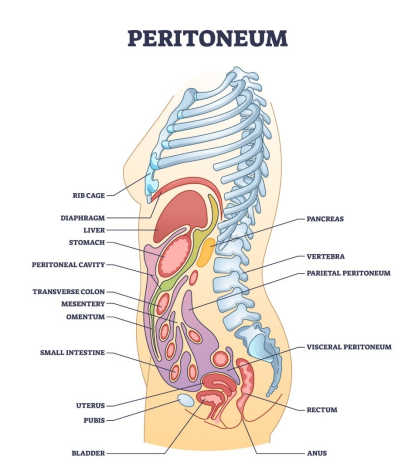
A. Providing support and reducing friction:The peritoneum is a continuous serous membrane that lines the abdominal cavity and covers the abdominal organs. It secretes a lubricating serous fluid that allows organs to glide against each other without friction during digestion and movement. It also helps suspend organs in place via folds (mesenteries).
B. Producing digestive enzymes:Digestive enzymes are primarily produced by the glandular organs such as the pancreas, salivary glands, stomach lining, and the small intestine, not the peritoneal membrane.
C. Storing bile:Bile is produced by the liver and stored/concentrated in the gallbladder.
D. Filtering waste products:The filtration of waste products from the blood is the primary function of the kidneys(and to a metabolic extent, the liver), not the peritoneum.
Correct Answer is D
Explanation
A. Basement membrane:This is a thin, non-cellular adhesive layer that anchors the epidermis to the dermis. It does not contain its own blood supply or complex nerve endings.
B. Hypodermis:While the hypodermis (subcutaneous tissue) does contain larger blood vessels and nerves, the question describes the characteristics of the "skin." The dermisis the classic answer for the vascularized and innervated layer of the skin itself, often contrasted with the avascular epidermis.
C. Epidermis:The epidermis is avascular(has no blood vessels) and receives its nutrients via diffusion from the dermis below. It has free nerve endings but lacks the rich vascular network found in the dermis.
D. Dermis:The dermis is highly vascular (rich in blood capillaries) to regulate temperature and provide nutrients. It is also packed with sensory receptors (nerve endings) for touch, pressure, heat, and pain.
Whether you are a student looking to ace your exams or a practicing nurse seeking to enhance your expertise , our nursing education contents will empower you with the confidence and competence to make a difference in the lives of patients and become a respected leader in the healthcare field.
Visit Naxlex, invest in your future and unlock endless possibilities with our unparalleled nursing education contents today