
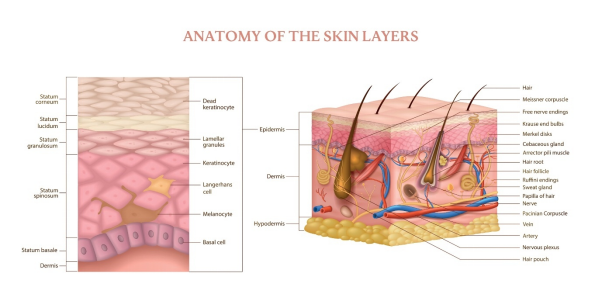
A patient presents with a wound that has reached the dermis. Which structure is most likely to be affected?
Adipose tissue
Stratum lucidum
Sweat glands
Melanocytes
The Correct Answer is C
A. Adipose tissue: Adipose (fat) tissue is primarily located in the hypodermis (subcutaneous layer), which is the layer beneath the dermis.
B. Stratum lucidum: This is a specific layer of the epidermis (the outermost skin layer), found only in thick skin like the palms and soles. If the wound has reached the dermis, it has already passed through the epidermis.
C. Sweat glands: The functional units of sweat glands, hair follicles, and sebaceous (oil) glands are located within the dermis. A wound extending into this layer would disrupt these structures.
D. Melanocytes: Melanocytes are pigment-producing cells located in the stratum basale, which is the deepest layer of the epidermis, sitting just above the dermis.
Nursing Test Bank
Naxlex Comprehensive Predictor Exams
Related Questions
Correct Answer is A
Explanation
A. Providing energy:Carbohydrates are broken down into glucose, which is the body’s preferred and most efficient fuel source for cellular respiration (ATP production), especially for the brain and muscles during exercise.
B. Building tissues:While some carbohydrates are found in cell markers, the primary "building blocks" of body tissues (muscles, skin, organs) are proteins.
C. Regulating hormones:While some hormones are glycoproteins, the major class of molecules used to synthesize steroid hormones are lipids (specifically cholesterol), and many others are protein-based.
D. Insulating organs:Thermal insulation and physical cushioning of organs is the primary function of lipids (adipose tissue/fat).
Correct Answer is C
Explanation
A. Rheumatoid arthritis:This is an autoimmune disorder primarily causing joint inflammation (synovitis), pain, and stiffness. While it affects the skeletal system, it does not typically present with the specific metabolic profile of low calcium and phosphate levels.
B. Paget's disease:This condition involves excessive and disorganized bone remodeling. Lab results for Paget's disease typically show very high levels of alkaline phosphatase (ALP), but calcium and phosphate levels usually remain normal.
C. Osteomalacia:Osteomalacia is the softening of the bones caused by defective bone mineralization, often due to Vitamin D deficiency. Without Vitamin D, the body cannot absorb calcium and phosphate effectively, leading to low serum levels of both. This results in the classic symptoms of deep bone pain and proximal muscle weakness.
D. Osteoporosis:Osteoporosis is a decrease in bone mass (density) that increases fracture risk. Crucially, in uncomplicated osteoporosis, blood calcium and phosphate levels are typically normal. It is a "silent" disease often without pain until a fracture occurs.
Whether you are a student looking to ace your exams or a practicing nurse seeking to enhance your expertise , our nursing education contents will empower you with the confidence and competence to make a difference in the lives of patients and become a respected leader in the healthcare field.
Visit Naxlex, invest in your future and unlock endless possibilities with our unparalleled nursing education contents today