
Which of the following properties of water explains its solvent abilities for certain substances?
Kinetic energy of liquid water molecules
High specific heat
High surface tension
Polarity of water molecules.
The Correct Answer is D
The polarity of water molecules explains its solvent abilities for certain substances.
Water is a polar molecule because it has a partial positive charge on one end and a partial negative charge on the other end due to the unequal sharing of electrons between the oxygen and hydrogen atoms.
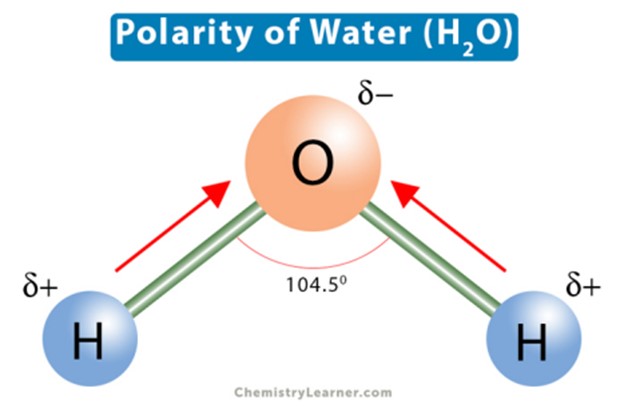
This polarity allows water to dissolve other polar substances and ionic compounds.
Choice A. Kinetic energy of liquid water molecules is not the correct answer because kinetic energy refers to the energy of motion and does not directly explain water’s solvent abilities.
Choice B. High specific heat is not the correct answer because specific heat refers to the amount of heat required to raise the temperature of a substance and does not directly explain water’s solvent abilities.
Choice C. High surface tension is not the correct answer because surface tension refers to the cohesive forces between liquid molecules and does not directly explain water’s solvent abilities.
Nursing Test Bank
Naxlex Comprehensive Predictor Exams
Related Questions
Correct Answer is D
Explanation
Genes are segments of DNA that encode the information for making proteins.

The sequence of nucleotides (As, Ts, Cs, and Gs) in a gene determines the amino acid sequence of the protein. DNA sequencing is the process of determining the sequence of nucleotides in a piece of DNA.
Choice A is incorrect because enzymes are proteins that catalyze chemical reactions, not DNA sequences. Choice B is incorrect because blood types are determined by the presence or absence of certain antigens on the surface of red blood cells, not by DNA sequences. Choice C is incorrect because hormones are chemical messengers that regulate various body functions, not DNA sequences.
Correct Answer is D
Explanation
The pleura is a double-layered serous membrane that covers each lung and lines the thoracic cage.
The pleura is a vital part of the respiratory tract.
Its role is to cushion the lung and reduce any friction that may develop between the lung, rib cage, and chest cavity.
Each pleura (there are two) consists of a two-layered membrane that covers each lung.
The layers are separated by a small amount of viscous (thick) lubricant known as pleural fluid.
The pleura is comprised of two distinct layers: the visceral pleura and the parietal pleura.
The visceral pleura is the thin, slippery membrane that covers the surface of the lungs and dips into the areas separating the different lobes of the lungs (called the hilum).
Whether you are a student looking to ace your exams or a practicing nurse seeking to enhance your expertise , our nursing education contents will empower you with the confidence and competence to make a difference in the lives of patients and become a respected leader in the healthcare field.
Visit Naxlex, invest in your future and unlock endless possibilities with our unparalleled nursing education contents today