
Which of the following results in osteoporosis?
An increase in osteocyte activity while osteoclast activity continues at expected levels.
A decline in osteoclast activity while osteoblast activity continues at expected levels.
An increase in osteocyte activity while osteoblast activity continues at expected levels.
A decline in osteoblast activity while osteoclast activity continues at expected levels.
The Correct Answer is D
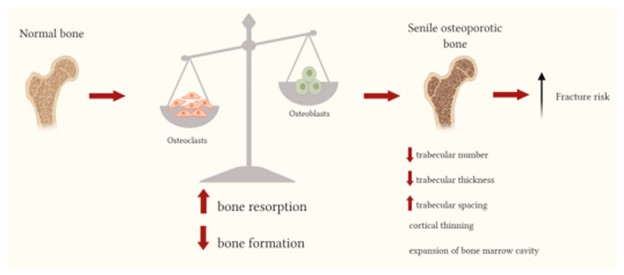
Osteoporosis is caused by an imbalance between the functioning of osteoclast and osteoblast cells.
Osteoblasts are responsible for forming new bone, while osteoclasts break down old bone.
If osteoblast activity declines while osteoclast activity continues at expected levels, this means that more bone is being broken down than is being formed, leading to a loss of bone density and an increased risk of osteoporosis.
Choice A is incorrect because an increase in osteocyte activity would not result in osteoporosis.
Osteocytes are mature bone cells that maintain the mineral concentration of the bone matrix.
Choice B is incorrect because a decline in osteoclast activity would not result in osteoporosis.
Osteoclasts break down old bone, so a decline in their activity would mean that less bone is being broken down.
Choice C is incorrect because an increase in osteocyte activity would not result in osteoporosis.
As mentioned earlier, osteocytes are mature bone cells that maintain the mineral concentration of the bone matrix.
Nursing Test Bank
Naxlex Comprehensive Predictor Exams
Related Questions
Correct Answer is C
Explanation
In this cross, both parents are homozygous recessive for the smooth leaf trait (ff).
This means that all of their offspring will inherit two copies of the recessive allele (f) and will therefore have smooth leaves.
Choice A. FF x FF is not correct because both parents are homozygous dominant for the fuzzy leaf trait (FF) and all of their offspring will inherit two copies of the dominant allele (F) and will therefore have fuzzy leaves.
Choice B. Ff x Ff is not correct because both parents are heterozygous for the leaf trait (Ff) and their offspring can inherit either one dominant allele (F) or one recessive allele (f) from each parent, resulting in a 3:1 ratio of fuzzy to smooth leaves.
Choice D. Ff x ff is not correct because one parent is heterozygous for the leaf trait (Ff) while the other is homozygous recessive (ff), resulting in a 1:1 ratio of fuzzy to smooth leaves in their offspring.
Correct Answer is B
Explanation
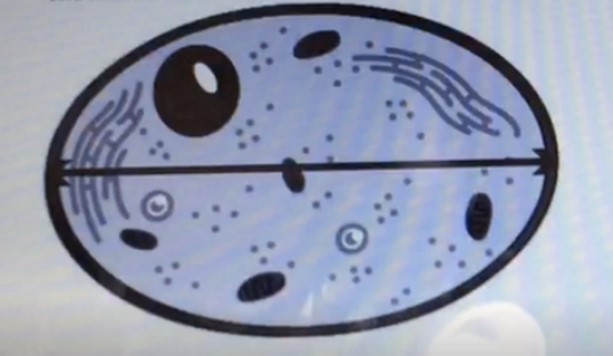
The diameter is the measurement of a straight line passing through the centre of a circle and connecting two points on its circumference.
In this case, the line across the center of the cell represents the diameter of the cell.
Choice A, Area, is not the correct answer because area refers to the amount of space inside a two-dimensional shape.
Choice C, Volume, is not the correct answer because volume refers to the amount of space occupied by a three-dimensional object.
Choice D, Radius, is not the correct answer because radius refers to the distance from the center of a circle to its circumference and is half the length of the diameter.
Whether you are a student looking to ace your exams or a practicing nurse seeking to enhance your expertise , our nursing education contents will empower you with the confidence and competence to make a difference in the lives of patients and become a respected leader in the healthcare field.
Visit Naxlex, invest in your future and unlock endless possibilities with our unparalleled nursing education contents today