
When a person exercises, their body temperature rises. How does the body maintain homeostasis in response to this change?
By dilating blood vessels and increasing sweat production
By increasing metabolic rate
By decreasing the heart rate
By constricting blood vessels and reducing sweat production
The Correct Answer is A
A. By dilating blood vessels and increasing sweat production: This is the primary cooling response. Vasodilation of cutaneous blood vessels increases blood flow to the skin to dissipate heat; sweating and subsequent evaporation remove heat from the body surface. Together these actions lower core temperature and restore homeostasis.
B. By increasing metabolic rate: Increasing metabolic rate would produce more heat, which would worsen hyperthermia rather than cool the body. Metabolic rate typically increases during exercise (which raises temperature), but it is not a homeostatic response to reduce body temperature.
C. By decreasing the heart rate: During exercise, heart rate increases to meet oxygen demand; decreasing heart rate would impair heat dissipation and cardiovascular support for exercise. It is not a thermoregulatory mechanism to cool the body.
D. By constricting blood vessels and reducing sweat production: Vasoconstriction and reduced sweating conserve heat and reduce heat loss - an appropriate response in cold stress, not when body temperature is elevated. This would counteract cooling and worsen hyperthermia.
Nursing Test Bank
Naxlex Comprehensive Predictor Exams
Related Questions
Correct Answer is C
Explanation
A. Irregular bone; blood cell production:Irregular bones have complex shapes (e.g., vertebrae, facial bones). While they do contain marrow for blood cell production, the bones of the leg are not classified as irregular.
B. Flat bone; mineral storage:Flat bones (e.g., sternum, skull, ribs) protect internal organs and provide attachment points for muscles. They are not the primary classification for limb bones.
C. Long bone; support and leverage:The bones of the legs (femur, tibia, fibula) are classified as long bones because they are longer than they are wide. Their structure (a long shaft with expanded ends) is mechanically engineered to support body weight and act as levers to facilitate movement when muscles contract.
D. Short bone; protection:Short bones are roughly cube-shaped (e.g., carpals in the wrist, tarsals in the ankle). Their primary function is stability and some motion, rather than the leverage provided by long bones.
Correct Answer is A
Explanation
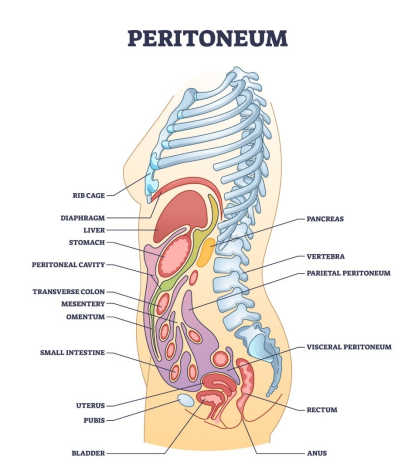
A. Providing support and reducing friction:The peritoneum is a continuous serous membrane that lines the abdominal cavity and covers the abdominal organs. It secretes a lubricating serous fluid that allows organs to glide against each other without friction during digestion and movement. It also helps suspend organs in place via folds (mesenteries).
B. Producing digestive enzymes:Digestive enzymes are primarily produced by the glandular organs such as the pancreas, salivary glands, stomach lining, and the small intestine, not the peritoneal membrane.
C. Storing bile:Bile is produced by the liver and stored/concentrated in the gallbladder.
D. Filtering waste products:The filtration of waste products from the blood is the primary function of the kidneys(and to a metabolic extent, the liver), not the peritoneum.
Whether you are a student looking to ace your exams or a practicing nurse seeking to enhance your expertise , our nursing education contents will empower you with the confidence and competence to make a difference in the lives of patients and become a respected leader in the healthcare field.
Visit Naxlex, invest in your future and unlock endless possibilities with our unparalleled nursing education contents today