
While obtaining a health history from a male adolescent during a good check-up, the nurse assesses his sexual behavior and risk for sexually transmitted infections. Based on the information, the nurse plans to teach the adolescent about using a condom. What statement would the nurse include in the teaching plan?
"Store your condoms in your wallet so they are ready for use."
"Use petroleum jelly with a latex condom for extra lubrication."
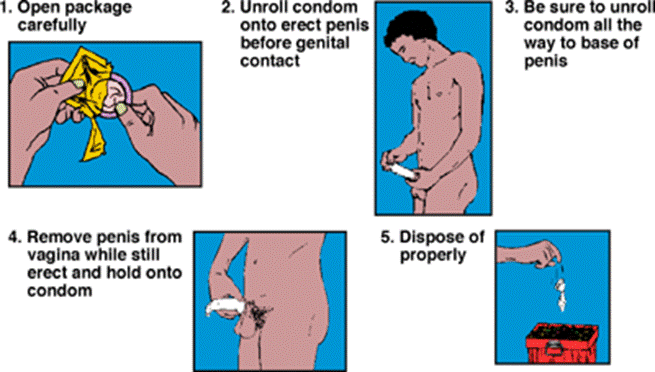
"Put the condom on before engaging in any genital contact."
"You can reuse a condom if it's within 3 hours."
The Correct Answer is C
Choice A: "Store your condoms in your wallet so they are ready for use." This statement is not correct and should not be included in the teaching plan. Storing condoms in a wallet can damage them by exposing them to heat, friction, or puncture. Damaged condoms can break or leak during sexual activity and increase the risk of STIs or pregnancy.
Choice B: "Use petroleum jelly with a latex condom for extra lubrication." This statement is not correct and should not be included in the teaching plan. Using petroleum jelly or any oil-based lubricant with a latex condom can weaken the latex material and cause it to break or slip off. Only water-based or silicone-based lubricants should be used with latex condoms.
Choice C: "Put the condom on before engaging in any genital contact." This statement is correct and should be included in the teaching plan. Putting the condom on before engaging in any genital contact can prevent the transmission of STIs or pregnancy by avoiding contact with pre-ejaculate fluid, semen, or vaginal fluid.
Choice D: "You can reuse a condom if it's within 3 hours." This statement is not correct and should not be included in the teaching plan. Reusing a condom can increase the risk of STIs or pregnancy by exposing the partner to residual fluid, bacteria, or sperm. A new condom should be used for each sexual act.
Nursing Test Bank
Naxlex Comprehensive Predictor Exams
Related Questions
Correct Answer is B
Explanation
Choice A: Protrusion of the posterior bladder wall downward through the anterior vaginal wall is not the correct answer because it describes a different condition called cystocele. A cystocele occurs when the bladder pushes into the vagina due to weakened pelvic support structures.
Choice B: Bulging of the small intestine through the posterior vaginal wall is the correct answer because it describes an enterocele. Enterocele occurs when the small intestine slides into a pouch between the rectum and vagina due to weakened pelvic support structures.
Choice C: Descent of the uterus through the pelvic floor into the vagina is not the correct answer because it describes a different condition called uterine prolapse. Uterine prolapse occurs when the uterus drops down into or out of the vagina due to weakened pelvic support structures.
Choice D: Sagging of the rectum with the pressure exerted against the posterior vaginal wall is not the correct answer because it describes a different condition called rectocele. Rectocele occurs when the rectum bulges into or out of the vagina due to weakened pelvic support structures.
Correct Answer is D
Explanation
Choice A: A 26-year-old client who has migraine headaches at the start of each menstrual cycle does not have a contraindication for receiving oral contraceptives. Oral contraceptives are pills that contain synthetic hormones (estrogen and progestin) that prevent ovulation and pregnancy. They can also help regulate menstrual cycles and reduce menstrual pain and bleeding. Some women with migraine headaches may benefit from oral contraceptives, especially if their migraines are related to hormonal fluctuations or menstruation. However, oral contraceptives may worsen migraines in some women, especially if they have aura (visual or sensory disturbances) or other risk factors for stroke. Therefore, oral contraceptives should be used with caution and under medical supervision in women with migraine headaches.
Choice B: A 28-year-old client who has a history of pelvic inflammatory disease does not have a contraindication for receiving oral contraceptives. Pelvic inflammatory disease (PID) is an infection of the female reproductive organs (uterus, fallopian tubes, ovaries) that can cause pain, fever, discharge, or infertility. It can be caused by various bacteria, often sexually transmitted ones such as gonorrhea or chlamydia. Oral contraceptives do not protect against STIs or PID, but they may reduce the risk of PID by thickening the cervical mucus and preventing bacteria from entering the uterus. Therefore, oral contraceptives can be used safely in women with a history of PID, but they should also use condoms or other barrier methods to prevent STIs.
Choice C: A 32-year-old client who has benign breast disease does not have a contraindication for receiving oral contraceptives. Benign breast disease (BBD) is a term that refers to various noncancerous conditions that affect the breast tissue, such as cysts, fibroadenomas, or mastitis. They can cause symptoms such as lumps, pain, or tenderness in the breasts. Oral contraceptives do not cause or increase the risk of BBD, but they may improve some symptoms of BBD by stabilizing the hormonal levels and reducing breast tissue sensitivity. Therefore, oral contraceptives can be used safely in women with BBD, but they should also have regular breast exams and mammograms to monitor their breast health.
Choice D: A 38-year-old client who reports smoking one pack of cigarettes every day has a contraindication for receiving oral contraceptives. Smoking is a habit that involves inhaling the smoke of tobacco or other substances that can cause various health problems, such as lung cancer, heart disease, or stroke. Oral contraceptives can increase the risk of these problems, especially in women who are older than 35 years or smoke more than 15 cigarettes per day. Smoking and oral contraceptives can interact and cause blood clots, high blood pressure, or reduced blood flow to the organs. Therefore, oral contraceptives should be avoided or discontinued in women who smoke, and alternative methods of contraception should be used.
Whether you are a student looking to ace your exams or a practicing nurse seeking to enhance your expertise , our nursing education contents will empower you with the confidence and competence to make a difference in the lives of patients and become a respected leader in the healthcare field.
Visit Naxlex, invest in your future and unlock endless possibilities with our unparalleled nursing education contents today