
A 26-year-old female is brought to the emergency department while having an asthma attack. She is given a nebulizer treatment with the medication albuterol. The nurse's immediate assessment priority would be to
Determine the time of the patient's last meal.
Monitor the patient's temperature and blood pressure.
Monitor respiratory rate and Spo2 with a pulse oximeter.
Provide education on asthma management and treatment.
The Correct Answer is C
During an asthma attack, the primary concern is the patient's ability to breathe and maintain adequate oxygenation. Monitoring the patient's respiratory rate and oxygen saturation (SpO2) with a pulse oximeter provides crucial information about the effectiveness of the albuterol treatment and the patient's respiratory status. It helps determine if the airway is opening up, if oxygen levels are improving, and if the patient is responding positively to the medication.
While determining the time of the patient's last meal can be relevant for certain interventions, it is not the immediate priority during an asthma attack. It is more important to focus on assessing and managing the patient's breathing and oxygenation first.
Monitoring the patient's temperature and blood pressure can be important for a comprehensive assessment, but they are not the immediate priority during an acute asthma attack. Addressing the patient's respiratory distress takes precedence.
Providing education on asthma management and treatment is an important aspect of care, but it should be done after the patient's acute symptoms are addressed and stabilized. In the immediate assessment phase, the focus is on assessing and managing the patient's respiratory status. Education can be provided once the patient's immediate needs are addressed.
Nursing Test Bank
Naxlex Comprehensive Predictor Exams
Related Questions
Correct Answer is C
Explanation
Pseudoephedrine is a sympathomimetic medication that acts as a decongestant by constricting blood vessels in the nasal passages, which helps to relieve sinus congestion. However, it can also cause vasoconstriction in other parts of the body, leading to an increase in blood pressure. Therefore, it is contraindicated for individuals with hypertension (high blood pressure).
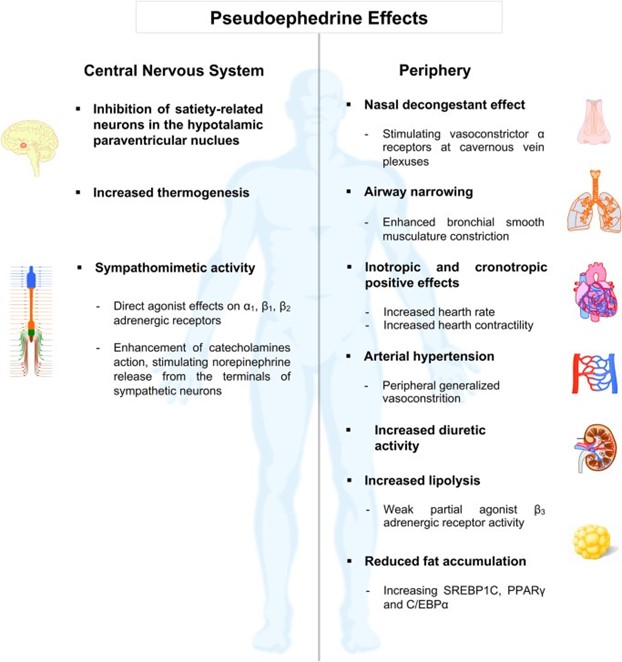
The other conditions mentioned, migraines, eczema, and diverticulitis, are not contraindications for the use of pseudoephedrine. However, it is important for individuals with these conditions to consult their healthcare provider before taking pseudoephedrine, as it may interact with other medications or exacerbate certain symptoms.
Correct Answer is ["10"]
Explanation
To determine the mL of diphenhydramine elixir to administer per dose, we need to calculate the dose based on the prescribed amount and the concentration of the elixir.
Given:
Prescribed dose: 25 mg Concentration of elixir: 12.5 mg/5 mL
We can set up a proportion to find the equivalent mL for the prescribed dose: 25 mg / x mL = 12.5 mg / 5 mL
Cross-multiplying and solving for x, we get:
25 mg * 5 mL = 12.5 mg * x mL 125 mg = 12.5 mg * x mL
125 mg / 12.5 mg = x mL 10 mL = x mL
Therefore, the nurse should administer 10 mL of diphenhydramine elixir per dose.
Whether you are a student looking to ace your exams or a practicing nurse seeking to enhance your expertise , our nursing education contents will empower you with the confidence and competence to make a difference in the lives of patients and become a respected leader in the healthcare field.
Visit Naxlex, invest in your future and unlock endless possibilities with our unparalleled nursing education contents today