
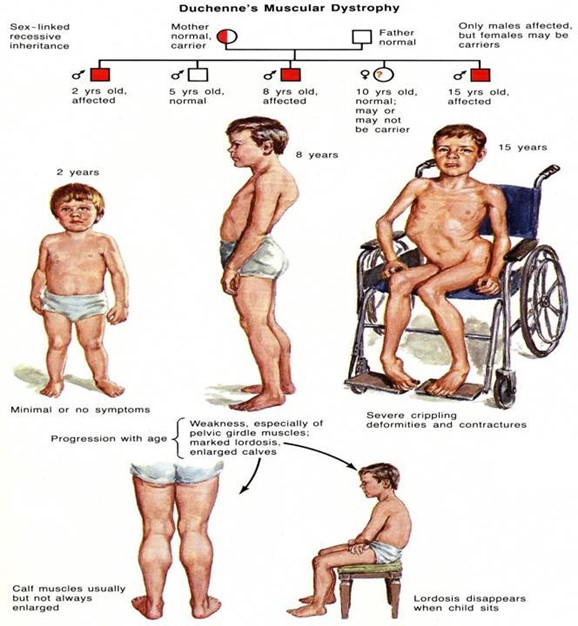
A 5-year-old boy was diagnosed with Duchenne muscular dystrophy less than 18 months ago.
The client presents with fatigue, and muscular weakness and is having difficulty running, and often falls majority of his attempts.
Which of the following would the nurse expect to be elevated in Duchenne muscular dystrophy?
Lactate Dehydrogenase.
C-Reactive Protein.
Erythrocyte sedimentation rate.
Creatine kinase.
The Correct Answer is D
In patients with Duchenne muscular dystrophy (DMD), creatine kinase levels are often increased to levels that are 50-100 times the reference range.
Choice A is incorrect because lactate dehydrogenase is not typically elevated in DMD.
Choice B is incorrect because C-reactive protein is not typically elevated in DMD.
Choice C is incorrect because the erythrocyte sedimentation rate is not typically elevated in DMD.
Nursing Test Bank
Naxlex Comprehensive Predictor Exams
Related Questions
Correct Answer is B
Explanation
The nurse should teach the patient to report promptly any edema of the face and hands.
Edema of the face and hands can be a sign of preeclampsia, a serious pregnancy complication that can lead to high blood pressure and damage to organs such as the liver and kidneys.
Preeclampsia can be dangerous for both the mother and the baby and requires prompt medical attention.
Choice A is not an answer because nasal congestion is a common symptom during pregnancy and is not considered a danger sign.
Choice C is not an answer because hemorrhoids are also a common symptom during pregnancy and are not considered a danger sign.
Choice D is not an answer because varicose veins are also a common symptom during pregnancy and are not considered a danger sign.
Correct Answer is B
Explanation
“6 weeks after fertilization.” Teratogens can begin affecting the developing embryo as early as 10 to 14 days after conception 1.
During embryonic development, there are periods when the developing organ systems show more sensitivity to teratogens.
Choice A is incorrect because 18 weeks after fertilization is not the earliest stage of pregnancy when exposure to a teratogenic agent could occur.
Choice C is incorrect because 12 weeks after fertilization is not the earliest stage of pregnancy when exposure to a teratogenic agent could occur.
Choice D is incorrect because this is not an incomplete question/stem.
Whether you are a student looking to ace your exams or a practicing nurse seeking to enhance your expertise , our nursing education contents will empower you with the confidence and competence to make a difference in the lives of patients and become a respected leader in the healthcare field.
Visit Naxlex, invest in your future and unlock endless possibilities with our unparalleled nursing education contents today