
A child who weighs 18 pounds receives a prescription for amoxicillin 25 mg/kg/day by mouth in divided doses every 12 hours. The bottle is labelled, "Amoxicillin for Oral Suspension, USP 400 mg per 5 mL." How many mL should the nurse administer with each dose?
(Enter numerical value only. If rounding is required, round to the nearest tenth.)
The Correct Answer is ["1.3"]
1.3 mL of amoxicillin suspension with each dose.
To calculate the correct dose of amoxicillin to give to the child, follow these steps:
Step 1: Convert the child's weight from pounds to kilograms. 18 pounds ÷ 2.2 = 8.18 kilograms
Step 2: Calculate the total daily dose of amoxicillin. 25 mg/kg/day x 8.18 kg = 204.5 mg/day
Step 3: Divide the total daily dose into two equal doses to be given every 12 hours. 204.5 mg/day ÷ 2 doses = 102.25 mg/dose
Step 4: Determine how many mL of the suspension contain 102.25 mg of amoxicillin. 400 mg/5 mL = 80 mg/mL 102.25 mg ÷ 80 mg/mL = 1.28 mL

Nursing Test Bank
Naxlex Comprehensive Predictor Exams
Related Questions
Correct Answer is A
Explanation
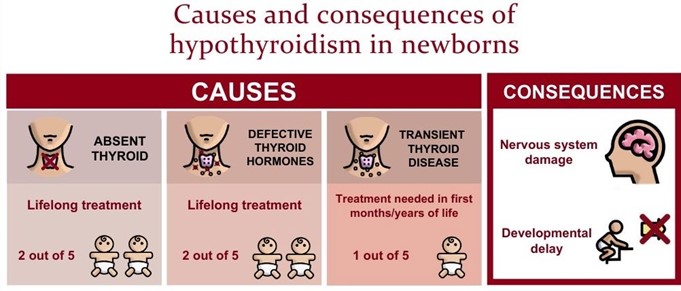
In a normal infant, T4 levels increase after birth due to stimulation by TSH from the pituitary gland. In this case, the T4 level is low and the TSH level is high, indicating that the thyroid gland is not producing enough T4 in response to TSH stimulation. This suggests that the infant may have congenital hypothyroidism, which requires prompt treatment to prevent developmental delays and other complications.
The low T4 level is not a direct cause of the high TSH level; rather, the high TSH level is a compensatory mechanism to increase T4 production. It is not normal for a breastfeeding infant to have high thyroxine levels. While the thyroid gland may take a few weeks to reach normal function after birth, the persistent low T4 and high TSH levels in this infant suggest a more serious issue.
Correct Answer is B
Explanation
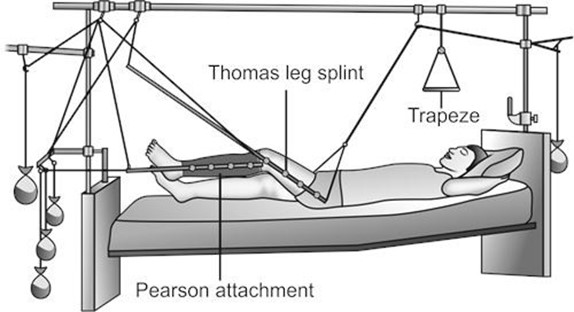
When caring for a child in balanced suspension skeletal traction, the most important intervention for the nurse to implement is monitoring peripheral pulses and sensation in the affected leg to detect any compromise in circulation or nerve function. This is crucial because the traction places tension on the bones, which can result in nerve or vascular damage.
Changing positions every 2 hours is important to prevent pressure injuries, but it is not the most critical intervention.
Cleansing pin sites and assessing skin for redness and signs of tissue breakdown are also important, but they are not as urgent as monitoring peripheral pulses and sensation.
Whether you are a student looking to ace your exams or a practicing nurse seeking to enhance your expertise , our nursing education contents will empower you with the confidence and competence to make a difference in the lives of patients and become a respected leader in the healthcare field.
Visit Naxlex, invest in your future and unlock endless possibilities with our unparalleled nursing education contents today