
A client diagnosed with bipolar II disorder has a problem statement of impaired social
interactions related to egocentrism. Which short-term correctly written outcome is an appropriate expectation for this client problem?
The client will have an appropriate one-on-one interaction with a peer by day 4.
The client will exchange personal information with peers at lunchtime.
The client will verbalize the desire to interact with peers by day 2.
The client will initiate an appropriate social relationship with a peer.
The Correct Answer is A
A. This outcome is specific, measurable, and timebound. It addresses the client's impaired social interactions and sets a realistic expectation for improvement within a short timeframe.
B. While this outcome is specific, it may not be achievable within a short timeframe and may not directly address the issue of egocentrism.
C. This outcome focuses on verbalization but may not necessarily lead to actual interaction or address the issue of egocentrism.
D. While this outcome is relevant, it is not as specific or timebound as option A.
Nursing Test Bank
Naxlex Comprehensive Predictor Exams
Related Questions
Correct Answer is A
Explanation
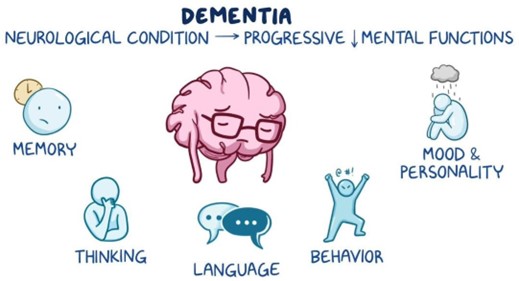
A. "He may begin to try to cover recognition of his memory loss by creating events." As
dementia progresses, individuals may experience confabulation, which involves creating false memories to compensate for memory loss. This is a common symptom seen in the middle stages of dementia.
B. "He may have difficulty in a motor skill such as walking." While motor skills may be affected in the later stages of dementia, it is not typically one of the early signs.
C. "The inability to communicate with speech comes immediately after the early signs." This statement is not accurate. Communication difficulties may occur in later stages, but it is not an immediate progression from early signs.
D. "He may not recognize you and other people who have been in his life." This symptom, known as agnosia, may occur in later stages of dementia, but it is not one of the early signs.
Correct Answer is D
Explanation
A. Administering diazepam may be part of the treatment plan for delirium tremens, but ensuring adequate hydration and addressing potential electrolyte imbalances is the first priority.
B. Raising the side rails is important for safety, but it is not the highest priority action at this time.
C. Obtaining a medical history is important for comprehensive care, but in this urgent situation, addressing fluid and electrolyte balance is the first priority.
D. Starting intravenous fluids is crucial for rehydration and addressing potential electrolyte imbalances, which is the priority in this emergency situation.
Whether you are a student looking to ace your exams or a practicing nurse seeking to enhance your expertise , our nursing education contents will empower you with the confidence and competence to make a difference in the lives of patients and become a respected leader in the healthcare field.
Visit Naxlex, invest in your future and unlock endless possibilities with our unparalleled nursing education contents today