
A client presents with symptoms of severe ulcerative colitis. Which clinical manifestations would the nurse expect to assess in this client? (Select all that apply)
Weight gain
Extreme thirst
Esophageal ulcers
Perianal fistulas
Rectal bleeding
Bloody diarrhea
Constipation
Correct Answer : E,F
Choice A reason: Weight gain is not expected in severe ulcerative colitis. Instead, these clients typically experience significant weight loss due to malnutrition, decreased oral intake secondary to abdominal pain, and the malabsorptive nature of chronic intestinal inflammation.
Choice B reason: While dehydration can occur due to diarrhea, extreme thirst is not a specific diagnostic manifestation of ulcerative colitis. Dehydration is usually addressed by monitoring for fluid volume deficit rather than identifying extreme thirst as a defining symptom of this disease.
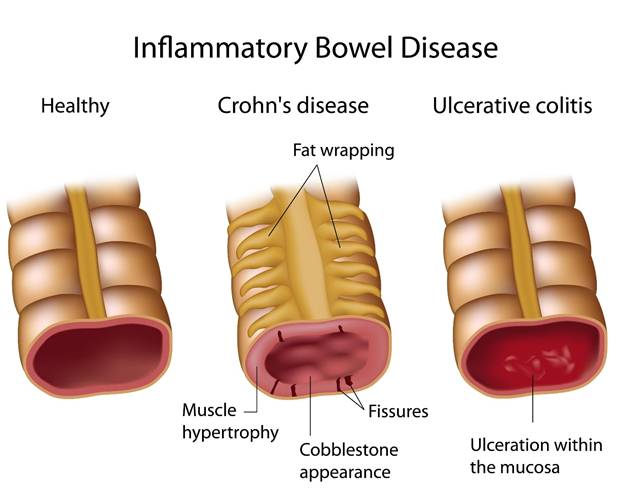
Choice C reason: Esophageal ulcers are not associated with ulcerative colitis. Ulcerative colitis is a disease process specifically limited to the mucosa and submucosa of the colon and rectum, whereas Crohn's disease can affect any part of the gastrointestinal tract, including the esophagus.
Choice D reason: Perianal fistulas are a hallmark complication of Crohn's disease, not ulcerative colitis. In ulcerative colitis, inflammation is continuous and superficial, primarily affecting the mucosal layer, and does not typically result in the deep, transmural fistulizing processes seen in Crohn's disease.
Choice E reason: Rectal bleeding is a classic sign of ulcerative colitis. The inflammation and ulceration of the colonic and rectal mucosa lead to friable tissue that bleeds easily. The presence of bright red blood per rectum is a common and expected clinical finding during an acute exacerbation of the disease.
Choice F reason: Bloody diarrhea is a primary clinical manifestation of ulcerative colitis. The inflammatory process causes the mucosal lining of the colon to slough off, leading to frequent, liquid stools that contain blood, mucus, and pus. This is a direct consequence of the extensive mucosal ulceration.
Choice G reason: Constipation is not an expected finding. The underlying pathophysiology involves hypermotility and inflammation, which produces diarrhea rather than slowing transit time.
Nursing Test Bank
Naxlex Comprehensive Predictor Exams
Related Questions
Correct Answer is A
Explanation
Choice A reason: Cardiac enzymes, such as cardiac troponin I and T, are structural proteins released into the bloodstream when myocardial cells are damaged or undergo necrosis. The serum levels of these markers correlate with the extent of myocardial injury, allowing clinicians to quantify the severity of the infarct.
Choice B reason: Cardiac enzymes confirm the presence and severity of myocardial injury but do not provide anatomical information regarding the location of the infarction. Imaging studies, such as an electrocardiogram or a cardiac magnetic resonance imaging, are required to determine which coronary artery is occluded and where the myocardial damage is localized.
Choice C reason: Cardiac enzymes are specific markers for myocardial cell death and do not indicate pulmonary congestion. Pulmonary congestion is typically assessed through physical examination findings, such as auscultation of crackles, assessment of respiratory status, and radiographic findings like a chest X-ray, rather than through blood-based biomarker analysis.
Choice D reason: Cardiac enzymes do not provide structural data about heart valves or overall heart geometry. Echocardiography is the gold-standard diagnostic tool used to visualize the structure of the heart, assess valve function, evaluate wall motion abnormalities, and measure the ejection fraction of the left ventricle in post-infarction patients.
Correct Answer is A
Explanation
Choice A reason: Clopidogrel is an anti-platelet agent that irreversibly inhibits the P2Y12 ADP receptor on platelets. This significantly increases the risk of prolonged bleeding. Due to this pharmacologic action, it is standard practice to hold this medication for approximately 5 to 7 days before surgical or invasive dental procedures to allow for the replacement of circulating platelets.
Choice B reason: Unlike heparin or warfarin, clopidogrel does not require routine laboratory monitoring of platelet counts or coagulation studies such as international normalized ratio or partial thromboplastin time. While monitoring for signs of bleeding is critical, regular lab checks are not standard for this specific medication, making this instruction incorrect.
Choice C reason: Dark, tarry stools (melena) are a clinical manifestation of upper gastrointestinal bleeding. Because clopidogrel significantly inhibits platelet function, this is a serious adverse effect, not an expected finding. The client must be educated to report such findings immediately as it indicates significant internal bleeding requiring medical intervention.
Choice D reason: Mild gastrointestinal upset can be a side effect, but the client should not discontinue the medication abruptly without consulting their healthcare provider. Abrupt cessation of anti-platelet therapy in a patient with a history of cardiac issues or stent placement significantly increases the risk of a life-threatening thrombotic event.
Whether you are a student looking to ace your exams or a practicing nurse seeking to enhance your expertise , our nursing education contents will empower you with the confidence and competence to make a difference in the lives of patients and become a respected leader in the healthcare field.
Visit Naxlex, invest in your future and unlock endless possibilities with our unparalleled nursing education contents today