
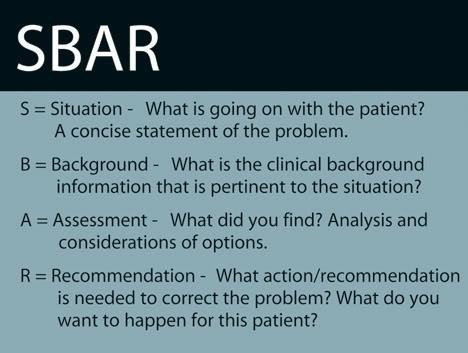
A male client who fell at home and experienced a brief loss of consciousness becomes increasingly confused after admission to the medical unit. The family requests an update on the client's condition. Using the SBAR (Situation, Background, Assessment, Recommendation) communication, which information should the nurse provide first?
Increasing confusion of the client.
Client's healthcare power of attorney.
Currently prescribed medications.
Fall at home as reason for admission.
The Correct Answer is A
Choice A Reason: This is the best action because it describes the current situation of the client and alerts the family to a possible change in the client's status. The nurse should provide the most relevant and urgent information first using the SBAR communication.
Choice B Reason: This is not the first action because it does not address the current situation of the client. The nurse should verify the client's healthcare power of attorney, but this is not a priority at this time.
Choice C Reason: This is not the first action because it does not explain the cause of the client's confusion. The nurse should review the client's medications and assess for any adverse effects, but this is not a priority at this time.
Choice D Reason: This is not the first action because it provides background information that is not directly related to the current situation of the client. The nurse should give a brief history of the client's admission, but this can be done later.
Nursing Test Bank
Naxlex Comprehensive Predictor Exams
Related Questions
Correct Answer is C
Explanation
Choice A Reason: Recording the patient's pulse volume distal to the IV site is a nursing assessment that requires clinical judgment and cannot be delegated to the UAP.
Choice B Reason: Reapplying cold compresses to the site of the extravasation is a nursing intervention that requires clinical judgment and cannot be delegated to the UAP.
Choice C Reason: Disposing of the IV tubing after the infusion is discontinued is a routine task that does not require clinical judgment and can be delegated to the UAP.
Choice D Reason: Teaching the patient about the need to keep the extremity elevated is a nursing intervention that requires clinical judgment and cannot be delegated to the UAP.
Correct Answer is A
Explanation
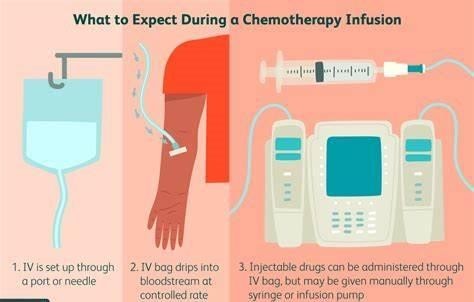
Choice A reason: Ceftriaxone is an antibiotic that can be given by gravity infusion without an IV pump, as long as the nurse monitors the flow rate and adjusts the roller clamp as needed. The dose and duration of ceftriaxone are usually fixed and not affected by minor fluctuations in the infusion rate.
Choice B reason: Heparin is an anticoagulant that requires a precise and constant infusion rate to prevent bleeding or clotting complications. An IV pump is essential to deliver heparin safely and accurately.
Choice C reason: Magnesium is an electrolyte that can cause serious adverse effects such as cardiac arrhythmias,
respiratory depression, and muscle weakness if infused too rapidly or too slowly. An IV pump is necessary to control the infusion rate and prevent magnesium toxicity or deficiency.
Choice D reason: Regular insulin is a hormone that regulates blood glucose levels and requires careful titration based on frequent blood glucose monitoring. An IV pump is required to deliver insulin at a consistent and adjustable rate to avoid hypoglycemia or hyperglycemia.

Whether you are a student looking to ace your exams or a practicing nurse seeking to enhance your expertise , our nursing education contents will empower you with the confidence and competence to make a difference in the lives of patients and become a respected leader in the healthcare field.
Visit Naxlex, invest in your future and unlock endless possibilities with our unparalleled nursing education contents today