
A nurse in an acute care facility is assessing a client who has schizophrenia. The client states. "Walk tall broom short dag bell." The nurse should document the client's speech as which of the following speech patterns?
Flight of ideas
Word salad
Neologisms
Clang associations
The Correct Answer is B
A. Flight of ideas: This speech pattern is characterized by rapidly shifting from one idea to another that are unrelated or loosely related. It often reflects disorganized thinking seen in conditions like mania or schizophrenia.
B. Word salad: Word salad refers to a jumble of words and phrases that lack coherence or meaning. It typically involves random or illogical word combinations that do not make sense when put together.
C. Neologisms: Neologisms are newly created words or phrases that have meaning only to the individual. They may be completely invented or may have personal significance to the speaker but are not understood by others.
D. Clang associations: Clang associations involve the stringing together of words based on similar sounds rather than logical connections. It often results in rhyming or repetitive speech patterns that lack coherence.
Nursing Test Bank
Naxlex Comprehensive Predictor Exams
Related Questions
Correct Answer is A
Explanation
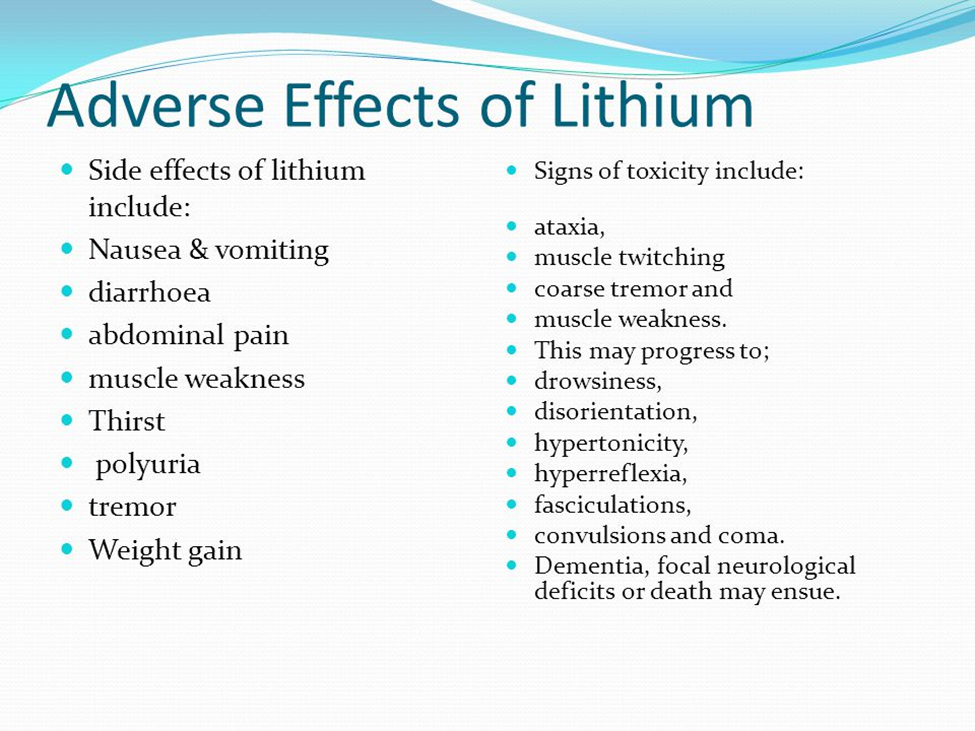
A. Weight gain and dry mouth: Weight gain and dry mouth are common adverse effects of lithium at therapeutic levels. They are not immediately dangerous but can affect compliance with the medication regimen.
B. Oliguria (reduced urine output) and muscle weakness are more concerning symptoms. They can indicate potential toxicity, especially oliguria, which suggests possible renal impairment, a serious concern with lithium therapy.
C. Hallucinations and blurred vision are more severe and typically associated with lithium toxicity rather than therapeutic levels. They indicate a need for immediate medical attention.
D. Coarse hand tremors and confusion: Coarse hand tremors and confusion are signs of lithium toxicity. At therapeutic levels, fine hand tremors can occur, but coarse tremors and confusion suggest higher serum levels.These symptoms are associated with toxicity and require urgent medical evaluation.
Correct Answer is D
Explanation
A. “I agree with you I'm sure this will never happen again.”: This response dismisses the seriousness of the situation and does not address the potential risk to the child's safety. It's important not to make assumptions about future behavior without further investigation.
B. “This is awful. You should file charges against your partner.”: While it's important to address the safety of the child, suggesting legal action may escalate the situation and could potentially put the child or parent at risk. It's important to handle such situations delicately and considerately.
C. “This is clearly child endangerment. I will have to call the police.”: While the safety of the child is paramount, involving the authorities should be done cautiously and with consideration for the family's dynamics. Calling the police immediately may not always be the most appropriate first step, especially without further assessment or discussion with the parent.
D. “I’d like to know more about what happened. Let’s sit and talk.”: This response is the most appropriate. It demonstrates a non-judgmental and supportive approach while also indicating a commitment to understanding the situation further. Sitting down to talk allows the nurse to gather more information, assess the child's safety, and provide appropriate support and resources to the family.
Whether you are a student looking to ace your exams or a practicing nurse seeking to enhance your expertise , our nursing education contents will empower you with the confidence and competence to make a difference in the lives of patients and become a respected leader in the healthcare field.
Visit Naxlex, invest in your future and unlock endless possibilities with our unparalleled nursing education contents today